Ardbeg Distillery: Smoke, Survival and the Cult of Islay’s Wildest Whisky
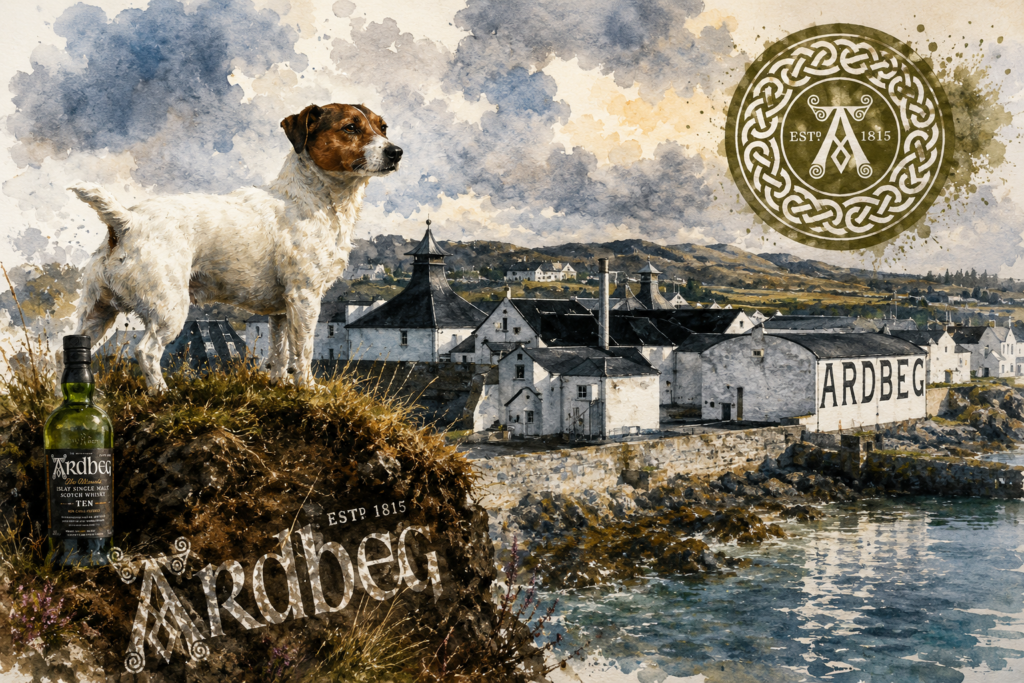
The road toward Ardbeg Distillery feels like a pilgrimage long before the distillery itself appears through the Islay mist. Past the whitewashed walls of Lagavulin and the medicinal smoke drifting from Laphroaig, the Atlantic wind grows sharper, saltier, heavier with peat, until eventually Ardbeg Distillery emerges beside the shoreline like something stubbornly anchored against the elements.
Visiting Ardbeg Distillery does not feel corporate, despite the luxury empire standing behind it. It feels weathered, alive and slightly chaotic in the best possible way. The sea crashes only metres away, gulls circle overhead with the kind of aggression only island gulls seem capable of, and even the warehouse doors smell faintly of damp rope, sea salt and old smoke. Somewhere near the courtyard, somebody is almost certainly carrying a dram before midday and nobody seems particularly concerned about it.
Some distilleries make excellent whisky, but Ardbeg Distillery built a religion around smoke.
And unlike many modern whisky success stories, this one was never guaranteed. Ardbeg Distillery did not glide elegantly through the twentieth century collecting awards and polished visitor centres. It nearly disappeared altogether. The fact that it survived at all is part of what makes the distillery feel so emotionally charged today. Every bottle carries a little of that resurrection story inside it.
For whisky drinkers, especially those drawn toward Islay’s darker and smokier side, Ardbeg Distillery has become more than a distillery. It is a place people speak about with tribal loyalty. A bottle opened among friends almost never stays quiet for long because somebody inevitably starts arguing about whether Uigeadail peaked five years ago, whether Corryvreckan is secretly the better whisky, or whether the latest Committee release is genius or expensive nonsense. Usually all three conversations happen at once.
Ardbeg Distillery at a Glance
- Founded: 1815
- Region: Islay
- Owner: The Glenmorangie Company / LVMH
- Water Source: Loch Uigeadail
- Whisky Style: Heavily peated Islay single malt
- Visitor Centre: Yes
- Famous Expressions: Ardbeg Ten, Uigeadail, Corryvreckan, Wee Beastie
- Known For: Powerful peat smoke, cult following, Committee releases and Islay character
The History of Ardbeg Distillery
Officially founded in 1815 by John Macdougall, Ardbeg quickly established itself as one of Islay’s defining producers. During the late nineteenth century, Ardbeg Distillery was among the island’s most productive whisky makers, its heavily peated spirit already building a reputation far beyond the Hebrides.
Then came the difficult decades. Ownership changes, financial instability and shifting whisky markets pushed Ardbeg Distillery dangerously close to extinction. In 1981, the distillery closed entirely, devastating not only the brand itself but the local community around it. Small-scale production resumed briefly later in the decade, though the future of Ardbeg Distillery remained uncertain in a way younger whisky drinkers sometimes struggle to fully appreciate now.
Today it is easy to look at Ardbeg’s global popularity and assume the rise was inevitable, but there was a very real possibility the stills would simply fall silent forever while the buildings slowly decayed beside the shoreline. Modern whisky culture tends to romanticise lost distilleries once they are gone, but reviving one before it disappears entirely is much rarer.
Everything changed in 1997 when Glenmorangie purchased Ardbeg Distillery and began restoring both the site and its reputation. That revival transformed Ardbeg from a fading Islay survivor into one of the most recognisable cult whisky brands on earth.
You can explore more through the Ardbeg official website.
Why Ardbeg Distillery Feels Different
Many distilleries talk about authenticity, but Ardbeg Distillery somehow still feels authentically eccentric.
Part of that comes from Islay itself. This is not a manicured whisky tourism fantasy. Islay is rugged, windswept and deeply tied to peat, and the landscape shapes the whisky long before spirit ever reaches oak. On some mornings the entire coastline smells like wet earth, bonfire ash and salt spray. On others, the air turns strangely sweet, almost like burnt caramel drifting through sea mist.
For newcomers wondering why Ardbeg Distillery tastes so radically different from Speyside or Highland whisky, our guide to smoky whisky explained explores how peat transforms aroma, flavour and texture inside a dram.
But Ardbeg Distillery’s identity goes beyond smoke alone. The distillery sits on Islay’s southern coast where maritime humidity and peat-rich land seem to seep into every warehouse wall. Ardbeg whiskies often combine dense smoke with flavours that should not logically coexist: charred lemon peel, iodine, espresso, smoked meats, black pepper, vanilla cream, seaweed and occasionally flashes of tropical fruit that appear almost absurd beneath all the ash and tar.
That contrast is what separates great Ardbeg from merely aggressive peat monsters. Some smoky whiskies feel exhausting after half a glass, whereas great Ardbeg somehow pulls you back for another sip even when your palate should already be surrendering.
Why Ardbeg Distillery Became a Cult Whisky Brand
Few distilleries in Scotland have built a following quite like Ardbeg Distillery.
Part of the appeal comes from timing. Ardbeg’s revival arrived just as whisky enthusiasts became increasingly obsessed with authenticity, peat and limited releases, though timing alone does not create loyalty this intense.
Modern Ardbeg owes much of its identity to the people behind it. Dr Bill Lumsden helped shape the contemporary style of Ardbeg Distillery with the same experimental mindset that transformed Glenmorangie into one of Scotland’s most innovative whisky houses. Alongside him, figures like former Distillery Manager Mickey Heads became beloved ambassadors for the brand itself.
Ardbeg succeeded because it understood something many distilleries missed during the whisky boom years: enthusiasts do not only fall in love with flavour. They fall in love with people, stories, rituals and identity, and Ardbeg leaned into that harder than almost anybody else.
Sometimes brilliantly. Sometimes a little ridiculously.
Not every dragon-themed, space-aged or carnival-inspired release has justified the escalating price tags, and Ardbeg fans know this better than anyone. Yet even when the marketing occasionally drifts close to self-parody, the distillery rarely loses its core identity underneath it all. The whisky still tastes unmistakably like Ardbeg, and that matters more than flashy packaging ever will.
The Ardbeg Committee and the Mythology of Smoke
In 2000, Ardbeg launched the Ardbeg Committee, a global community created with one symbolic mission: ensuring Ardbeg Distillery would never close again.
It was a brilliant idea because long before whisky brands became obsessed with online communities and exclusive membership ecosystems, Ardbeg understood that fans wanted participation, not simply consumption. Committee releases became events. Ardbeg Day became an annual pilgrimage. Special bottlings triggered midnight queues, online frenzy and heated debates across whisky forums.
Sometimes the marketing became theatrical to the point of absurdity, but that was always part of the charm. Ardbeg embraced its eccentricity rather than hiding it behind polished luxury language. Space-aged whisky experiments, monsters, dragons, smoke mythology and bizarre release concepts all became part of the distillery’s identity.
Because beneath the madness, the whisky itself remained genuinely compelling — or at the very least interesting, which honestly counts for quite a lot in modern whisky where too many expensive releases disappear from memory almost immediately after launch.
Shortie: The Mascot of Ardbeg Distillery
No serious Ardbeg Distillery spotlight feels complete without mentioning Shortie, the distillery’s beloved Jack Russell Terrier mascot.
Shortie represents something strangely important about Ardbeg. He is scruffy, energetic, mischievous and impossible not to like, essentially the perfect canine embodiment of the distillery itself. Many luxury whisky brands attempt elegance, whereas Ardbeg Distillery chose personality instead.
That decision helped the distillery feel human in an increasingly polished whisky landscape. Shortie became part of the mythology, another layer in the emotional connection people build with this place. You can almost imagine him darting between warehouse doors while peat smoke drifts across the courtyard and somebody inside debates whether to open another bottle of Corryvreckan.
What Makes Ardbeg Distillery Unique?
Many Islay distilleries produce heavily peated whisky, but Ardbeg Distillery balances intensity with complexity better than almost anyone else.
Where some smoky whiskies become one-dimensional, Ardbeg layers ash, citrus, maritime salt, dark chocolate, tar, vanilla sweetness and peppery spice into something far more dynamic. Even at high strength, the whisky often retains remarkable precision. Corryvreckan, especially, still tastes like the sort of whisky that should come with a warning label attached to the cork.
Ardbeg also mastered modern whisky storytelling without completely sacrificing authenticity. The annual releases generate enormous anticipation, yet the distillery’s reputation still rests primarily on the quality of the spirit itself rather than pure scarcity marketing. That balance is rare in contemporary Scotch whisky, particularly now that every other distillery seems desperate to launch “ultra-premium” bottles wrapped in increasingly elaborate packaging.
The Core Range vs the Special Releases
This is where opinions become dangerous among Ardbeg fans because despite all the excitement surrounding annual Committee releases and experimental limited editions, I still believe the greatest modern whiskies from Ardbeg Distillery remain firmly inside the core range.
Ardbeg Uigeadail is, for me, one of the finest heavily peated whiskies ever consistently produced at scale. Dark fruit, dense smoke, barbecue richness, espresso bitterness and oily maritime depth collide in a whisky that somehow feels both savage and elegant at once.
Then there is Ardbeg Corryvreckan, a whisky that feels less like a dram and more like being caught inside the famous whirlpool it is named after. Pepper, tar, dark chocolate, cracked oak spice and roaring smoke arrive with astonishing intensity, yet the whisky never loses balance. Even experienced whisky drinkers sometimes pause after the first sip of Corryvreckan like they have just been slapped by the Atlantic itself.
These bottles are not merely good core range expressions. They are benchmarks for modern peated Scotch, which makes it all the more ironic that they often outperform Ardbeg’s own special releases.
Among the limited editions, Ardbeg Eureka and Ardbeg BizarreBQ stand out because they retain that unmistakable Ardbeg soul while still feeling playful and adventurous.
Others, however, struggled to justify the hype. Ardbeg Anthology: The Unicorn’s Tale and Ardbeg Spectacular felt comparatively underwhelming beside the distillery’s strongest work. Not terrible whiskies by any means, but reminders that sometimes the permanent range already captures Ardbeg at its absolute best.
And perhaps that is oddly reassuring. Beneath all the limited-edition theatre, the true greatness of Ardbeg Distillery still lives inside bottles people can actually open without feeling like they need to photograph the label for Instagram first.
Visiting Ardbeg Distillery
The morning I visited Ardbeg Distillery, Islay felt almost unreal. Low clouds rolled across the coastline, the wind coming off the Atlantic carried the smell of peat smoke straight through the courtyard, and before I had even stepped inside properly I already had that rare feeling you sometimes get at certain distilleries — the sense that this place genuinely matches the mythology surrounding it.
What surprised me most was how comfortable Ardbeg felt. Not polished or intimidating, despite its global reputation, but warm, slightly chaotic and full of character. At one point during the tour I remember standing near the warehouses with rain drifting sideways across the coastline while somebody nearby casually joked about opening another bottle before lunch, and it somehow summed up the entire atmosphere perfectly. Nobody felt rushed. Nobody felt performative. It just felt like people who genuinely loved whisky sharing a place they were proud of.
The warehouse tasting ended up being one of my favourite whisky experiences on Islay. There is something about drinking Ardbeg surrounded by old casks, damp stone walls and lingering peat smoke that completely changes the whisky. I had tasted Corryvreckan and Uigeadail many times before visiting, but there in the warehouse they felt louder, oilier and somehow more connected to the island itself. The smoke carried differently. The maritime notes became sharper. Even the smell of the warehouse — old oak, sea air, wet earth and faint alcohol vapour — seemed to become part of the tasting experience.
What really stayed with me afterwards, though, was the staff. Whisky tours can sometimes blur together after enough distillery visits, but the team at Ardbeg Distillery made the experience feel genuinely personal and relaxed. You could tell they cared deeply about the place without ever making it feel scripted or overly rehearsed, and that authenticity is becoming increasingly rare in modern whisky tourism.
If you are planning a whisky trip to Islay, I would consider Ardbeg Distillery an essential stop. Current tastings, tours and visitor experiences can be booked through the official Ardbeg Distillery tours page.
Ardbeg Distillery FAQ
When was Ardbeg Distillery founded?
Ardbeg Distillery was officially founded in 1815 by John Macdougall and has become one of the most famous whisky distilleries on Islay.
Was Ardbeg Distillery ever closed?
Yes. Ardbeg Distillery closed in 1981 during a difficult period for the Scotch whisky industry. Limited production resumed later in the decade before Glenmorangie purchased and revived the distillery in 1997.
Where is Ardbeg Distillery located?
Ardbeg Distillery is located on the southern coast of Islay, close to fellow iconic Islay distilleries Lagavulin and Laphroaig.
What is Ardbeg Distillery known for?
Ardbeg Distillery is famous for heavily peated Islay single malt Scotch whisky with intense smoke, maritime character, medicinal notes and remarkable complexity beneath the peat.
What are the best whiskies from Ardbeg Distillery?
For me, Ardbeg Uigeadail and Ardbeg Corryvreckan remain the distillery’s greatest modern expressions and often outperform many limited releases.
What is the Ardbeg Committee?
The Ardbeg Committee is the distillery’s global fan community created in 2000 to help ensure Ardbeg Distillery would never close again. Committee members receive access to exclusive releases, events and Ardbeg Day celebrations.
Who is Shortie?
Shortie is Ardbeg Distillery’s famous Jack Russell Terrier mascot and one of the distillery’s most recognisable symbols.
Can you visit Ardbeg Distillery?
Yes. Ardbeg Distillery offers tours, tastings and visitor experiences on Islay. Current information can be found on the official Ardbeg tour booking page.
What makes Ardbeg Distillery unique?
Ardbeg Distillery combines intense peat smoke with surprising balance and complexity. Its whiskies often show flavours of citrus, espresso, dark chocolate, sea salt, tar and tropical fruit beneath the smoke, creating a style that feels unmistakably Ardbeg.
Is Ardbeg Distillery owned by LVMH?
Yes. Ardbeg Distillery is owned by The Glenmorangie Company, which forms part of Moët Hennessy Louis Vuitton (LVMH).
What should beginners try from Ardbeg Distillery?
Ardbeg Ten Years Old is usually the best starting point for newcomers, while Uigeadail and Corryvreckan showcase the distillery at its boldest and most complex.
Why does Ardbeg whisky taste smoky?
Ardbeg whisky gets its smoky flavour from peat used during the malting process. For a deeper explanation, read our guide to smoky whisky explained.
Final Thoughts
Ardbeg Distillery occupies a strange and fascinating place in modern whisky because it manages to be both wildly popular and genuinely respected at the same time. That balance is much harder to maintain than most people realise. Plenty of distilleries become victims of their own success once hype, scarcity and endless special editions begin overshadowing the whisky itself.
Ardbeg occasionally drifts close to that line. Some annual releases feel louder than they need to be, and not every experiment justifies the increasingly ambitious price tags attached to modern limited editions. Yet the distillery almost always seems to find its way back to what made whisky drinkers fall in love with it in the first place: powerful Islay whisky with unmistakable character and enough raw personality to cut through an increasingly polished whisky landscape.
What makes Ardbeg Distillery special is not simply the peat level or the smoke intensity. Other distilleries can produce heavily peated whisky. What Ardbeg does differently is combine that smoke with texture, balance and atmosphere. The best bottles somehow feel both aggressive and elegant at once, capable of delivering roaring waves of ash, tar, dark chocolate, espresso and maritime salt while still remaining surprisingly controlled underneath all the chaos.
And perhaps that is why the distillery inspires such loyalty. Ardbeg does not feel clinically engineered for modern whisky trends. It still feels slightly unpredictable. Slightly obsessive. The kind of distillery where mythology, Atlantic weather, eccentric marketing and genuinely brilliant whisky all collide together in a way that probably should not work as well as it does.
The real magic of Ardbeg Distillery is not found in collectible bottles sitting unopened on shelves or annual release hype cycles dominating social media for a few weeks every year. It lives in quieter moments instead. Standing outside the warehouses while Islay wind cuts across the shoreline. Pouring Corryvreckan for somebody who thinks they understand smoky whisky until that first sip lands. Opening Uigeadail late at night while the smell of peat smoke, dark fruit and sea air slowly fills the room.
That is when Ardbeg truly makes sense.
Not as a luxury product. Not as an investment bottle. Not even as Scotland’s loudest peat monster.
But as one of the few distilleries left that still feels completely and unapologetically itself.