Laphroaig Càirdeas 2026 French Oak Review: The Bottle I Had To Bring Home From Fèis Ìle
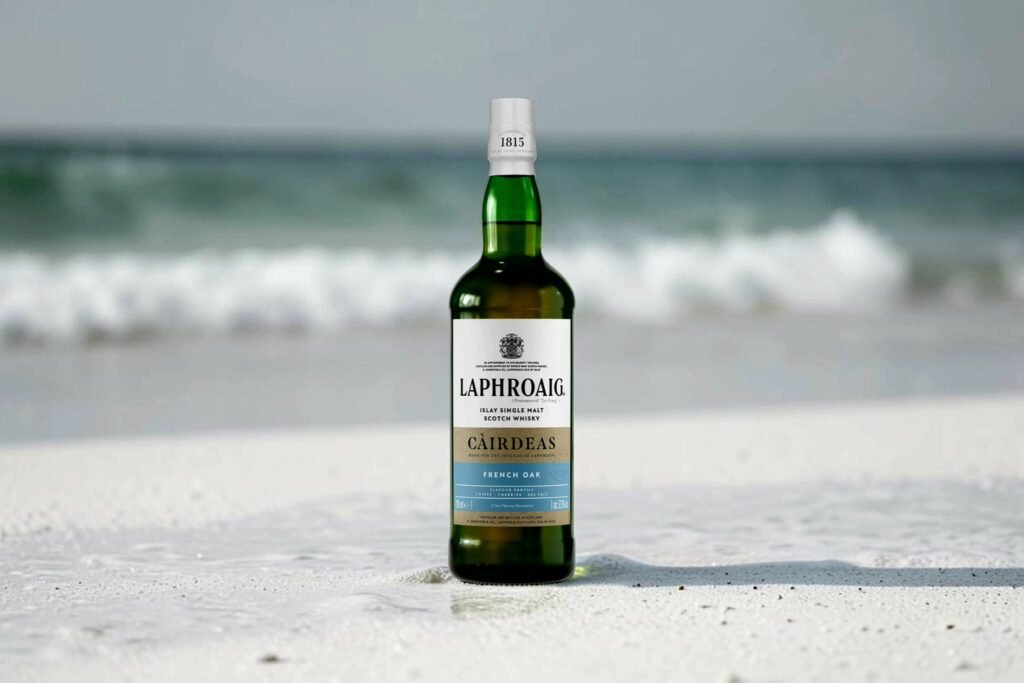
Laphroaig Càirdeas 2026 French Oak was never going to stay on Islay. Not after that week, not after that walk, and certainly not after the first dram confirmed exactly why it deserved a place in my suitcase.
I picked up my bottle during this year’s Fèis Ìle during what was genuinely one of the most enjoyable weeks I’ve ever spent on Islay. I was fortunate enough to be staying aboard the Thalassa, and somehow everything aligned perfectly. The weather was extraordinary from start to finish, with endless sunshine, calm seas and clear blue skies transforming the island into something that felt almost unfamiliar. Even seasoned festival veterans seemed slightly bewildered by how lucky we had become.
As always, however, the whisky was only part of the story.
One of the things I love most about Fèis Ìle is how quickly friendships form. Familiar faces return year after year, while complete strangers can become friends over the course of a single dram. By the time Laphroaig Day arrived, Brad and Shelby from the Florida Keys had gone from fellow passengers aboard the Thalassa to people I suspect I’ll be sharing whisky with for many years to come. You should check out their Scuba Diving School if you ever find yourself in the Keys!
Together we made the walk from Ardbeg to Laphroaig along Islay’s famous south coast path beneath cloudless skies, with the sea sparkling beside us and the familiar whitewashed buildings of Laphroaig slowly emerging in the distance. It’s a walk I’ve done before, but I don’t think I’ve ever enjoyed it quite as much.
If you’ve followed Dram1 for any length of time, you’ll already know I have a weakness for Laphroaig. Some distilleries make excellent whisky. Others create a connection that keeps pulling you back year after year. The smell of peat drifting across the courtyard, the medicinal character that divides opinion so beautifully, the feeling that every bottle remains unapologetically itself. Laphroaig has always been one of those distilleries for me.
So when this year’s Càirdeas appeared in the shop, there wasn’t much of a decision to make.
This bottle was coming home.
Laphroaig Càirdeas 2026 French Oak In 30 Seconds
- Fèis Ìle 2026 exclusive release
- French oak maturation influence
- Classic Laphroaig peat, smoke and maritime character
- Layers of dark fruit, spice and savoury complexity
- Distinctive notes of tar, seaweed crisps and Rockefeller oysters
- One of the strongest recent entries in the Càirdeas series
The Story Behind Laphroaig Càirdeas 2026 French Oak
The annual Càirdeas release has become one of the highlights of the Islay whisky calendar, not because it guarantees perfection, but because it often allows Laphroaig to explore different aspects of its character without losing sight of its roots.
French oak felt like an intriguing choice from the moment it was announced. The cask type has the potential to add spice, structure and darker fruit notes, but there is always a risk that the wood begins to dominate the spirit beneath it. Laphroaig is not a distillery that benefits from being hidden behind oak.
Fortunately, that never happens here.
The French oak certainly leaves its mark, but every sip remains firmly anchored in the coastal, medicinal and smoky character that has made Laphroaig one of Scotland’s most recognisable single malts.
Tasting Notes: Laphroaig Càirdeas 2026 French Oak
Stats
- Age: NAS
- ABV: 58.2%
- Distillery: Laphroaig
- Region: Islay
- Flavour Profile: Smoke & Storm
- Chill-Filtration: No
- Colouring: No
Nose
The first thing I wrote in my notebook was simply, “that’s definitely Laphroaig.”
It wasn’t particularly poetic, but it was accurate.
Medicinal peat, iodine, coastal smoke and damp rope emerge immediately, creating that unmistakable profile that has inspired both devotion and confusion among whisky drinkers for generations. What surprised me was how quickly the more unusual notes began to appear once the whisky settled in the glass.
Soft tar notes reminded me of old harbour walls warming beneath the afternoon sun after the tide had retreated. Alongside that came roasted seaweed, specifically seaweed crisps, carrying a salty, savoury umami character that felt both coastal and unexpectedly moreish. The maritime influence runs deep here, but it never feels forced or exaggerated.
The most memorable note, however, was something I kept returning to throughout the evening: Rockefeller oysters. Not fresh oysters straight from the shell, but the richer combination of shellfish, herbs, butter, char and smoke that defines the dish itself. It’s not a tasting note I find often, but it appeared repeatedly and became one of the defining characteristics of the whisky for me.
Beneath the coastal elements sit layers of blackberry skins, black cherry, plum compote and dry cocoa, while the French oak contributes gentle clove and cinnamon spice without ever demanding centre stage.
Palate
The palate immediately transported me back to Islay.
That may sound romanticised, but there was something about the combination of peat smoke, sea spray and maritime salinity that brought back memories of standing on deck aboard the Thalassa watching the coastline drift by in the evening light.
Tarred rope, smoked sea salt and earthy peat arrive first before giving way to a wonderfully savoury middle palate. The seaweed crisp note becomes even more pronounced here, joined by grilled lemon, cracked black pepper and a shellfish character that again brought Rockefeller oysters to mind. There is a richness to the whisky that feels almost culinary at times, yet it never loses its freshness or balance.
The French oak reveals itself gradually through notes of dark berries, bitter chocolate, espresso and warming spice, adding depth without distracting from the spirit itself. What impressed me most was how naturally everything fitted together. At no point did I feel like I was tasting a whisky defined by oak influence. Instead, it felt like Laphroaig viewed through a slightly different lens, one that emphasises darker fruit and savoury complexity while remaining unmistakably rooted in Islay.
A few drops of water opened additional layers of fruit and sweetness, but I found myself repeatedly returning to the whisky neat. The slight edge and intensity suit it well.
Finish
The finish is long, coastal and wonderfully persistent.
Smoke lingers for minutes, accompanied by drying oak spice, sea salt and the distinctive tar note that first appeared on the nose. The maritime character continues long after the fruit begins to fade, leaving behind impressions of seaweed, oyster shells and gentle medicinal peat. Eventually notes of espresso and dark chocolate emerge as the final echoes of smoke drift away.
Even long after the glass was empty, I found myself returning to it just to revisit the aromas that remained.
Food Pairing
Normally I try to avoid pairing recommendations that feel overly convenient, but Rockefeller oysters genuinely feel like the perfect companion for this whisky. The overlap between the dish and the flavour profile in the glass is remarkable, with both sharing notes of brine, herbs, richness and subtle char.
Beyond that, grilled seafood, smoked brisket or charcoal-cooked lamb would all work beautifully, while a bowl of quality seaweed crisps would probably make far more sense than most traditional whisky pairings.
Who Is This Whisky For?
This is a bottle for people who already understand why Laphroaig inspires such loyalty.
If you enjoy medicinal peat, coastal character and whiskies that occasionally challenge your expectations, there is plenty to love here. The French oak adds complexity and depth without softening the distillery’s identity, making it particularly rewarding for long-time Laphroaig fans looking for a fresh perspective on familiar territory.
Those new to heavily peated whisky may find it a demanding introduction, but for seasoned Islay drinkers it offers something genuinely distinctive.
Verdict
Strengths
- Excellent integration of French oak influence
- Distinctive and memorable flavour profile
- Outstanding maritime and savoury complexity
- Unique notes of tar, seaweed crisps and Rockefeller oysters
- Remains unmistakably Laphroaig throughout
Weaknesses
- Limited availability
- Requires time in the glass to fully reveal itself
- The savoury maritime profile won’t appeal to everyone
- The drying oak influence may divide some drinkers
Final Thoughts
Every now and then a bottle becomes inseparable from the circumstances in which it was purchased, and Laphroaig Càirdeas 2026 French Oak will always be one of those whiskies for me. Whenever I open it in the years ahead, I suspect I’ll find myself thinking not only about the whisky itself but about that remarkable week aboard the Thalassa, the friendships that developed over shared drams and long conversations, and the walk from Ardbeg to Laphroaig beneath a sky so clear it almost felt out of place on Islay. It was one of those rare festival weeks where everything seemed to align perfectly, and this bottle has become a small piece of that memory.
Fortunately, nostalgia is not carrying the whisky. Strip away the festival, the sunshine and the personal connections, and what remains is still one of the most compelling Càirdeas releases I’ve tasted in recent years. The French oak influence adds depth and complexity without ever obscuring the character that makes Laphroaig so distinctive, allowing notes of tar, seaweed crisps, coastal smoke and that wonderfully savoury Rockefeller oyster character to remain firmly at the heart of the experience. Rather than feeling like a cask experiment searching for attention, it feels like a natural extension of the distillery’s personality, offering a different perspective on familiar territory while remaining unmistakably rooted in Islay.
What impressed me most was how confidently the whisky carries both sides of its identity. The French oak contributes darker fruit, spice and structure, yet every sip still feels connected to the coastline, to the peat, and to the maritime character that has made generations of whisky drinkers fall in love with Laphroaig. It is distinctive without becoming gimmicky, experimental without losing sight of its origins, and memorable for reasons that go far beyond its limited availability.
For me, it stands among the highlights of Fèis Ìle 2026 and ranks as one of the strongest recent entries in the Càirdeas series. The fact that it also serves as a reminder of an unforgettable week spent sailing aboard the Thalassa, sharing drams with old friends and making new ones, simply makes opening the bottle that little bit more special. Even if those memories were removed entirely, however, this would still be a whisky I’d happily recommend to any Laphroaig fan looking for a different perspective on a distillery they already know and love.