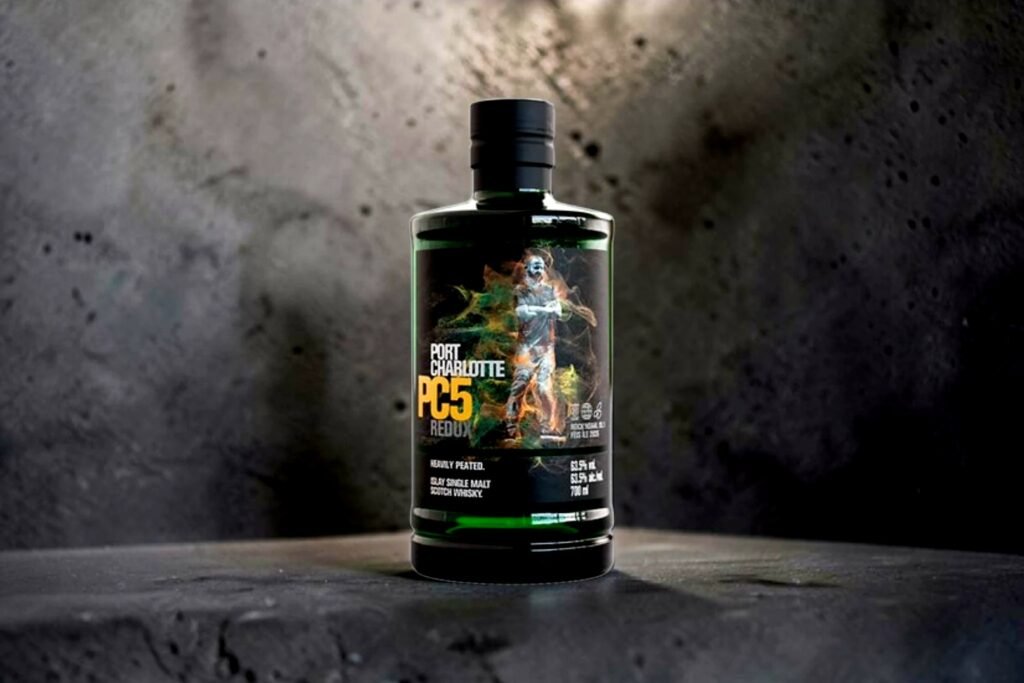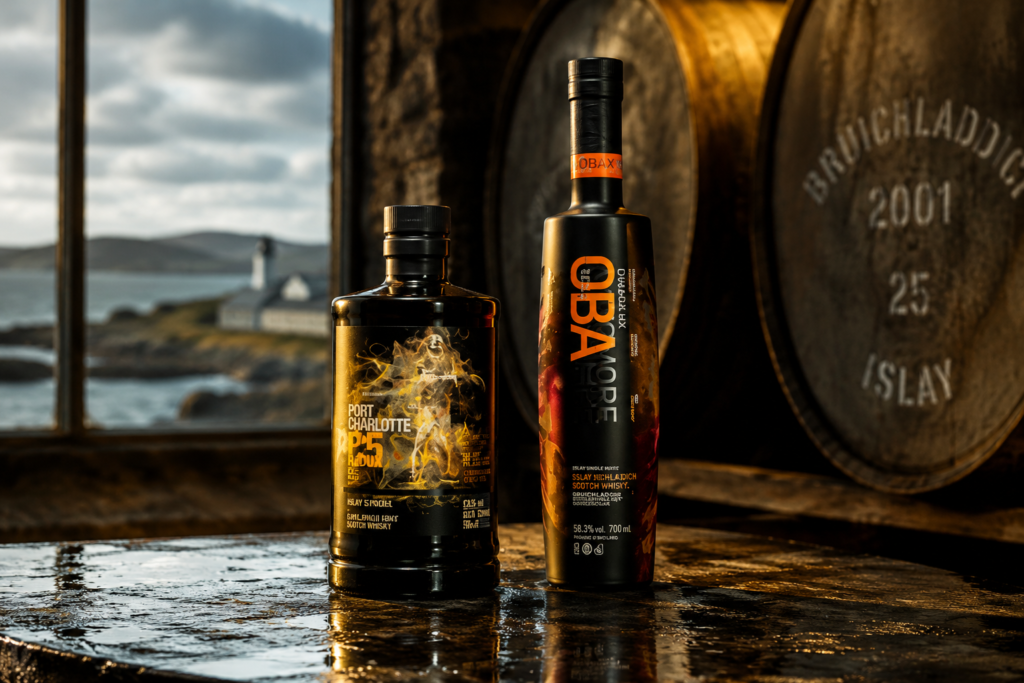
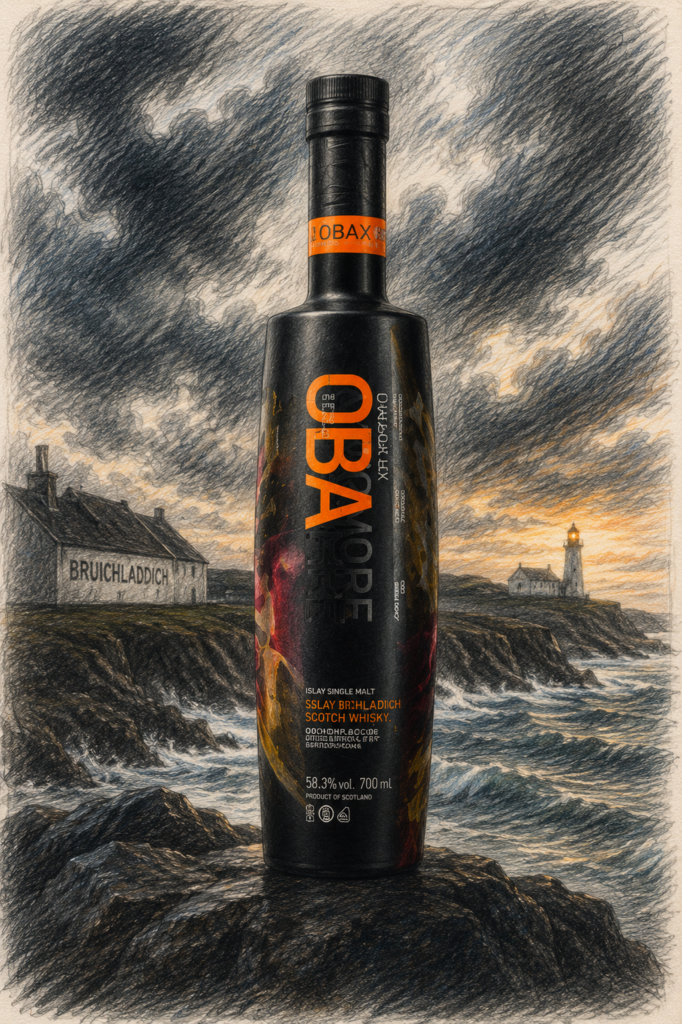
Bruichladdich has officially unveiled Port Charlotte PC5 Redux and Octomore OBA Redux as its exclusive Rock’ndaal bottlings for Fèis Ìle 2026, marking the distillery’s 25th anniversary since its famous resurrection in 2001. Both releases will debut during Rock’ndaal on 24 May and already feel destined to dominate conversations across Islay this year. PC5 Redux revisits one of the most revered whiskies from Bruichladdich’s early revival years under Jim McEwan, while OBA Redux resurrects Adam Hannett’s experimental Octomore Black Art concept first explored during Fèis Ìle nearly a decade ago.
Bruichladdich’s decision to hide the PPM and age statement behind OBA Redux already feels guaranteed to divide Octomore fans, particularly from a distillery whose modern reputation was built on radical transparency and obsessive detail.
For me personally, this announcement changed the mood surrounding this year’s trip aboard the Thalassa almost instantly. Rock’ndaal will be our first major stop of Fèis Ìle 2026, which suddenly feels both exciting and financially irresponsible in equal measure. The dangerous thing about arriving at Bruichladdich early in the festival week is that people still believe they are capable of budgeting sensibly. Nobody has fully surrendered to Islay yet. Then somebody hands you a cask strength Port Charlotte before lunch, another person starts talking about old Black Art batches, and within half an hour you are mentally rearranging luggage space for bottles you absolutely did not plan to buy.
That atmosphere is exactly why Rock’ndaal remains one of the defining days of Fèis Ìle. Bruichladdich has never felt particularly interested in restraint as a distillery, and thankfully the festival reflects that personality. Music rolls across Lochindaal while crowds drift between warehouse tastings and courtyard bars carrying tasting glasses that become increasingly difficult to keep track of as the afternoon disappears into evening. By mid-afternoon, somebody nearby is always passionately explaining peat ppm to a stranger while another person opens a festival bottle they swore they would save for home. The entire day feels wonderfully unpolished in a way that suits Bruichladdich perfectly.
Twenty-five years after reopening, that atmosphere still feels deeply connected to the identity Jim McEwan helped rebuild when Bruichladdich emerged from mothball status in 2001. At the time, the distillery felt completely different from much of the Scotch industry around it. McEwan pushed conversations around terroir, barley provenance and transparency long before those ideas became fashionable marketing language, while simultaneously embracing experimentation in ways that helped shape modern Islay whisky culture. Port Charlotte brought heavily peated spirit back to Bruichladdich, Octomore pushed peat levels into territory that sounded almost ridiculous on paper, and Black Art deliberately rejected transparency altogether in favour of mystery and sensory experience.
You can feel all of that history wrapped into these two bottles.
If you want to dive deeper into how Bruichladdich transformed from a silent distillery into one of modern whisky’s defining cult names, we explored the full story here:
Bruichladdich Distillery: A Revolutionary Comeback
Port Charlotte PC5 Redux Revisits A Whisky That Helped Define Modern Bruichladdich
Of the two releases, PC5 Redux is the whisky that immediately grabbed me emotionally because the original PC5 represented far more than simply another young heavily peated Islay release. It was one of the clearest early statements that Bruichladdich was genuinely back.
The heavily peated Port Charlotte spirit first ran from the stills on 29 May 2001 during the distillery’s earliest festival celebrations after reopening. Five years later, the original PC5 arrived carrying all the energy and confidence that defined those early revival years. It quickly became legendary among peat enthusiasts because it felt unapologetically alive — smoky, oily, muscular and packed with the sweet barbecue smoke profile that still defines the best Port Charlotte releases today.
What made the original PC5 so compelling was never age alone. If anything, part of its charm came from how little Bruichladdich seemed interested in apologising for its youth. The whisky felt spirit-driven rather than engineered into softness through excessive oak influence, and that confidence became part of its identity. Modern whisky sometimes forgets that youthful peat can be thrilling when the distillate itself has enough character to carry the experience.
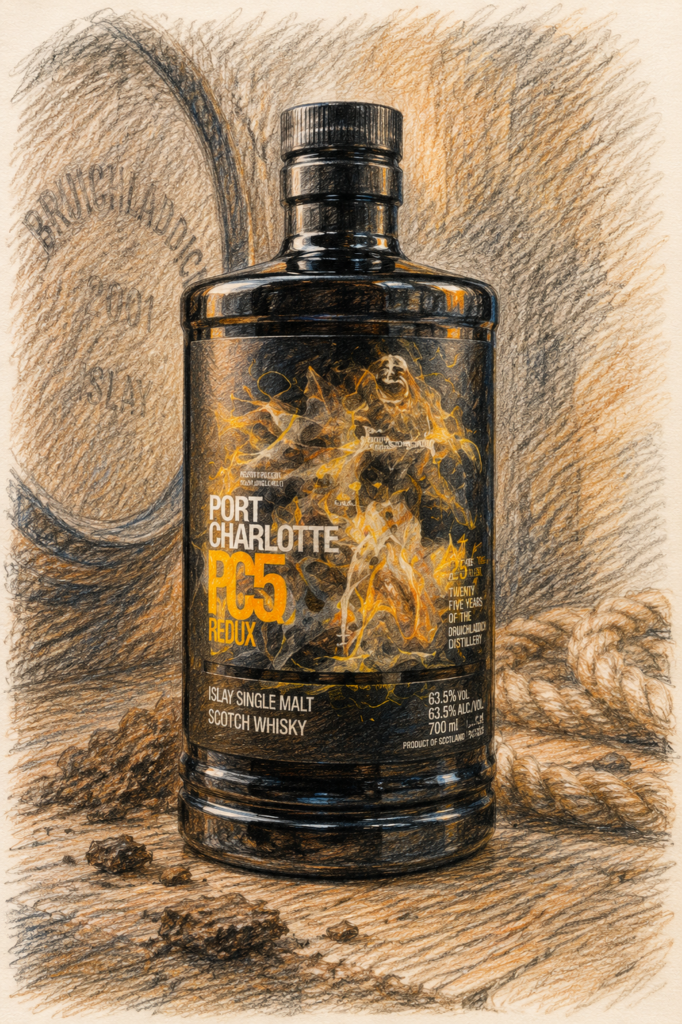
Now Adam Hannett has revisited that original profile for Bruichladdich’s 25th anniversary, bottling PC5 Redux at 63.5% ABV after five years of maturation in American oak. Limited to 2,500 bottles, the release reportedly keeps the spirit itself front and centre while the oak remains firmly in the background.
What genuinely surprised me, however, was the price. At £75, PC5 Redux feels almost suspiciously reasonable in today’s whisky market, especially during Fèis Ìle where some festival bottlings now seem aimed more at people discussing secondary market values than people actually drinking whisky. Bruichladdich could comfortably have pushed this beyond the £100 mark and most enthusiasts would probably have accepted it without much resistance.
Instead, this feels like a bottle designed to be opened.
That matters because whiskies like PC5 become legendary through experience. They become memories attached to warehouse tastings, ferry conversations and slightly blurry late-night debates about peat levels after one dram too many. The original PC5 earned its reputation because people drank it, shared it and argued passionately about it.
For anyone wondering why Port Charlotte remains one of Scotland’s strongest peated ranges today, we recently explored exactly what makes the spirit work so well in our full review of the core release:
I also recently included Port Charlotte 10 in our selection of essential Islay whiskies to try during Fèis Ìle 2026 because few modern peated malts capture Bruichladdich’s style so consistently well:
Octomore OBA Redux Will Probably Divide People — Which Is Exactly Why It Works
If PC5 Redux reconnects Bruichladdich with the energy of its early revival years, OBA Redux feels much more like Adam Hannett leaning fully into provocation.
The original OBA concept first appeared during Hannett’s inaugural Fèis Ìle masterclass in 2016 before eventually evolving into OBA Concept_01 in 2017. The idea behind the whisky was deceptively simple: what happens when you merge Octomore’s immense peat power with the secrecy surrounding Black Art?
That Black Art connection matters because Jim McEwan originally created the series almost in opposition to Bruichladdich’s otherwise obsessive transparency. No detailed cask recipes. No production roadmap. No technical breakdown telling drinkers exactly what they were supposed to find in the glass. Black Art asked people to stop analysing whisky for a moment and simply experience it.
Applying that philosophy to Octomore feels almost intentionally controversial because Octomore fans are famously obsessed with details. Peat ppm, barley provenance, fermentation times and cask composition have always formed part of the series’ identity. Yet OBA Redux deliberately withholds much of that information. Bruichladdich has chosen not to reveal the PPM level, the whisky’s age or its full maturation breakdown, leaning fully into mystery instead.
Part of me genuinely loves that decision because modern whisky culture can sometimes become exhausting in its obsession with statistics and technical specifications. Another part of me suspects the whisky industry has also become extremely good at monetising mystery itself. At £325, OBA Redux unquestionably sits in luxury territory, and I suspect Octomore fans will spend the next several months arguing over whether the secrecy enhances the whisky or simply helps justify the price.
The frustrating thing is that I still desperately want one.
Because beneath all the mythology and smoke, Octomore at its best remains one of the most fascinating whiskies produced anywhere in Scotland. Very few heavily peated spirits manage to combine brute-force smoke with tropical fruit, floral elegance and oily texture in the way Octomore consistently can. Even people who claim to dislike peated whisky often end up looking slightly confused after tasting a great Octomore because it refuses to behave the way logic suggests it should.
We explored that balance recently in our full comparison feature looking at the latest Octomore releases:
Bruichladdich Still Understands The Emotional Side Of Whisky Better Than Most
What makes these releases feel so perfectly suited to Rock’ndaal has very little to do with scarcity alone. Limited whisky appears constantly now, usually wrapped in familiar language about exclusivity and collectability, but Bruichladdich still approaches festival bottlings with a sense of personality that many distilleries have gradually polished away. Standing in the courtyard overlooking Lochindaal while peat smoke drifts past food stalls and somebody nearby debates old Black Art releases over live music, these bottles become part of something much larger than simple collectables.
PC5 Redux celebrates the spirit that helped resurrect Bruichladdich under Jim McEwan, while OBA Redux pushes further into Adam Hannett’s more experimental and divisive modern direction. One release feels proudly old-school in its confidence and directness, while the other embraces mystery, provocation and the kind of modern whisky culture where people discuss bottle allocations before they have even tasted the dram itself.
Predictably, I still want both.
By the time the sun starts dropping behind Lochindaal and somebody nearby is pouring Octomore from a plastic festival cup, resistance will probably become impossible anyway.
Sources & Further Reading
- The Spirits Business coverage
- The Whisky Wire coverage
- One More Dram release analysis
- Official Bruichladdich Rock’ndaal releases