The 10 Best Peated Islay Whiskies Under €100: The Bottles I Keep Coming Back To
There is something about autumn that makes peated whisky taste just a little bit better. Perhaps it’s the rain tapping against the windows, the grey skies that seem to have permanently settled above the Netherlands, or the leaves slowly turning brown before surrendering to the wind. Whatever the reason, as soon as the temperatures start dropping, I find myself wandering towards the peated section of my whisky room more often than usual.
Don’t get me wrong, I enjoy a good smoky dram throughout the year. I’ve happily poured myself a glass of Laphroaig in the middle of summer, and there’s certainly something to be said for enjoying a coastal whisky while sitting outside on a warm evening. But autumn and winter? That’s when peat really comes into its own for me. There’s something wonderfully comforting about sitting inside while the weather does its worst, with a glass of whisky that smells like a bonfire on a windswept Scottish beach.
And when it comes to peated whisky, there’s one little island that keeps pulling me back: Islay.
For this article, I’ve decided to put together my personal selection of the best peated Islay whiskies, with a few ground rules. I’m sticking to established core-range expressions rather than limited editions, single casks, or bottles that require a second mortgage. Everything here should generally be obtainable for less than €100 in the European market, although prices and availability naturally fluctuate, particularly with batch releases.
These aren’t necessarily the ten most prestigious Islay whiskies, nor am I pretending they’re objectively the best. They’re the ten bottles I’d most happily reach for, recommend to fellow whisky enthusiasts, or keep stocked in my own whisky room. And yes, narrowing it down to ten proved considerably more difficult than I anticipated.
Affiliate disclosure: This article may contain affiliate links. If you purchase a bottle through one of these links, DRAM1 may earn a small commission at no additional cost to you. The rankings and opinions are entirely my own, and no distillery or retailer has paid for a place on this list.
Listen to my top 10 best peated islay whiskies:
Three Ingredients? I Would Argue There Are Five.
One of the things I find most fascinating about whisky is just how much variety can emerge from so few ingredients. As I explain in my beginner’s guide to whisky, single malt Scotch whisky is made using just three ingredients: malted barley, water, and yeast. That’s it. Three seemingly simple ingredients responsible for an extraordinary range of flavours, aromas, and textures. You can find all the exact rules to whisky at the Scotch Whisky Association.
Of course, the production process is anything but simple. Fermentation times, still shapes, distillation techniques, and countless other decisions influence what eventually ends up in our glasses. But personally, I’ve always felt that two additional ingredients deserve a place in the conversation: wood and peat.
The first is oak. Without maturation in oak casks, Scotch whisky simply wouldn’t be Scotch whisky. Whether we’re talking about ex-bourbon barrels contributing vanilla, honey, and coconut, or sherry-seasoned casks introducing dried fruits, chocolate, and spices, wood plays an enormous role in shaping the final spirit. I’ve explored this in more detail in my article about sherry casks and their influence on whisky.
The second is peat. Technically, it isn’t an ingredient added to the whisky itself, but rather a fuel traditionally burned during the drying of malted barley. The resulting smoke introduces aromatic compounds into the grain, some of which survive fermentation, distillation, and maturation to become those wonderfully smoky, earthy, medicinal flavours that so many of us adore. If you’d like to understand the process better, have a look at my guide to smoky whisky and how peat influences flavour.
What makes peat particularly interesting is that it isn’t the same everywhere. Peat is essentially partially decomposed vegetation accumulated over thousands of years, and its composition depends on the environment in which it formed.
On Islay, peatlands contain substantial amounts of decomposed mosses, sedges, and other wetland vegetation, with coastal conditions helping shape their character. Islay whisky is famous for those distinctly medicinal aromas: iodine-like notes, antiseptic, tar, seaweed, and even the occasional freshly opened box of Band-Aids. Travel to the Scottish mainland and you’ll often encounter a different style of smoke, sometimes reminiscent of burning wood, charcoal, and a countryside bonfire. Meanwhile, Orkney’s heather-rich peatlands are frequently associated with a more fragrant, herbal, and floral style of smoke.
These regional differences aren’t simply romantic whisky folklore, either. As explained in The Oxford Companion to Spirits & Cocktails, the vegetation that forms peat varies considerably across Scotland, with Orkney’s heather-rich peatlands being particularly distinctive. These differences may help explain why some peated whiskies evoke medicinal smoke and tar, while others lean towards fragrant heather or a countryside bonfire.
And there’s actual science behind this. A 2009 study published in the Journal of Agricultural and Food Chemistry examined peat from Islay, Orkney, and two mainland Scottish locations. Researchers discovered measurable differences in chemical composition depending on geographical origin and even the depth at which the peat was extracted. While this doesn’t mean we can trace every medicinal or smoky aroma directly to a particular plant, it certainly supports the idea that where peat comes from can influence the whisky we eventually enjoy.
Nevertheless, the regional differences are fascinating, and there’s no denying that Islay has developed one of the most recognisable whisky identities in the world.
It’s also worth remembering that not every Islay whisky is smoky. Bunnahabhain is particularly famous for its unpeated single malts, while Bruichladdich produces both unpeated whisky under its own name and heavily peated expressions under the Port Charlotte and Octomore labels. But today we’re leaving the unpeated bottles on the shelf.
We’re here for the smoke.
So, which bottles deserve a place among the best peated Islay whiskies you can actually buy without breaking the bank? After plenty of tasting, revisiting old favourites, and some rather difficult decisions, these are the ten that have earned their place on my personal list. Starting with a whisky that, for me, represents just about everything I love about Islay.
Top 10 Best Peated Islay Whiskies
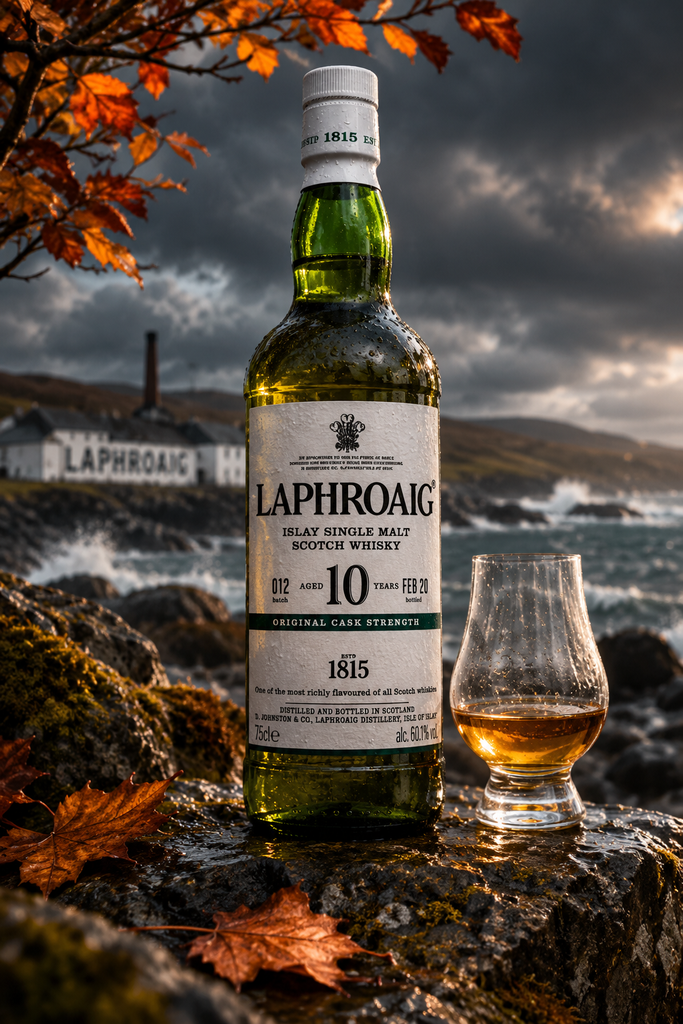
1. Laphroaig 10 Year Old Cask Strength — Islay at Its Most Glorious
If I could only keep one peated Islay whisky from this entire list, this would be it. And frankly, I wouldn’t need much time to make that decision.
Laphroaig has always been one of those distilleries that refuses to compromise its personality. Its whisky is unapologetically medicinal, intensely smoky, and sometimes downright confrontational. The standard 10-year-old already delivers that unmistakable combination of iodine-like aromas, seaweed, ash, and earthy peat, but the Cask Strength takes everything I love about Laphroaig and turns up the volume.
Bottled at natural cask strength, with the exact ABV varying between batches, this is a whisky that demands your attention. The nose delivers an enormous wave of medicinal peat smoke, tar, damp earth, and coastal brine, followed by sweeter notes of vanilla, citrus, and malted barley. On the palate, there’s an almost oily intensity, with charred oak, pepper, salted caramel, and that wonderfully distinctive Laphroaig medicinal character. The finish seems to linger forever, leaving behind smoke, sea salt, and a pleasant dryness.
What makes it so special to me isn’t simply its intensity. It’s the balance beneath that intensity. There’s a remarkable sweetness hiding behind the smoke, and adding a few drops of water can reveal an entirely different side of the whisky.
The only caveat is availability. This is a recurring batch release rather than a permanently identical bottling, so prices and stock vary. Fortunately, certain batches can still be found below my €100 ceiling, although some retailers charge considerably more.
My verdict: The ultimate expression of everything I adore about traditional, heavily peated Islay whisky. Big, uncompromising, complex, and utterly magnificent.
Read my full comparison of Laphroaig 10 and Laphroaig 10 Cask Strength.
2. Ardbeg Uigeadail — Where Smoke Meets Sherry
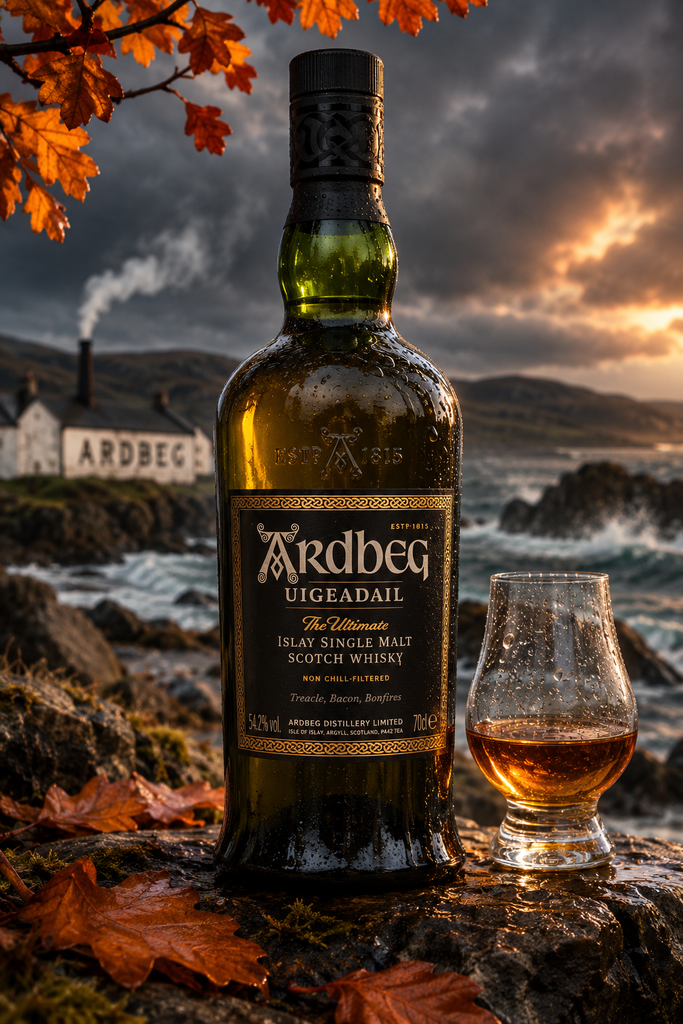
If Laphroaig 10 Cask Strength represents the raw, medicinal side of Islay, Ardbeg Uigeadail demonstrates just how beautifully peat smoke can interact with rich sherry-cask influences.
Named after the loch that supplies Ardbeg with its water, Uigeadail (pronounced Oog-a-dall) has been one of my favourite readily available whiskies for years. Bottled at a generous 54.2% ABV, it combines bourbon-cask and sherry-cask matured whisky into something that feels considerably more indulgent than its relatively modest price might suggest.
There’s an unmistakable Ardbeg character here: dense smoke, soot, earthy peat, and maritime influences. But wrapped around that familiar smoky backbone are layers of dark chocolate, raisins, dried figs, espresso, and treacle. On the palate, the combination becomes even more compelling, with rich sweetness giving way to warming spices, liquorice, and smouldering embers.
What I particularly enjoy about Uigeadail is how the smoke and sweetness seem to take turns rather than compete. One moment you’re enjoying something reminiscent of Christmas cake beside a fireplace, and the next you’re standing on a storm-battered Scottish coastline with a bonfire burning nearby.
It’s rich, powerful, beautifully balanced, and remarkably consistent for a core-range release. In fact, if someone asked me to recommend just one peated whisky that combines serious intensity with sherry-driven sweetness, Uigeadail would probably be my first suggestion.
My verdict: One of the finest examples of peat and sherry working together, and a bottle I believe every serious smoky whisky enthusiast should experience.
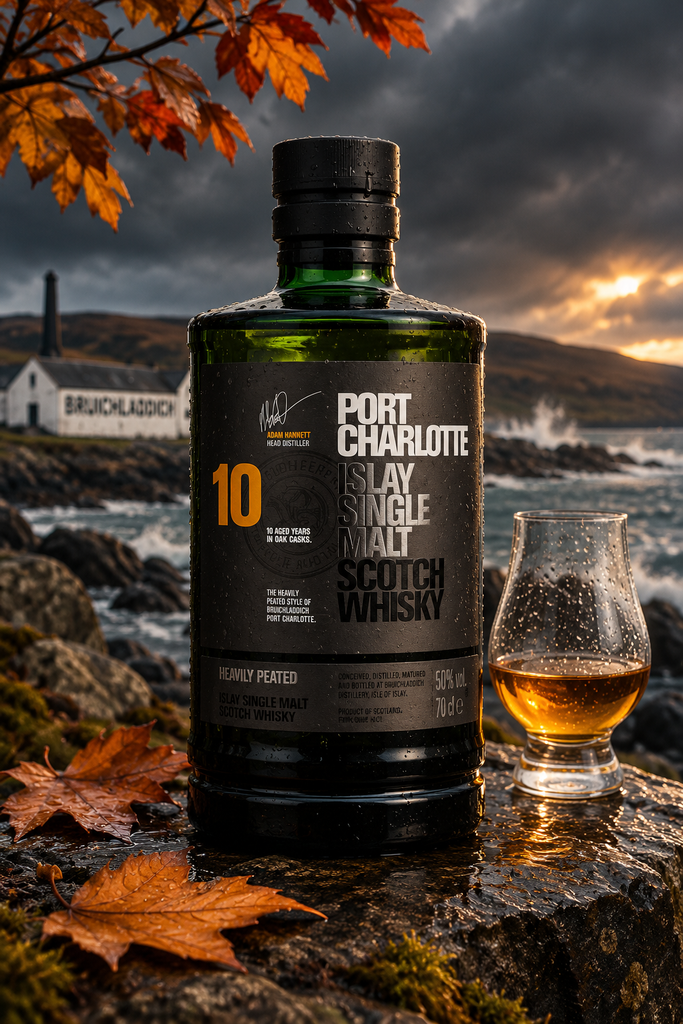
3. Port Charlotte 10 Year Old — Modern Islay Done Right
There’s something rather wonderful about Port Charlotte 10. It manages to be thoroughly modern in its philosophy while delivering everything I want from a traditional peated Islay single malt.
The barley is peated to a specification of 40 PPM, placing it firmly in heavily peated territory. Interestingly, Bruichladdich explains that its Port Charlotte range explores how barley provenance, cask maturation, and time influence heavily peated whisky. It’s a philosophy that I think comes through beautifully in the 10 Year Old.
Bottled at 50% ABV, without chill filtration or added colouring, Port Charlotte 10 has an incredibly satisfying texture. The smoke is immediately noticeable, but it never completely dominates. Instead, it shares the stage with lemon zest, vanilla, honey, malted barley, and a lovely coastal freshness. There’s a slightly farmyard-like earthiness underneath, accompanied by toasted oak and a gentle mineral quality.
The cask recipe, combining predominantly first-fill American whiskey casks with second-fill American whiskey and second-fill French wine casks, adds complexity without overwhelming the spirit’s character.
What I admire most about Port Charlotte 10 is its balance. It’s heavily peated, certainly, but it also has an elegance and clarity that make it remarkably approachable. It never feels like the distillery is trying to impress you simply by throwing more smoke into the glass.
For me, it’s one of the strongest examples of what modern Islay whisky can achieve, particularly at a price that remains accessible to most enthusiasts.
My verdict: Beautifully composed, wonderfully textured, and proof that heavily peated whisky can be both powerful and elegant.
4. Ardbeg Corryvreckan — A Storm in a Whisky Glass
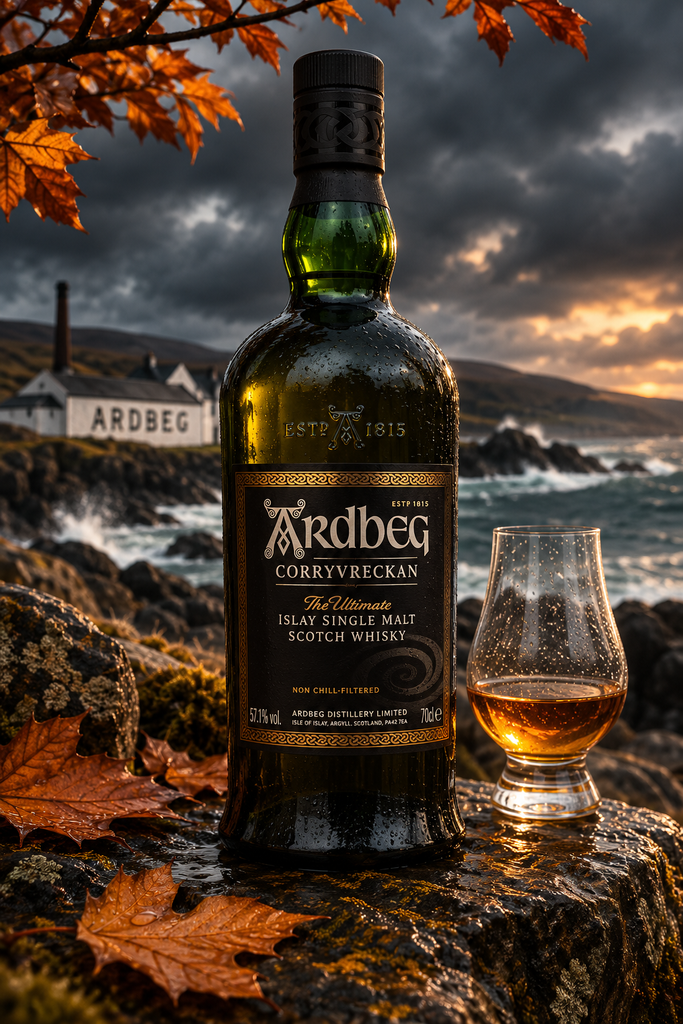
If Uigeadail is Ardbeg’s rich, sherried embrace, Corryvreckan is the moment the weather turns nasty and someone decides to head outside anyway.
Named after the famous whirlpool between Jura and Scarba, Corryvreckan is an appropriately turbulent whisky. Bottled at 57.1% ABV, it offers a noticeably different experience from Uigeadail, with the emphasis shifting towards peppery spice, dark fruit, espresso, and an almost muscular style of peat smoke.
The nose is fascinating, combining intense smoke with black pepper, dark chocolate, citrus, and hints of tar. On the palate, there’s an explosion of flavour: roasted coffee beans, liquorice, pepper, dark berries, and powerful earthy smoke. A subtle sweetness runs through the experience, but this is certainly not a whisky that prioritises easy drinking.
Corryvreckan’s maturation recipe includes French oak influences, helping contribute to its distinctive spicy, structured personality. It’s a whisky with an enormous amount of character, and one that rewards patience. Give it some time in the glass, perhaps add a few drops of water, and you’ll discover that there’s considerably more happening here than brute force alone.
I’ve always enjoyed how different Corryvreckan feels from Uigeadail despite both being unmistakably Ardbeg. Where Uigeadail offers warmth and richness, Corryvreckan brings intensity, tension, and an almost restless energy.
My verdict: Dark, spicy, powerful, and gloriously unruly. Not necessarily the bottle I’d recommend to a peat beginner, but an absolute treat for experienced smoke lovers.
5. Lagavulin 16 Year Old — The Timeless Islay Classic
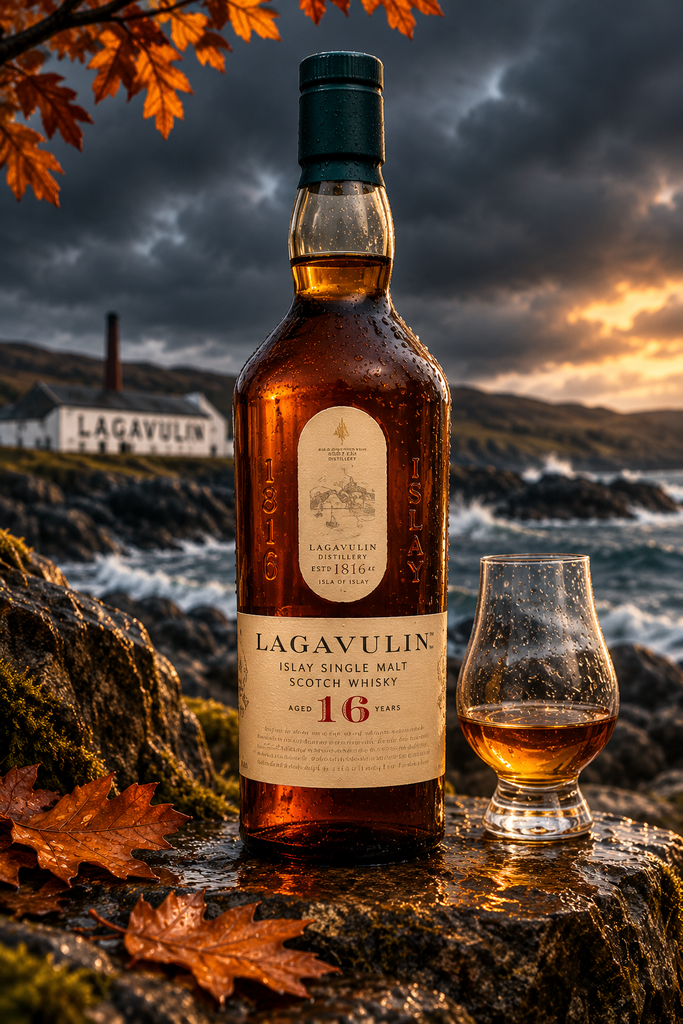
There are certain whiskies that have become so familiar that it’s easy to forget just how good they actually are. Lagavulin 16 is one of them.
For many enthusiasts, myself included, Lagavulin 16 has played an important role in developing an appreciation for peated whisky. It’s one of those bottles that seems to embody the romantic image of Islay: dark warehouses, crashing waves, smoky fires, and whisky slowly maturing in oak casks.
At 43% ABV, Lagavulin 16 is considerably gentler in strength than most of the bottles occupying the top positions on this list. But what it lacks in alcoholic intensity, it makes up for with maturity, balance, and an unmistakably elegant personality.
The nose combines rich peat smoke with seaweed, dried fruits, leather, and subtle sherry sweetness. On the palate, there’s a beautifully integrated combination of smoky malt, oak, dark chocolate, coastal saltiness, and warming spices. The finish is long, dry, and gently smoky, with that characteristic Lagavulin combination of elegance and depth.
Would I love to see it bottled at 46% or even 48%? Absolutely. But I also recognise that part of Lagavulin 16’s charm lies in its accessibility. It delivers a mature, complex Islay experience without demanding that every sip becomes an endurance test.
It’s a classic for a reason, and while newer releases and higher-strength expressions occasionally steal the spotlight, I keep finding myself returning to this old favourite.
My verdict: An enduring benchmark for mature, peated Islay whisky. Elegant, complex, and deserving of its legendary reputation.
6. Kilchoman Machir Bay — A Brilliantly Spirited Young Islay
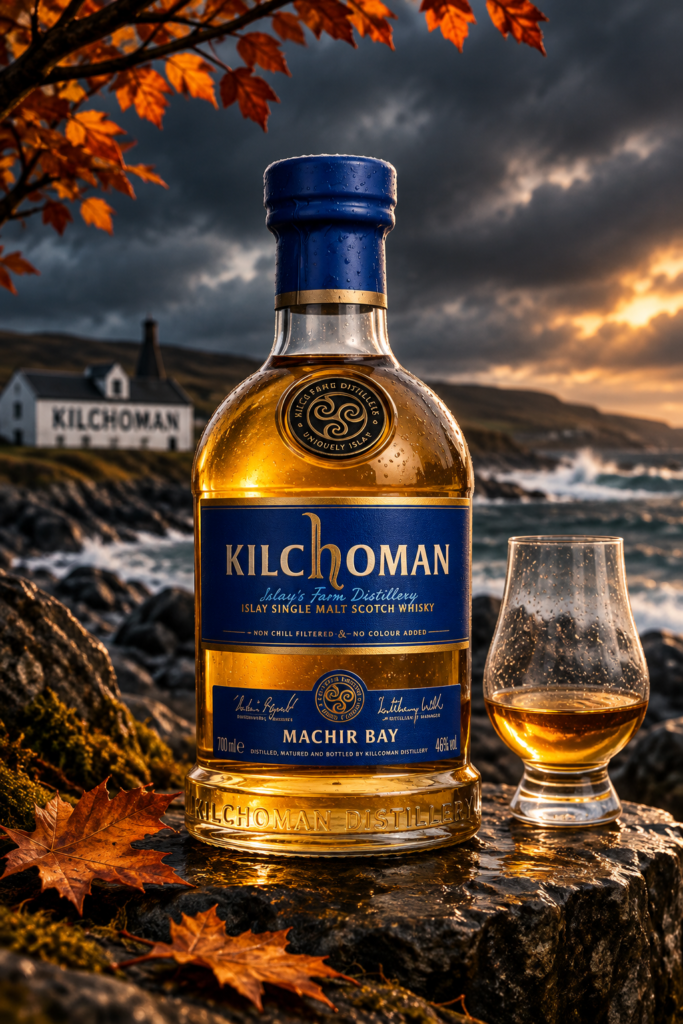
Kilchoman may be one of Islay’s younger distilleries, having started production in 2005, but it has long since established itself as a serious contender among the island’s whisky producers.
Machir Bay, named after the spectacular beach on Islay’s western coast, is one of the distillery’s signature expressions and a wonderful demonstration of how youthful peated whisky can shine when the spirit itself has enough character.
Unlike many older Islay malts, Machir Bay doesn’t rely on decades of maturation to deliver complexity. Instead, its character comes from a lively combination of bright citrus, sweet malt, coastal freshness, and vibrant peat smoke. The maturation is predominantly in bourbon barrels, with a smaller contribution from oloroso sherry casks, providing a touch of additional richness without obscuring the distillate.
Bottled at 46% ABV, it has a freshness that I find particularly appealing. There’s lemon peel, vanilla, green apple, and a lovely cereal sweetness beneath the smoke, while the palate introduces toasted oak, black pepper, and a pleasantly ashy finish.
What makes Machir Bay special is its energy. It’s youthful without feeling immature, smoky without becoming one-dimensional, and remarkably expressive for a whisky that generally sits towards the more affordable end of the Islay spectrum.
It’s also an excellent reminder that age statements aren’t everything. Give me a well-made, characterful young whisky over a tired, over-oaked older expression any day of the week.
My verdict: Fresh, lively, beautifully smoky, and one of the most enjoyable everyday Islay whiskies available.
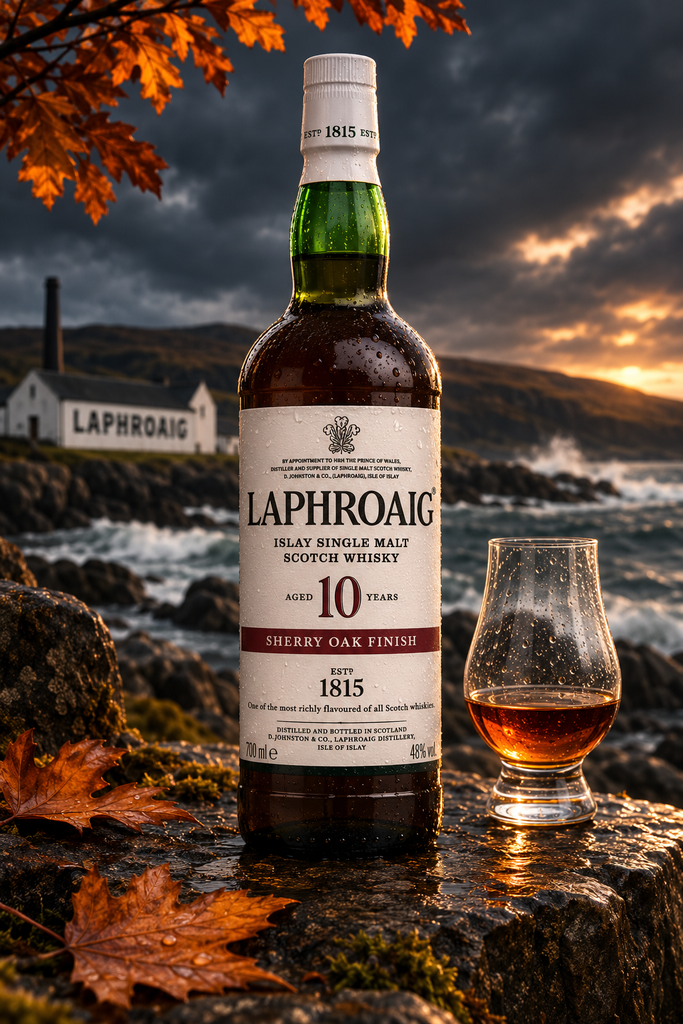
7. Laphroaig 10 Year Old Sherry Oak — A Sweeter Side of the Beast
Laphroaig and sherry casks can be an absolutely magnificent combination, and the 10 Year Old Sherry Oak demonstrates precisely why.
The classic Laphroaig distillery character is still very much present. There’s no mistaking that distinctive medicinal peat smoke, with its antiseptic aromas, coastal brine, and earthy intensity. But the influence of oloroso sherry-seasoned oak introduces an entirely different dimension, softening some of the sharper edges while adding richness and sweetness.
Bottled at 48% ABV, Laphroaig 10 Sherry Oak offers a satisfying balance between strength and drinkability. Expect dried fruits, dark chocolate, toasted nuts, and warming spices layered over the familiar Laphroaig smoke. There’s something particularly appealing about the contrast between those sweeter flavours and the whisky’s unmistakably medicinal character.
I find this expression especially enjoyable when the weather turns colder. The combination of dark fruit, rich oak, and smoky warmth makes it feel almost tailor-made for an autumn evening.
Compared with Ardbeg Uigeadail, the sherry influence feels different. Where Uigeadail delivers an enveloping sweetness, Laphroaig retains more of its medicinal sharpness, creating a fascinating interplay between contrasting flavours.
It doesn’t quite dethrone the 10 Year Old Cask Strength for me, but then again, very few whiskies do.
My verdict: A wonderfully rich interpretation of Laphroaig’s unmistakable character, particularly appealing to enthusiasts who enjoy both medicinal peat and sherry-cask sweetness.
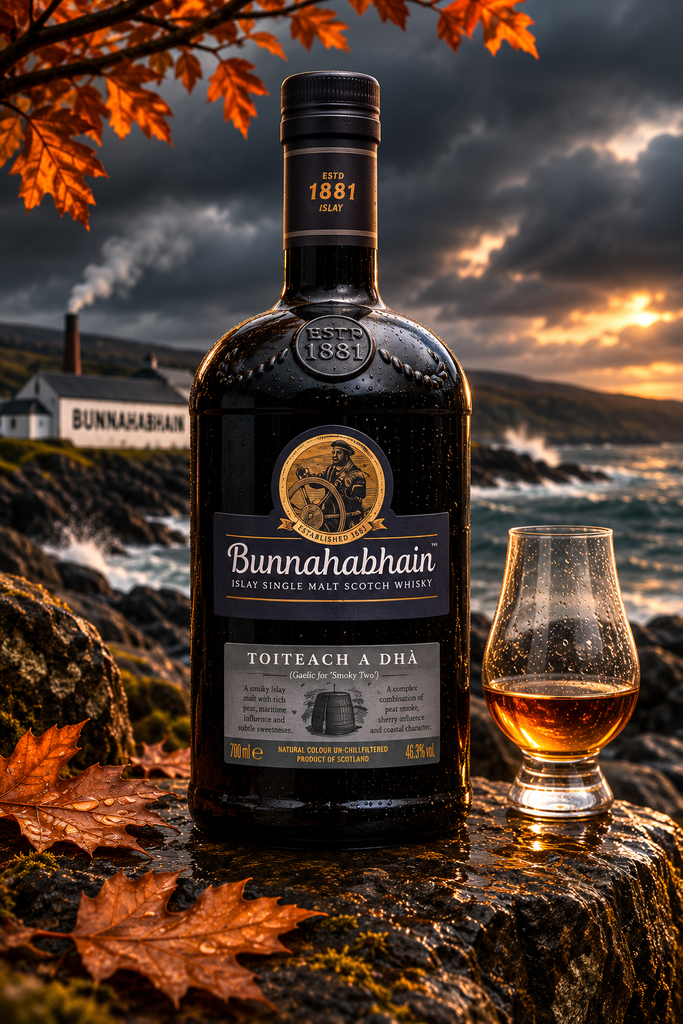
8. Bunnahabhain Toiteach a Dhà — The Smoky Side of Bunnahabhain
When most people think of Bunnahabhain, they probably picture the distillery’s wonderfully rich, predominantly unpeated single malts. And understandably so. Bunnahabhain 12 is a tremendous whisky in its own right, while the older expressions can be genuinely spectacular.
But Bunnahabhain also knows a thing or two about peat.
Toiteach a Dhà, meaning ‘Smoky Two’ in Gaelic, is the successor to the original Toiteach and offers a fascinating alternative to the more familiar styles of Islay smoke. Bottled at 46.3% ABV, it combines peated Bunnahabhain spirit with bourbon and sherry-cask influences, resulting in a whisky that feels distinct from its neighbours on the island.
The nose introduces earthy smoke, sweet malt, citrus, and a touch of dried fruit. On the palate, there’s a pleasing combination of toasted nuts, pepper, caramel, and gently medicinal peat, with the sherry influence adding depth without becoming dominant.
What I enjoy about Toiteach a Dhà is that it doesn’t attempt to compete with Laphroaig or Ardbeg on sheer intensity. Its smoke feels softer, more integrated, and somewhat more restrained. There’s a lovely underlying maltiness, too, reminding you that Bunnahabhain’s distillery character remains important even when peat enters the equation.
It’s perhaps one of the less obvious choices on this list, but that’s part of its appeal. For someone who already knows the island’s big smoky names and wants to explore something a little different, this is an excellent place to start.
My verdict: An underrated peated Islay malt with a lovely balance of earthy smoke, sherry sweetness, and unmistakable Bunnahabhain character.
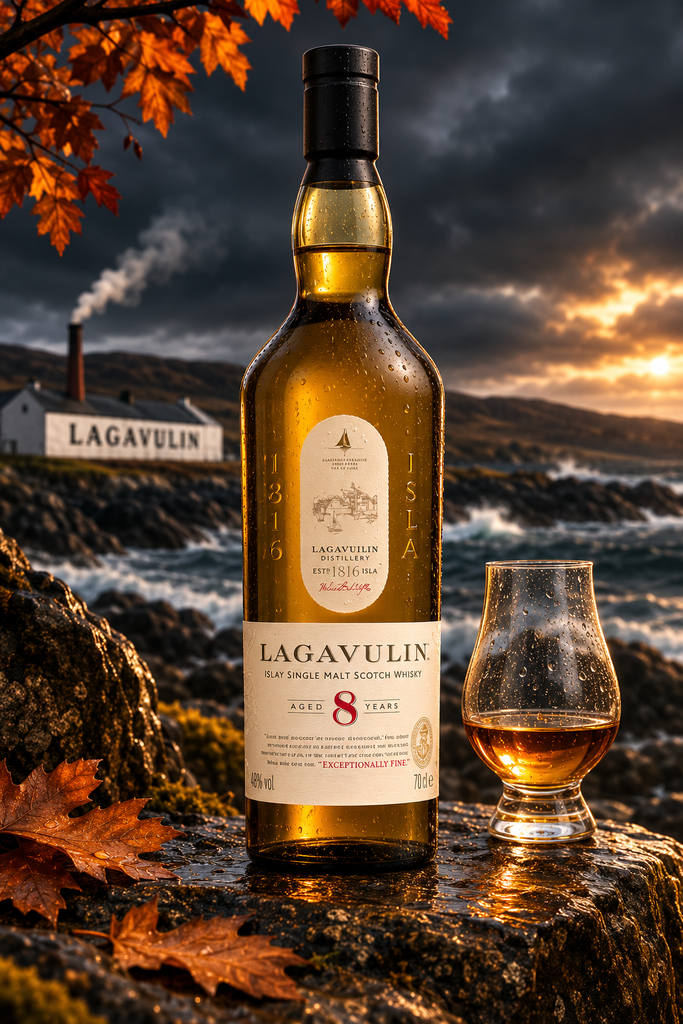
9. Lagavulin 8 Year Old — Young, Feisty, and Full of Character
Lagavulin 8 originally appeared in 2016 as part of the distillery’s 200th anniversary celebrations, and its reception was enthusiastic enough for it to become a permanent addition to the core range.
And I’m very glad it did.
While Lagavulin 16 is celebrated for its maturity and elegant integration of flavours, the 8 Year Old takes a decidedly different approach. Bottled at 48% ABV, it places the distillery’s youthful spirit character front and centre, delivering a brighter, more energetic interpretation of Lagavulin’s famous peat smoke.
The nose offers fresh lemon, sweet malt, sea spray, and a clean, assertive smokiness. On the palate, there’s plenty of black pepper, citrus zest, toasted cereals, and earthy peat, with a slightly salty, mineral quality that keeps things interesting.
What I particularly appreciate is how little this whisky tries to disguise its youth. Rather than leaning heavily on rich cask influences, it allows the distillate to do much of the talking. The result is a whisky that feels direct, expressive, and surprisingly complex.
In fact, there are occasions when I prefer its liveliness to the more polished 16 Year Old. Not necessarily because it’s a better whisky, but because it offers something different: a clearer view of Lagavulin’s distillery character without quite as much oak influence.
It also tends to be considerably more affordable than its older sibling, making it a particularly attractive option for anyone looking to explore Lagavulin without spending too much.
My verdict: A wonderfully spirited young Islay malt that proves Lagavulin doesn’t need sixteen years in oak to deliver an exceptional smoky experience.
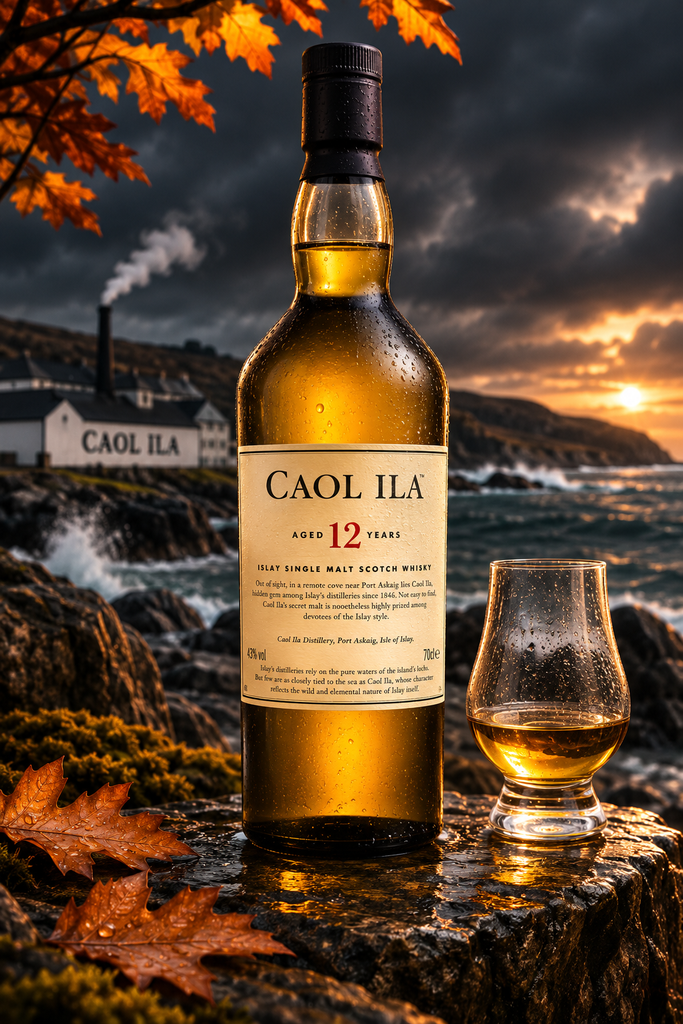
10. Caol Ila 12 Year Old — The Quietly Brilliant All-Rounder
Some whiskies demand attention from the moment you open the bottle. Others gradually win you over through their balance, consistency, and sheer drinkability.
Caol Ila 12 belongs firmly in the second category.
Located on Islay’s northeastern coast, overlooking the Sound of Islay towards Jura, Caol Ila produces a style of peated whisky that often feels noticeably cleaner and more delicate than the powerful southern Islay malts.
The 12 Year Old, bottled at 43% ABV, is an excellent introduction to that distinctive house style. The nose offers gentle peat smoke, fresh citrus, green apple, and subtle coastal aromas. On the palate, there’s a lovely combination of sweet malt, lemon zest, soft vanilla, and a slightly oily maritime character, followed by a clean, lingering smoky finish.
It’s not as intense as Laphroaig, as rich as Uigeadail, or as muscular as Corryvreckan. But that’s precisely why it deserves a place on this list.
Caol Ila 12 is the sort of whisky I can pour almost regardless of the occasion. It doesn’t demand a special moment, a particular mood, or an hour of careful contemplation. It’s simply a beautifully balanced, dependable peated single malt that delivers far more enjoyment than its relatively modest price might suggest.
And while Caol Ila’s importance to blended Scotch whisky sometimes overshadows its single malt expressions, I think the 12 Year Old deserves considerably more recognition.
My verdict: Elegant, approachable, gently maritime, and consistently enjoyable. A fitting reminder that great peated whisky doesn’t always need to shout.
So, Which Peated Islay Whisky Should You Buy?
Trying to narrow down the best peated Islay whiskies to just ten bottles was never going to be easy. If there’s one thing I hope this list demonstrates, it’s that Islay whisky is far more diverse than its smoky reputation might suggest. Even within this relatively small selection, we’ve encountered everything from the medicinal intensity of Laphroaig to the rich sherry-driven sweetness of Uigeadail, the elegant balance of Port Charlotte, and the delicate coastal character of Caol Ila.
If you’re relatively new to peated whisky, I’d probably suggest starting with Caol Ila 12 or Kilchoman Machir Bay. Both offer plenty of smoky character without becoming overwhelming. Port Charlotte 10 is another excellent choice, particularly if you’re looking for something with a little more body and intensity.
For those who already know they love peat, Ardbeg Uigeadail is an almost irresistible recommendation, especially if you enjoy sherry-cask maturation. Corryvreckan, meanwhile, is the bottle I’d reach for when I want something darker, spicier, and considerably more demanding.
And if you ask me which bottle I’d choose for myself?
Well, there’s a reason Laphroaig 10 Cask Strength occupies the top spot.
But perhaps the nicest thing about putting together a list like this is realising that there’s no single correct answer. Whisky is wonderfully subjective, and what appeals to me might be entirely different from what makes your perfect autumn dram. Some people love that medicinal, iodine-like intensity, while others prefer sweeter, fruitier, or more gently smoky expressions.
As I sit here writing this, the skies outside are grey, the rain looks unlikely to stop anytime soon, and the trees are rapidly losing their leaves. The whisky room is only a short walk away, and I suspect I know exactly which shelf I’ll be visiting this evening.
Now I’m curious: which peated Islay whisky would make your personal top ten? And more importantly, which bottle have I criminally overlooked?
Slàinte mhath!
DRAM1 encourages responsible enjoyment of whisky. Drink responsibly and only if you’re of legal drinking age.