Ardnamurchan Tokaji Cask Release Review – How Sweet Is Too Sweet?
Some samples arrive with a little more expectation attached to them than others. This Ardnamurchan Tokaji Cask Release came from my dear friend Peter Linting, who also happens to be my fellow founder of Still & Story, and considering the amount of whisky that tends to pass between us, I’ve learned that something appearing in a sample bottle usually means he thinks it is worth my time. In this case, he didn’t need much convincing. Ardnamurchan has become one of those distilleries I’m almost always interested in trying, and putting their spirit into Tokaji casks sounded strange enough to immediately get my attention.
I’ve had quite a few Ardnamurchans by now, and part of the reason I keep coming back to them is that there’s usually plenty of distillery character left underneath whatever they decide to do with the wood. There’s malt, texture and a slightly rugged quality to the spirit that makes it interesting even before you start throwing more adventurous casks at it. Some of my favourite releases have actually been the ones where the cask was allowed to contribute rather than take over, which is probably worth remembering before I start talking about this particular bottle.
Because Tokaji isn’t exactly a shy choice.
Tokaji comes from Hungary and is best known for its sweet wines, particularly Tokaji Aszú, made using grapes affected by noble rot. The grapes lose water and concentrate their sugars, acids and flavours, producing wines that can be enormously rich in honey, apricot, citrus and dried fruit while retaining enough acidity to stop the whole thing collapsing into syrup. That combination sounds rather promising for whisky maturation, although sweet-wine casks also have an impressive ability to completely bulldoze a delicate spirit when someone gets a little too enthusiastic with them.
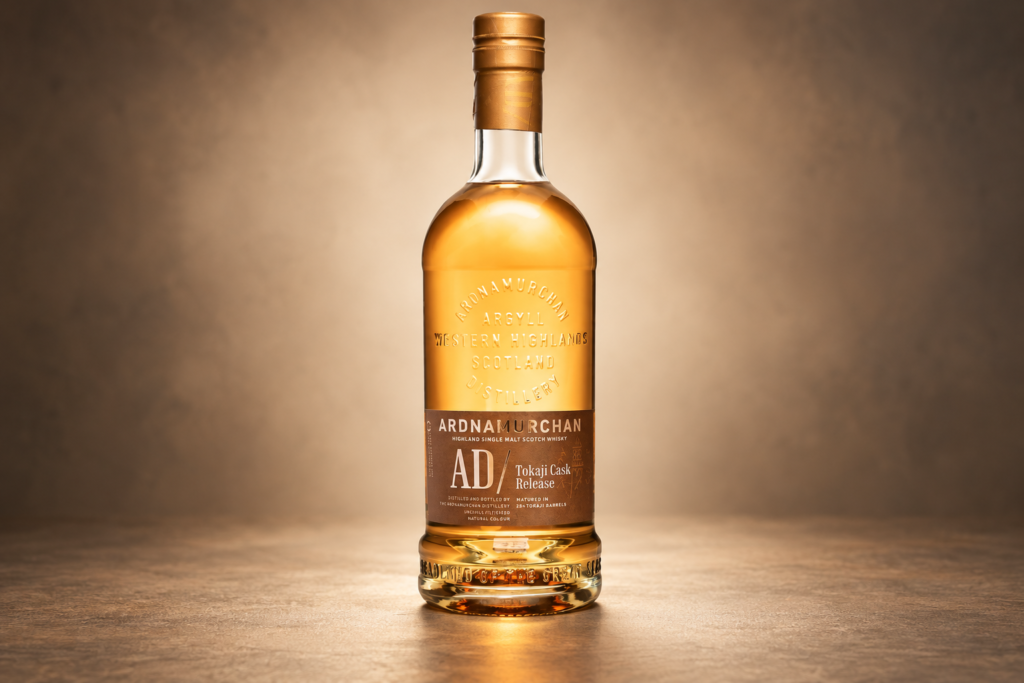
For this 2026 Ardnamurchan Tokaji Cask Release, 28 bourbon barrels of unpeated Ardnamurchan spirit were transferred into Tokaji casks for finishing, before two additional bourbon barrels were added to the final vatting. The result was bottled at 52% ABV, natural colour and without chill filtration.
On paper, I like quite a lot about that. Ardnamurchan, unpeated spirit, a fairly serious bottling strength and an unusual wine cask are more than enough reasons for me to pour a glass.
Although after smelling it, I suspect somebody in Hungary may have left the door to the sweet shop open.
Listen to the review:
Tasting Notes: Ardnamurchan Tokaji Cask Release
Stats
- Distillery: Ardnamurchan
- Type: Highland Single Malt Scotch Whisky
- Age: NAS
- ABV: 52%
- Cask Type: Bourbon & Tokaji Wine Casks
- Country: Scotland
- Flavour Profile: Dessert Delight
Tokaji is an interesting choice for Ardnamurchan because there isn’t any peat here to provide an obvious counterweight to all that wine-derived sweetness. This release uses entirely unpeated spirit, so the malt, spice and cereal character of Ardnamurchan has to do most of the work if the Tokaji starts getting particularly loud.
And it gets loud remarkably quickly.
Nose
Candied orange peel practically jumps out of the glass, followed by maraschino cherries, cotton candy and an enormous amount of honey. Saying that the nose is sweet would be something of an understatement. There’s an almost syrupy quality to it initially, with the orange and cherry pushing it firmly towards confectionery, although thankfully it doesn’t stay quite that simple once it has been sitting in the glass for a few minutes.
The malt starts coming through underneath all that sweetness, and this is where I begin recognising more of the Ardnamurchan I was hoping to find. Freshly malted barley appears first, followed by warm bread with plenty of butter melting into it. There’s something slightly doughy as well, somewhere between bread straight from the oven and pancake batter, before maple syrup arrives and pours itself all over the pancakes just in case there was any danger of the whisky not being sweet enough already.
I particularly like those cereal notes because they stop the Tokaji from completely taking over. The freshly malted barley has a slightly earthy quality that works surprisingly well with the candied fruit, while the bread and butter give the nose some weight underneath the honey. There’s also a faint touch of sulphur hiding right at the back. It never develops into anything I find unpleasant, but every now and then there’s a little struck-match funk between the fruit and malt that adds another edge to an otherwise extremely polished and sweet nose.
It is undeniably expressive and there’s plenty happening, but I keep wanting something sharper to cut through it. A little more citrus acidity, perhaps, or something mineral to push back against all that honey and candy. Instead, every road seems to eventually lead back towards sweetness.
Palate
The first sip is considerably less sweet than the nose had me expecting, which comes as something of a relief. Candied orange peel is still there and honey follows almost immediately, but the sweetness becomes darker and heavier as molasses starts appearing underneath it. More importantly, there’s suddenly a substantial amount of spice pushing in from the other direction.
Crushed black and white peppercorns arrive first, with enough heat to immediately pull my attention away from the honey. There’s a little Sichuan pepper as well, bringing that peculiar combination of citrus and tingling spice, and it changes the whisky considerably from what I thought I was going to get after nosing it. The Tokaji is still easy to find, but it no longer has the whole stage to itself.
Then the herbal side starts to develop. Fennel is the most obvious one for me, followed by cardamom and nutmeg, with the combination occasionally making me think of the contents of a spice cupboard after somebody has knocked several jars over at once. The cardamom works particularly well with the orange, while the fennel brings a slightly savoury, aniseed-like quality that I desperately wanted after all the sweetness on the nose. There’s enough going on here that I keep moving between honey, citrus, pepper and herbs rather than settling on one dominant flavour.
The malt makes another appearance as well, although it is considerably quieter than it was on the nose. This time it reminds me more of porridge, soft and creamy rather than freshly malted barley, and I wish there were slightly more of it. Whenever that cereal character appears, the whisky feels considerably more balanced, but the Tokaji never allows it to stay at the front for particularly long.
Still, the palate is easily more interesting to me than the nose suggested it might be. It remains undeniably sweet, but the black pepper, Sichuan pepper, fennel and cardamom give it enough resistance that I’m no longer wondering whether I accidentally poured dessert into my Glencairn.
Finish
There are some tannins waiting in the finish, but thankfully they remain restrained enough that I don’t really mind them. There’s a gentle drying sensation around the sides of the mouth rather than the aggressive black-tea astringency I sometimes find with heavily wine-influenced whisky, and the sweetness finally starts backing away enough for some different flavours to appear.
Liquorice is the big one. Honey liquorice appears first, which feels entirely appropriate considering everything that came before it, but then things become considerably more Dutch. Salmiak starts creeping in, followed by something that reminds me very specifically of Wybertjes. That slightly medicinal, herbal black-liquorice character works surprisingly well here, particularly because it brings a little bitterness and savouriness to the remaining honey.
There’s still some citrus hanging around underneath it, while cloves and cinnamon slowly build alongside the liquorice. Combined with the remaining honey, the whole thing starts tasting remarkably close to the aftermath of a hot toddy. Honey, lemon, cloves, cinnamon and warmth are all there; apparently all I’m missing is the mug.
The finish is medium to long, with the liquorice, cinnamon and gentle tannins lasting considerably longer than the sweeter fruit. I actually prefer that final stage to the first few seconds of the nose. The Tokaji finally loosens its grip a little and leaves the spices and darker flavours behind.
I can happily live with that.
Food Pairing
With this much sweetness already in the Ardnamurchan Tokaji Cask Release, I wouldn’t put a big dessert next to it and add even more. I’d rather go in the opposite direction and give it something salty enough to push back against the honey and candied fruit.
A strong blue cheese would be my first choice. Something like Roquefort has enough salt, funk and acidity to stand up to the Tokaji influence, while that creamy richness should work nicely with the honey, orange and softer malt notes. Sweet wine and blue cheese are hardly strangers to one another anyway, so I’m not exactly breaking new culinary ground here.
Although I’m also wondering what would happen with some good pâté, toasted brioche and just a tiny bit of bitter orange marmalade. The pâté should pull the whisky in a more savoury direction, while the marmalade has enough in common with all that candied orange to tie everything back together.
Just don’t add too much marmalade.
This whisky has brought plenty of sweetness of its own.
Who Is the Ardnamurchan Tokaji Cask Release For?
If you like sweet wine cask finishes, this is probably one of the more unusual Ardnamurchans worth seeking out. There’s no shortage of Tokaji influence here, with candied orange, cherries, honey and molasses appearing throughout the whisky, but there’s enough pepper, cardamom, fennel and liquorice underneath to make it considerably more interesting than simply calling it sweet would suggest.
If, like me, you tend to prefer Ardnamurchan when the distillate gets an equal vote in whatever happens inside the cask, this might be a slightly harder sell. The distillery character certainly hasn’t disappeared, and the malted barley, warm bread and porridge are some of the flavours I enjoy most here, but I’ve had several Ardnamurchans where I think the balance between spirit and oak was considerably better.
Ultimately, there’s also the simple question of how much sweetness you enjoy in your whisky. If candied orange, honey and maraschino cherries sound like an excellent starting point, you can probably ignore most of my complaining.
Verdict
The Ardnamurchan Tokaji Cask Release is one of those whiskies where my opinion changed several times while drinking it. The nose initially had me worried that the Tokaji had simply taken over, because candied orange, maraschino cherries, cotton candy, honey and maple syrup aren’t exactly subtle. Thankfully, the malted barley and warm buttered bread underneath give it more depth, even if I would have liked those flavours to fight their way further towards the front.
The palate is where things become considerably more interesting. Crushed peppercorns, Sichuan pepper, fennel, cardamom and nutmeg give all that sweetness something to push against, before the finish moves into liquorice, salmiak, citrus, cloves and cinnamon. That progression is probably the biggest surprise here; what initially threatens to become a rather straightforward exercise in sweetness ends up considerably spicier, darker and more herbal than the nose suggests.
Still, I don’t think this is one of my favourite Ardnamurchans. I’ve tasted quite a few releases from the distillery that I suspect would topple this fairly easily in a blind tasting, simply because I prefer them when the balance leans a little further towards the spirit and a little less towards the cask. The Tokaji influence here is interesting and occasionally genuinely surprising, but for my taste it pushes the sweetness just a little too far.
I’m glad Peter sent me a sample, because this is exactly the sort of Ardnamurchan I wanted to try.
I’m equally glad he didn’t send me a case.
Final Thoughts
Ardnamurchan has reached the point where I approach its more experimental releases with fairly high expectations. That’s probably slightly unfair for a distillery that only started producing whisky in 2014, but it is also entirely their own fault. They have released enough very good whisky in a relatively short period that I’m no longer impressed simply because something has Ardnamurchan written on the label.
The Tokaji Cask Release certainly isn’t boring. The jump from cotton candy and maraschino cherries on the nose to black pepper, fennel and cardamom on the palate, followed by that liquorice-heavy finish, makes it far more interesting than the opening sweetness initially suggests. There is still enough Ardnamurchan underneath it to remind me why I like the distillery in the first place, but I find myself searching for those flashes of malt and cereal rather than the Tokaji.
For somebody with a bigger sweet tooth than mine, that equation could easily work the other way around. The Tokaji brings an enormous amount of flavour without turning the whisky into a completely anonymous wine-cask experiment, and at 52% there is enough weight and spice to stop it becoming completely soft.
For me, though, this sits firmly in the interesting-rather-than-essential corner of Ardnamurchan.
Put it blind next to some of the other Ardnamurchans I’ve tasted and I know which glass I’d probably reach for again.
It wouldn’t be the sweetest one.