Dubhghlas Peatsie Ruby Port Review – A Candied, Herbal and Smoky Dutch Whisky
It is Dubhghlas Week here on DRAM1, celebrating something I have been waiting quite a few years to finally write about: the first actual whiskies from my friends Cees and Laura at Dubhghlas Distillery.
Earlier this week I kicked things off with the Dubhghlas Distillery Spotlight followed by the Dubhghlas Peatsie Palo Cortado review, a whisky that impressed me enormously with just how much complexity these two engineers managed to squeeze out of a three-year-old spirit and a first-fill quarter cask. Now it is time for the second of their inaugural trio, and we are swapping dry Andalusian sherry for something considerably fruitier.
Meet Dubhghlas Peatsie Ruby Port.
On paper, there are plenty of similarities. It is once again a three-year-old peated Dutch single malt, matured in a first-fill quarter cask and bottled as a single cask at a gloriously unapologetic cask strength. Yet putting the two whiskies side by side quickly demonstrates why I love the approach Dubhghlas has taken with these first releases.
These aren’t three variations dressed up to create a range. They are three individual casks allowed to tell their own stories.
And the Ruby Port has a particularly peculiar story to tell.
Listen to the Dubhghlas Peatsie Ruby Port Review:
From Palo Cortado to Ruby Port
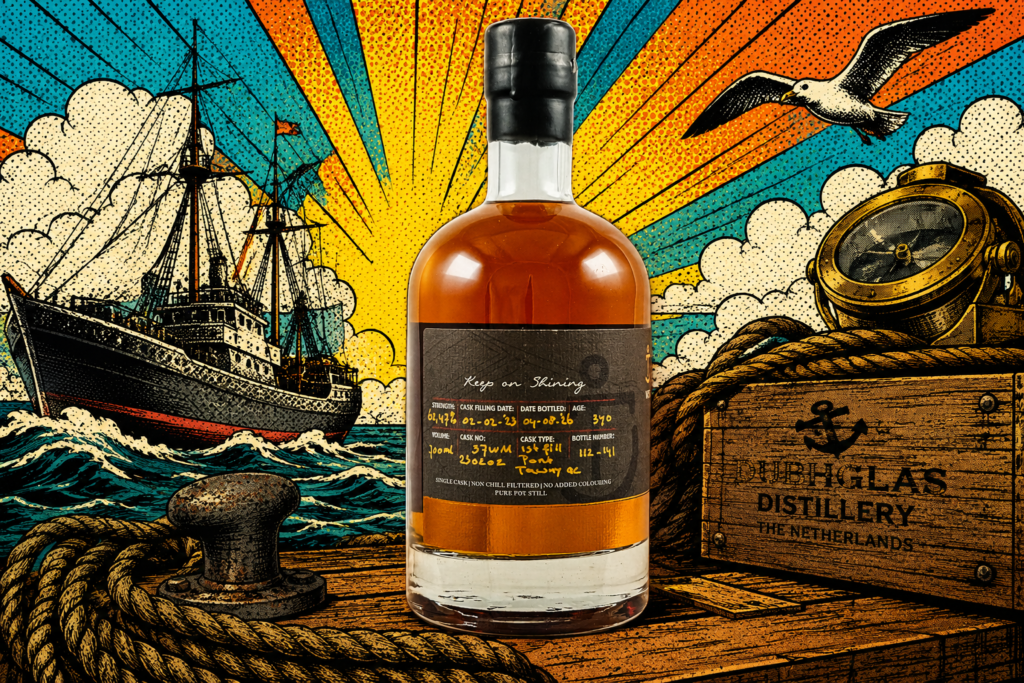
As discussed in my Dubhghlas Distillery Spotlight, Peatsie represents the moment years of experimentation finally became whisky. Cees and Laura had already allowed us to taste their spirit as new make, but August 2026 marked the arrival of the real thing: three inaugural Peatsie single casks matured respectively in Palo Cortado, Ruby Port and Tawny Port quarter casks.
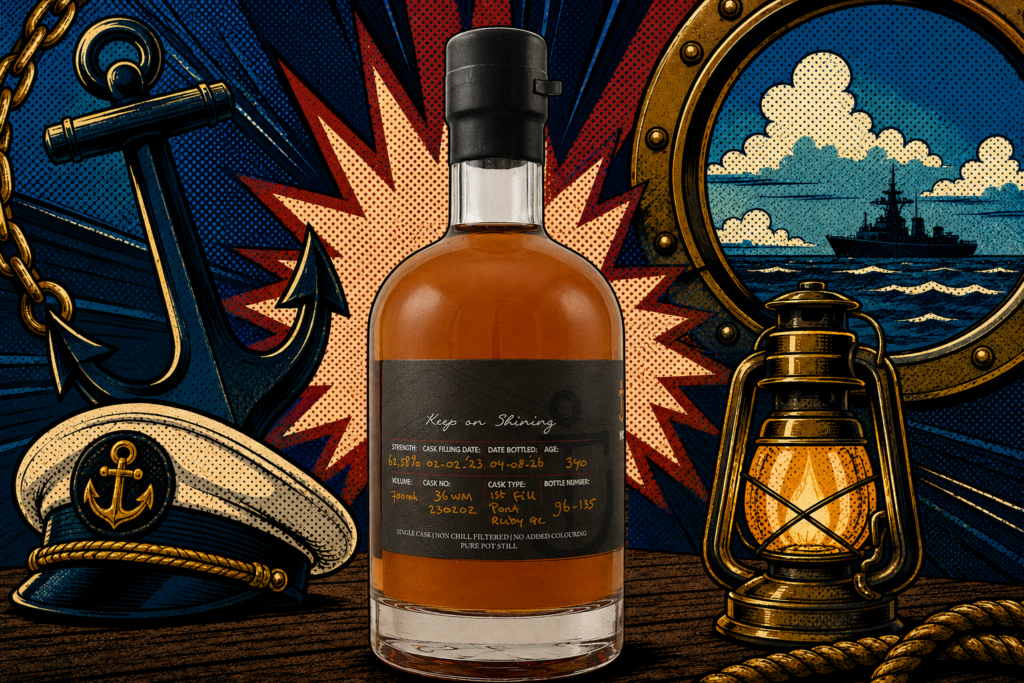
The Ruby Port and Tawny Port whiskies actually began life on the same day. This particular spirit was distilled on 2 February 2023 before spending just over three years in its first-fill Ruby Port quarter cask. It was eventually bottled on 4 August 2026 at its natural strength of 62.58% ABV, with cask #36WM2300202 yielding just 135 bottles.
Using a quarter cask is particularly significant when you are talking about such young whisky. The smaller volume creates greater interaction between spirit and wood, and when that wood previously held something as flavourful as Ruby Port, three years can leave a considerable fingerprint.
That certainly seems to have happened here.
What I find particularly interesting, however, is that the Port hasn’t simply made the whisky fruitier. Compared with the Palo Cortado, it feels like an entirely different side of the Peatsie spirit has been pulled to the surface.
Tasting Notes: Dubhghlas Peatsie Ruby Port
Stats
- Distillery: Dubhghlas Distillery
- Whisky: Peatsie Ruby Port
- Country: The Netherlands
- Age: 3 Years Old
- Vintage: 2023
- Cask: 1st Fill Ruby Port Quarter Cask
- Cask Number: 36WM2300202
- ABV: 62.58%
- Outturn: 135 Bottles
- Natural Colour: Yes
- Chill-filtered: No
- Flavour Profile: Dessert Delight
There is something rather wonderful about seeing 62.58% ABV printed on the label rather than a neat, consumer-friendly number. This is a genuine single-cask release presented at natural strength, and that means you are effectively handed the final part of the whisky-making process yourself. Drink it exactly as Cees and Laura bottled it or bring it down until you find your own sweet spot.
As it turns out, that freedom becomes particularly important with this whisky.
Nose
The peat immediately feels more restrained than it did on the Palo Cortado. It hasn’t disappeared by any stretch of the imagination, but rather than pushing itself forward it drifts around the fruit in delicate whiffs of brine, cured meats and a smouldering wood fire somewhere in the distance. And that gives the fruit plenty of room to shine. Ripe plums arrive first, followed by juicy nectarine, figs and strawberries. There is a luscious quality to it without becoming syrupy, and I really enjoy how those ripe fruits mingle with the savoury touches of smoke and cured meat. Sweetness and peat aren’t competing for attention here; they seem perfectly happy sharing the glass.
The maltiness I found so clearly in the Palo Cortado is considerably less pronounced as well. Where that whisky gave me a distinct bowl-of-porridge character, here I find little more than a faint suggestion of toasted bread underneath all that fruit. It makes the Ruby Port feel immediately softer and more fruit-driven on the nose, even if what follows on the palate is considerably less predictable.
Palate
Well, this takes a turn.
The fruit might dominate the nose, but the first thing that hits me on the palate is an unexpectedly herbal and spicy character. Nutmeg, cardamom and baking spices tumble into liquorice root before things become greener still. Fresh basil appears alongside fennel seed and mint, creating a fascinating herbal streak that I genuinely wasn’t expecting from the nose.
Then comes something wonderfully Dutch.
Wijnballen.
For anyone outside the Netherlands wondering what on earth I am talking about, a wijnbal is an old-school Dutch hard-boiled sweet, often found at fairs and traditional sweet shops. Despite the name, there isn’t actually wine involved; think large, intensely fruity, old-fashioned boiled candy.That is exactly what I am getting here. And once I’ve found it, the whole fruit profile suddenly seems to transform into sweets. Citrus candy reminds me of Napoleon sweets, while strawberry takes the form of those hard strawberry candies with their liquid centres. Plum and darker fruits linger underneath, but the overriding impression is unmistakably candied fruit.
I should stress that I mean that entirely as a compliment. There is something almost nostalgic about it. Meanwhile, Peatsie hasn’t forgotten the peat part of its name. The smoke becomes considerably more assertive than it was on the nose, bringing peppered roast beef, charred oak and crispy bacon bits into the mix. Fruit candy, fresh herbs, liquorice and bacon really shouldn’t make much sense together. Somehow, they do.
Finish
The finish is long, although this is also where the whisky loses me slightly. Mint, aniseed and liquorice root cling to the sides of the tongue while the oak begins to exert considerably more influence. There is a tannic dryness here that eventually becomes just a little too assertive for me at full strength.
Thankfully, the peat carries on beautifully through the middle of the palate. That earlier roasted-meat character gradually turns into something resembling seared brisket, leaving behind this wonderfully savoury, smoky trace that I really dig. And therein lies my problem with the finish: half of it is wonderful. The other half is fighting my tongue. A little water, however, changes that equation considerably.
Food Pairing
With the combination of candied fruit, Ruby Port influence, herbs and savoury peat, I would be tempted to lean into the whisky’s meatier side rather than pairing it with dessert.
Something like slow-cooked beef brisket with a slightly sweet glaze would be fantastic. The caramelised exterior and rich beef should pick up those seared-meat and crispy-bacon notes, while a little sweetness in the glaze could connect beautifully with the strawberry, plum and boiled-candy character.
Just don’t go too heavy on the sauce. There is enough happening in the glass already.
Who Is Dubhghlas Peatsie Ruby Port For?
First and foremost, this is one for whisky drinkers who enjoy exploring. If you want a perfectly polished, predictable whisky that tastes exactly the same every time you buy another bottle, a 135-bottle single cask from a tiny Dutch distillery probably isn’t where you should be looking. But if you enjoy young whisky with character, heavily active casks, cask-strength releases and the opportunity to play around with dilution yourself, there is plenty of fun to be had here.
It is also an interesting whisky for peat lovers who don’t necessarily want smoke to dominate everything else. There is plenty of peat, particularly once you start drinking it, but fruit, herbs, spice and cask influence are all given their own space. Most importantly, it tastes individual. With so much whisky in the world fighting to occupy broadly familiar flavour profiles, I will happily take something slightly weird over something perfectly ordinary.
Verdict
I strongly prefer the Peatsie Palo Cortado. I might as well get that out of the way. That whisky offered greater complexity to me and felt more complete from nose through finish. The Ruby Port isn’t quite operating on the same level, particularly because the tannins become too dominant towards the end when I drink it neat.
But that doesn’t make this anything less than a very well-made whisky.
In fact, the palate is probably the most surprising of the two so far. The transition from ripe fruit on the nose into herbs, old-fashioned fruit candy, liquorice, roast beef and bacon on the palate takes several unexpected turns, and I love a whisky capable of catching me off guard. My biggest criticism is the finish. At 62.58% ABV, that tannic edge becomes too aggressive for my tastes and begins masking some of the flavours I actually want to stick around.
Then I add water. And suddenly things click. The tannins retreat, the whisky relaxes and that lovely combination of fruit, herbs and savoury peat gets considerably more room to breathe. For my palate, somewhere around four parts Peatsie Ruby Port to one part water seems to hit a particularly satisfying balance. That brings it roughly towards the 50% ABV mark, and that is where I personally enjoy this whisky most. Of course, someone else may prefer it at 55%. Another drinker might love the sheer intensity at 62.58%. And that, ultimately, is one of the best arguments for what Dubhghlas is doing.
Final Thoughts
Two Peatsies down, and already I am getting a much clearer picture of what makes these inaugural releases interesting.
The Palo Cortado showed me complexity, malt, smoke and a remarkably mature character for its age. The Ruby Port takes the same basic concept and runs somewhere completely different with it: ripe fruit on the nose, an unexpectedly herbal palate, nostalgic boiled sweets, savoury peat and a fairly forceful tannic finish. It isn’t quite as accomplished as the Palo Cortado for me, but in some ways it might actually be the more eccentric whisky. And I like eccentric.
More importantly, this bottle perfectly demonstrates why releasing these whiskies as single casks at cask strength was the right decision. Dubhghlas hasn’t decided for me what the Peatsie Ruby Port is supposed to taste like at 46%, 48% or 50%. Cees and Laura have given me what came from the cask and essentially said: you figure it out.
So I did.
Four parts whisky. One part water. Somewhere around 50% ABV.
That’s my Peatsie Ruby Port.
Yours might be completely different.
And isn’t that half the fun?