Following Hogshead Indie Since the Very Beginning
One of the things I enjoy most about writing these Indie Bottler Spotlights is discovering the stories behind the labels. More often than not, that means diving into a company’s history years after it has established itself, piecing together interviews, old releases and conversations with people who were there from the beginning.
Hogshead Indie is different.
It’s one of the very few independent bottlers I’ve been fortunate enough to follow almost from the moment the idea first started taking shape. Long before there was a bottle on a shelf, before anyone outside a small circle knew the name, I’d already spent an afternoon talking whisky with the man behind it. Looking back now, that gives this spotlight a perspective I rarely get to write from.
When I first met Toon van Rooij, Hogshead Indie didn’t exist. At least, not publicly. Our paths crossed during the Whisky Tasting Festival in Utrecht, where Toon was representing Spheric Spirits through Hogshead Imports. Ironically, I hardly spoke to him that day. I’d travelled there specifically to meet Benedict Skelton of Spheric Spirits, whose bottlings had already made a huge impression on me, so most of my attention ended up focused there. Only afterwards did I realise there was another story waiting to be told.
While preparing an interview about Spheric Spirits, I naturally started reading more about Hogshead Imports. What I’d assumed was simply an importer for one independent bottler turned out to be something much broader. Alongside Spheric Spirits, Toon had assembled a carefully curated portfolio featuring names such as Chapter 7, Hidden Spirits, Uncharted Whisky Co. and Ferg & Harris. Although every bottler had its own identity, they all seemed to share one thing: a focus on flavour rather than marketing. That intrigued me far more than the interview I’d originally planned.
A few weeks later we met at ‘t Zotte Lemke in Nijmegen, the historic café run at the time by Toon’s family. The conversation was supposed to revolve around Hogshead Imports, but, like most good whisky conversations, it quickly wandered in every possible direction. We talked about forgotten distilleries, refill casks, changing trends in Scotch whisky and why some independent bottlers seemed to understand a distillery’s character better than the distillery itself. Every topic eventually circled back to the same place: the whisky in the glass.
That afternoon also taught me something about Toon himself. He never spoke like somebody trying to sell me a bottle. There was no rehearsed sales pitch and no attempt to convince me that every release was somehow the next must-have whisky. Instead, he spoke with the enthusiasm of someone who genuinely loves discovering great casks and sharing them with other enthusiasts. It sounds like a subtle distinction, but I think it’s an important one. In an industry where storytelling and marketing increasingly dominate the conversation, genuine passion is surprisingly easy to recognise.
At that point, Hogshead Indie still wasn’t part of the discussion. Or so I thought. Not long after our interview, a message landed in my Instagram inbox containing a photograph of a bottle I’d never seen before. Dark green glass. A beautifully understated vintage-inspired label. No flashy artwork or elaborate branding, just a bottle that immediately felt different from much of what was appearing on shelves at the time. The accompanying message was simple. “Don’t tell anyone just yet.”
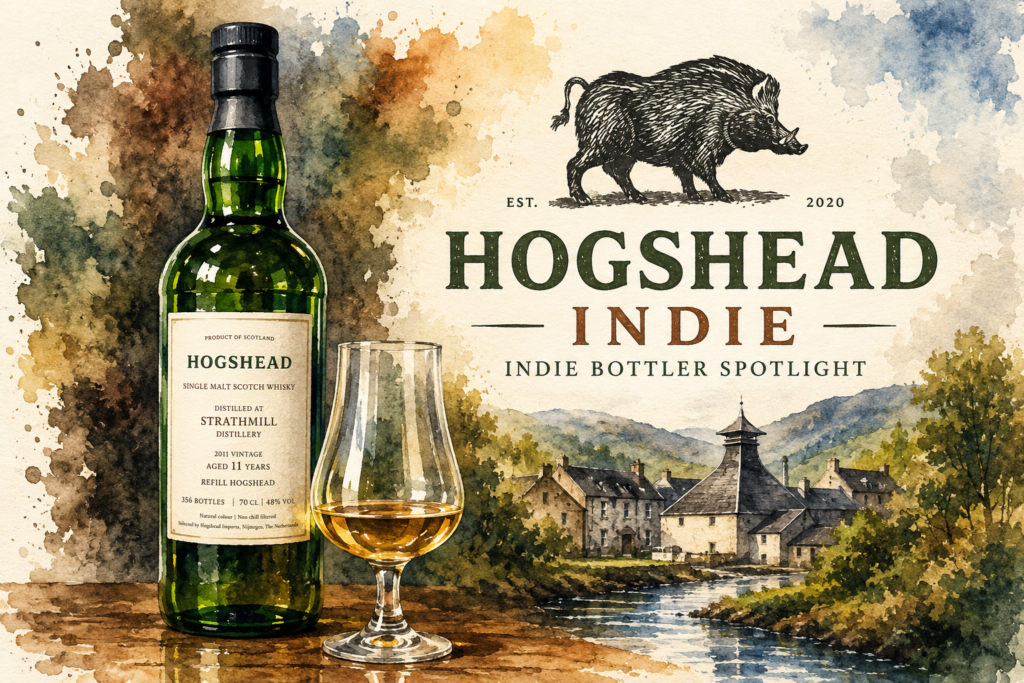
During our conversation, Toon had hinted that something exciting was in the works, but I hadn’t realised he was about to launch an independent bottler built entirely around his own philosophy of cask selection. A short while later I found myself back in Nijmegen, where the complete first Hogshead Indie release was waiting for me in neatly prepared sample bottles, together with a full bottle of the Strathmill 11 Year Old. That whisky would become the very first Hogshead Indie review ever published on DRAM1.
Looking back now, I couldn’t have asked for a better introduction. It wasn’t trying to impress through extravagant cask finishes or eye-catching presentation. Instead, it quietly trusted the spirit to do the talking. As more releases followed over the years, I realised that wasn’t simply the character of one bottle. It was the foundation on which the entire bottler had been built.
From Importer to Independent Bottler
By the time Hogshead Indie officially launched, Toon already had years of experience selecting and importing independent bottlers from across Europe. Working with so many different companies gave him something many new bottlers don’t have from the outset: a clear understanding of what genuinely makes one stand apart from another. It would have been easy to follow the trends dominating the whisky market. Release older whiskies. Chase increasingly active casks. Produce louder labels and bigger flavours. Instead, Hogshead Indie moved in almost the opposite direction. The focus wasn’t on creating whiskies that would generate the biggest headlines. It was on bottling whiskies people would actually want to drink.
That philosophy becomes apparent before you’ve even opened the bottle. The dark green glass and vintage-inspired labels deliberately evoke an earlier era of Scotch whisky, long before colourful illustrations and limited-edition packaging became the norm. The presentation is elegant without demanding attention, which feels entirely appropriate for a bottler whose emphasis has always been on what’s inside.
The same thinking continues with the cask selection. One of Hogshead Indie’s defining characteristics is its preference for refill casks whenever they allow the distillery character to shine most clearly. In today’s market, where heavily seasoned sherry casks and first-fill bourbon barrels often dominate conversations, that can almost feel like swimming against the current. Refill oak contributes less vanilla, less spice and fewer obvious wine influences, allowing the spirit itself to remain centre stage.
As someone who enjoys tasting distillery character as much as cask influence, that’s something I’ve always appreciated. The Strathmill 11 Year Old immediately demonstrated how expressive understated maturation can be. Later releases such as the Aultmore 14 reinforced exactly the same point. Neither whisky relied on overwhelming oak influence to make an impression. Instead, they celebrated what made those distilleries interesting in the first place.
That doesn’t mean Hogshead Indie follows rigid rules. One detail that particularly fascinated me during my conversations with Toon was his preference for bottling many releases at 48% ABV. It’s an unusual strength, sitting neatly between the familiar 46% and natural cask strength that dominate independent bottling. His explanation was refreshingly straightforward. Many whiskies simply taste their best there.
I’ll admit I was sceptical at first. Surely every whisky has its own ideal bottling strength? As it turns out, that’s exactly the point. When a whisky works better at cask strength, that’s how it gets bottled. The Ruadh Maor 11 Year Old, matured in a PX Solera cask, remained at 57.1% because reducing it simply made it less interesting. The alcohol percentage wasn’t chosen to fit a house style; it was chosen to suit the whisky.
That tells you almost everything you need to know about Hogshead Indie. Rather than forcing every release into the same mould, the philosophy adapts to whatever allows the spirit to show its best side. Natural colour and non-chill filtration fit naturally within that approach, not because they’re fashionable buzzwords, but because they help preserve flavour. It’s a surprisingly restrained philosophy in a whisky world that often rewards excess.
Over the years I’ve tasted fruity Speysiders, rich Mortlachs, elegant grain whiskies and smoky Islay malts from Hogshead Indie. They all taste completely different, yet they somehow feel connected. Not because they share the same flavour profile, but because every bottle feels selected according to the same simple principle. Let the distillery speak first. Only then should the cask join the conversation.
When the Cask Becomes Part of the Story
Reading the previous section, you could easily come away with the impression that Hogshead Indie only bottles refill casks and avoids more active maturation altogether. In reality, that couldn’t be further from the truth. What sets the bottler apart isn’t the type of cask it chooses, but the reason behind that choice.
Over the last decade we’ve seen an explosion of unusual finishes. Tequila barrels, mezcal casks, chestnut oak, maple syrup, IPA beer barrels and countless wine casks have all found their way into whisky. Some have produced genuinely brilliant drams, while others have felt like experiments that were perhaps more exciting on paper than in the glass. Hogshead Indie has largely avoided that trap by remaining remarkably selective. Whenever I’ve spoken to Toon, I’ve always had the feeling that every cask has to justify its existence. A finish isn’t added because it will look good on a label or generate excitement on social media. It’s there because it genuinely improves the whisky already sitting in the cask.That distinction matters.
I’ve tasted plenty of whiskies where a finish feels like it’s trying to compensate for spirit that lacked character in the first place. With Hogshead Indie, I rarely get that impression. Instead, the secondary maturation tends to feel like the final chapter of a story that was already worth telling. The Mortlach 9 Year Old is a good example. Mortlach has built its reputation on producing rich, muscular spirit, and that’s exactly what made the whisky so enjoyable. The cask added depth and complexity, but underneath it all there was never any doubt that I was drinking Mortlach.
The same was true of the Islay 13 Year Old, distilled at Ardbeg. Independent Ardbeg bottlings are always walking a fine line. Push the cask influence too far and you risk masking one of Scotland’s most recognisable distillery characters. Hold back too much and the whisky struggles to offer anything different from the official range. For me, Hogshead Indie struck that balance beautifully. The cask contributed another layer of flavour without ever competing with the maritime smoke and oily peat that make Ardbeg instantly recognisable.
Perhaps the most interesting part is that this philosophy isn’t nearly as modern as it first appears.When people hear phrases like old-school whisky, they often picture pale refill-cask malts with delicate oak influence. History tells a rather different story. Go back to the first half of the twentieth century and heavily sherried Scotch was anything but unusual. Many of the legendary bottles collectors chase today owed much of their character to active European oak and fortified wine casks.
Seen through that lens, bottlings matured in PX Solera, Ruby Port or Amontillado aren’t a break from tradition at all. They’re simply another way of respecting it. The difference is intent. The cask should never become the main attraction. It should support the whisky, not overwhelm it.
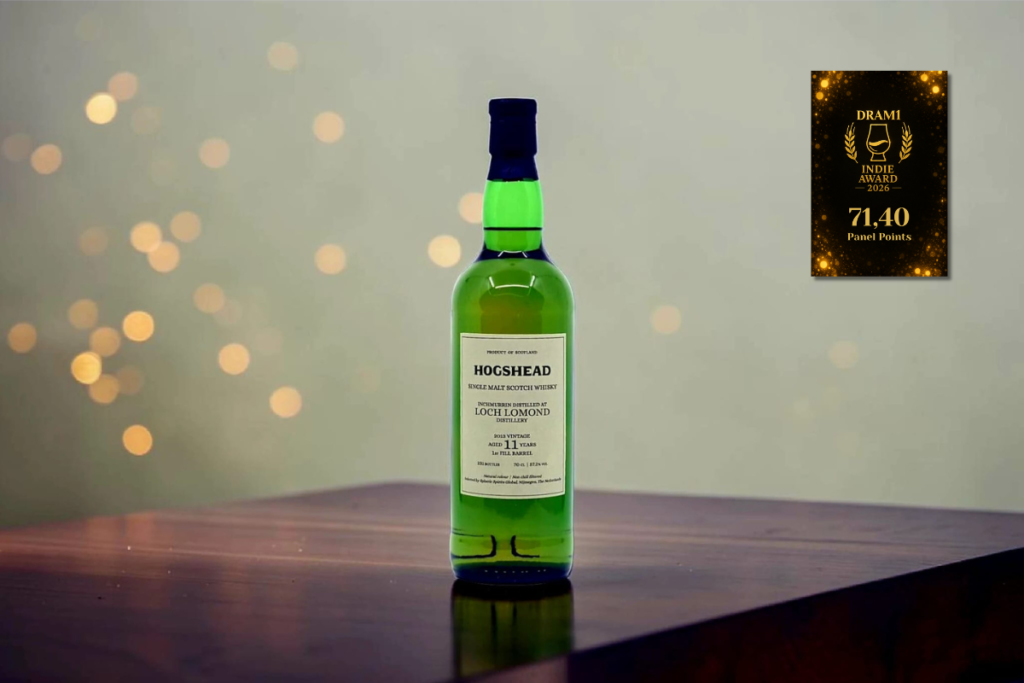
That philosophy was reinforced for me during the DRAM1 Indie Award 2026. Blind tastings remove almost everything that influences our expectations. The bottle disappears. The distillery name disappears. Price no longer matters. All that’s left is what’s in the glass. It’s one of the reasons I place so much trust in blind competitions. Among Hogshead Indie’s entries, the Inchmurrin 11 Year Old once again demonstrated exactly what I’d come to expect from the bottler. It wasn’t the loudest whisky on the table, nor was it trying to dominate through sheer intensity. Instead, it won people over with balance, clarity and drinkability.
That result didn’t surprise me.
Over the years I’ve come to realise that consistency is probably the hardest thing for an independent bottler to achieve. Anyone can stumble across an exceptional cask. Building an entire range where every release feels thoughtfully selected is something else entirely. Whether I’ve poured a dram of Strathmill, Aultmore, Mortlach, North British, Chain Pier 5, Tullibardine or Ardbeg, I’ve never had the feeling that Hogshead Indie was still searching for its identity. It found that identity remarkably early.
The bottles may vary enormously, but the thinking behind them remains unmistakably consistent.
Why Hogshead Indie Stands Out in a Crowded Market
There has never been a better time to enjoy independent bottlings. Every year seems to bring another new label, another importer launching its own range or another company determined to carve out a place in an increasingly competitive market. As enthusiasts, we’re spoiled for choice. We have access to distilleries that once rarely appeared outside official bottlings and more styles of maturation than ever before. The downside is that genuine identity has become much harder to find.
Take the labels off many independent bottles and you’d struggle to guess who selected the cask. That’s not necessarily a criticism. Many bottlers deliberately avoid imposing a house style and simply let every whisky speak for itself. Hogshead Indie sits somewhere in the middle. After tasting a growing number of releases over the years, I’ve started to recognise the decisions behind the bottles rather than the flavours themselves. Distillery character comes first. The cask should complement rather than dominate. Balance matters more than intensity. Most importantly, the whisky should make you want another glass.
That last point is probably the one I value most. Some whiskies impress you for twenty minutes before becoming exhausting to drink. Others quietly reveal themselves over the course of an evening, becoming more enjoyable with every pour. Almost every Hogshead Indie release I’ve tasted has fallen into that second category. I’ve found myself reaching less for my notebook and more for the bottle. To me, that’s a compliment few whiskies earn.
It also reflects something I discussed with Toon during our very first conversation. Whisky exists to be opened. That might sound obvious, but I sometimes wonder whether we’ve lost sight of it. Limited editions disappear before most enthusiasts have the chance to buy them. Secondary market prices often dominate discussions that should really be about flavour. Bottles spend years behind glass waiting to appreciate in value instead of being shared around a table. There’s nothing wrong with collecting whisky. I own a few bottles that are difficult to replace myself. But I’ve always believed whisky reaches its full potential once the cork comes out.
That mindset runs right through Hogshead Indie. While rising cask prices have affected every independent bottler, the focus has consistently remained on offering genuine value rather than exclusivity. Older releases inevitably cost more, but they never feel expensive simply for the sake of appearing premium. It’s an approach I genuinely admire. Another strength is the diversity of the range. Rather than becoming synonymous with one particular distillery, Hogshead Indie has bottled everything from delicate Speysiders and well-aged grain whisky to peated Islay malts and blended malts. Despite that variety, the range never feels directionless.
Every release feels like another expression of the same philosophy rather than another attempt to chase whatever happens to be fashionable that year. That’s probably the greatest compliment I can give any independent bottler. When I pick up a Hogshead Indie bottle today, I don’t expect to know exactly how it will taste. I simply trust that there’s a good reason it was bottled in the first place. That’s a reputation you can’t build through clever marketing or eye-catching labels. You build it one carefully chosen cask at a time.
Final Thoughts
When I started writing this spotlight, I quickly realised it would be impossible to separate Hogshead Indie from my own journey as a whisky writer. I’ve been fortunate enough to watch the bottler develop before the first release, interview the people behind it, review a growing number of bottlings and, more recently, see several of those whiskies perform impressively during the DRAM1 Indie Award 2026. Few bottlers have given me that kind of long-term perspective. Perhaps that’s why I keep coming back to the same conclusion.
Hogshead Indie isn’t trying to reinvent independent bottling. Instead, it reminds me why I fell in love with independent bottlers in the first place. The emphasis isn’t on chasing the oldest casks, the loudest finishes or bottles destined to spend their lives unopened in collectors’ cabinets. It’s about finding whiskies that deserve to be bottled, presenting them as honestly as possible and trusting the liquid to justify the decision. In many ways, it’s an old-fashioned philosophy. Ironically, that makes it feel surprisingly refreshing today.
As the whisky industry continues to evolve, there will always be room for bold experiments, unusual cask finishes and eye-catching limited editions. Some of them are genuinely exceptional. At the same time, I hope there will always be bottlers that remain rooted in the fundamentals: respecting distillery character, choosing casks because they improve the whisky rather than simply making it more marketable, and bottling releases that enthusiasts will actually open and enjoy.
That’s exactly where I think Hogshead Indie has found its place.
If there’s one hope I have for the future, it’s that success never changes that philosophy. Continue trusting refill casks when they tell the story best. Continue embracing more active maturation when it genuinely adds something to the spirit. Most importantly, continue bottling whiskies that invite people to gather around a table, pour another dram and enjoy whisky for what it has always been at its best.
Something to be shared.
Looking back, that first bottle of Strathmill wasn’t just the beginning of Hogshead Indie. It was the beginning of a journey I’ve genuinely enjoyed following ever since. And judging by everything I’ve tasted so far, I have a feeling the best chapters are still waiting to be written.