Yamazaki Distillery Spotlight: The Distillery That Changed Japanese Whisky Forever
Long before Japanese whisky became a global obsession, before auction prices exploded and collectors fought over every annual release, there was a quiet valley on the outskirts of Kyoto where Shinjiro Torii believed something extraordinary could be created.
In the early 1920s, Japan was not part of the whisky conversation. Scotch dominated the category, Irish whiskey still carried historical weight, and bourbon belonged firmly to America. Building a whisky distillery in Japan felt risky enough on its own. Building one focused on single malt whisky felt almost irrational.
But Torii saw something others did not.
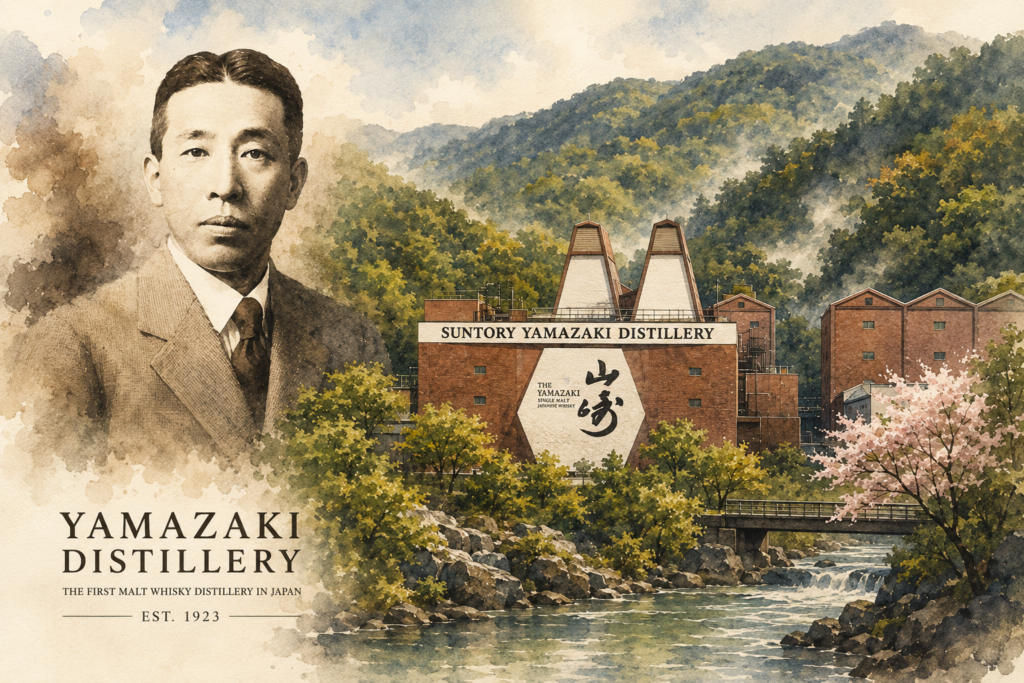
In 1923, he founded Yamazaki Distillery, creating what would become Japan’s first commercial malt whisky distillery and laying the foundation for an industry that would eventually rival Scotland itself in prestige, quality, and global demand. According to Suntory’s official distillery history, Yamazaki was specifically chosen for its soft water and humid climate — two elements that still shape the whisky today.
And unlike many distilleries that become trapped by their own mythology, Yamazaki still earns the attention it receives.
Yamazaki Distillery: Key Facts
Distillery: Yamazaki Distillery
Location: Shimamoto, between Kyoto and Osaka, Japan
Founded: 1923
Founder: Shinjiro Torii
Owner: Suntory Holdings
Style: Elegant, layered Japanese single malt
Known For: Yamazaki 12, Yamazaki 18, Mizunara oak maturation
Historic Importance: Japan’s first commercial malt whisky distillery
The History of Yamazaki Distillery
Shinjiro Torii was not trying to create Japanese Scotch.
That distinction matters, because one of the biggest misconceptions about early Japanese whisky is that it simply copied Scotland. Certainly, Scotland provided technical inspiration, but Torii’s ambition was more specific than imitation. He wanted to create whisky that suited Japanese cuisine, Japanese culture, and Japanese palates — softer, more balanced, more delicate, yet still deeply complex.
To help build the distillery, Torii hired Masataka Taketsuru, who had studied distilling in Scotland and brought practical whisky-making knowledge back to Japan. Together, they helped establish the foundations of Japanese whisky production.
The partnership did not last forever. Philosophical differences eventually pushed Taketsuru to leave and establish Nikka, creating one of whisky history’s most fascinating rivalries.
But Yamazaki remained at the centre of Japanese whisky’s identity.
Over the decades, Yamazaki Distillery evolved from a domestic curiosity into one of the most respected names in world whisky. When Japanese whisky exploded internationally in the 2000s and 2010s, Yamazaki became the bottle many drinkers chased first.
If you are still relatively new to the category, it is worth starting with this full introduction to Japanese whisky before diving deeper into Yamazaki’s range:
👉 Japanese Whisky Introduction Guide
What Makes Yamazaki Distillery Stand Out?
What makes Yamazaki Distillery fascinating is not brute force or intensity. It is precision.
The first time I tasted Yamazaki 12 beside old-school Highland malts, what struck me wasn’t the elegance everyone talks about — it was the texture. There’s a waxy softness underneath the fruit that almost disappears if you drink it too quickly.
Everything about the distillery feels deliberate. The spirit is rarely aggressive. Instead, Yamazaki focuses on layering flavour in a way that feels controlled without becoming lifeless.
And unlike many Scottish distilleries that maintain one clearly defined house style, Yamazaki intentionally creates multiple spirit styles within the same distillery using:
- different still shapes,
- varying fermentation lengths,
- multiple yeast strains,
- and a huge variety of cask types.
That diversity gives Suntory’s blenders an enormous palette to work with.
The result is whisky that often feels incredibly composed — honey, orchard fruit, incense-like spice, polished oak, delicate smoke, soft tropical fruit — all moving together without any single note dominating too aggressively.
For some whisky lovers, that elegance is exactly what makes Yamazaki special.
For others, particularly those who prefer heavier, dirtier, more character-driven whisky, Yamazaki can occasionally feel too refined. Too precise. Almost too careful.
But even critics usually admit the craftsmanship is exceptional.
The Mizunara Oak Influence
If there is one thing that helped define Yamazaki Distillery globally, it is Mizunara oak.
Yamazaki did not invent Mizunara maturation, but it helped turn it into one of the most sought-after flavour profiles in modern whisky. Suntory has spent decades refining its use of the notoriously difficult Japanese oak, which leaks easily and requires exceptional coopering skill. (Food & Wine)
Unlike American oak or European sherry casks, Mizunara produces a profile that feels unmistakably different:
- sandalwood,
- incense,
- coconut,
- temple-like spice,
- fragrant oak,
- and an almost meditative dryness.
Some older Yamazaki releases develop an aroma that feels closer to polished wood temples or incense smoke than traditional whisky casks. It is one of the few whisky styles where people genuinely struggle to compare the flavour profile directly to Scotch.
That uniqueness matters.
In a world where many distilleries compete by pushing heavier peat, bigger sherry influence, or louder cask finishes, Yamazaki carved out an identity that feels entirely its own.
Visiting Yamazaki Distillery
On damp mornings, the valley around Yamazaki carries this heavy stillness that feels completely different from the coastal energy of many Scottish distilleries. Compared to many Scottish distilleries, the atmosphere feels calmer and more restrained.
And fittingly, the visitor experience reflects the whisky itself.
The tours are organised, polished, and carefully presented without becoming overly theatrical. There is an attention to detail throughout the distillery that feels unmistakably Japanese — clean lines, quiet confidence, precision without unnecessary excess.
You can explore official visitor information and tours here:
👉 Official Yamazaki Distillery Tours
For whisky enthusiasts, visiting Yamazaki carries a certain weight simply because of what the distillery represents historically. This is where Japanese single malt whisky truly began.
Yamazaki Core Range Bottlings Worth Exploring
You can explore the full official Yamazaki collection here:
👉 The Yamazaki Whisky Collection
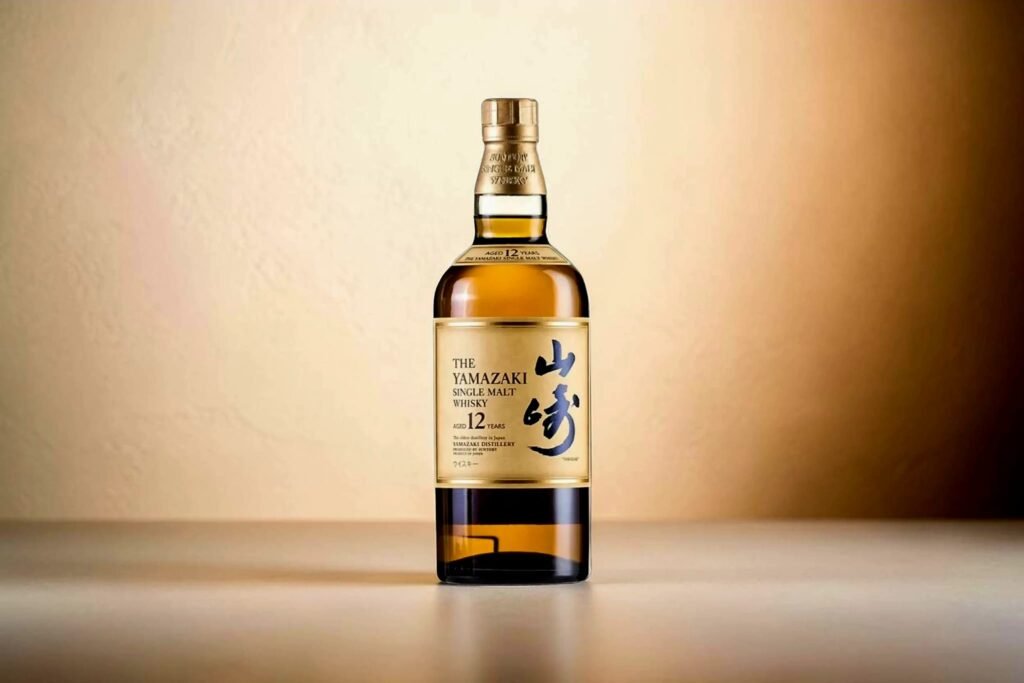
Yamazaki 12 Year Old
For many drinkers, this is still the definitive introduction to Japanese single malt whisky.
Honey, peach, soft spice, citrus, delicate oak, and subtle incense notes create a whisky that feels composed without losing personality. It is approachable, but not simplistic.
The problem today is availability. What was once relatively accessible has become increasingly difficult to find at sensible prices.
→ Read my full Yamazaki 12 Review
Yamazaki 18 Year Old
This is the bottle that helped cement Yamazaki Distillery’s luxury reputation.
Rich sherry cask influence brings dark chocolate, dried fruit, polished oak, tobacco spice, and deeper Mizunara complexity. When people talk about “premium Japanese whisky,” this is often the profile they imagine.
It is excellent whisky.
Whether it is worth modern secondary market pricing is a completely different question.
→ Read my full Yamazaki 18 Review
Yamazaki Distiller’s Reserve
Created partly in response to stock shortages, the Distiller’s Reserve avoids feeling like a compromise. It leans younger and brighter than the age-stated releases, but still carries the distillery’s signature elegance and restrained complexity.
Hibiki Harmony
Although technically a blend rather than a Yamazaki single malt, Hibiki Harmony showcases the softer, polished side of Suntory’s blending philosophy beautifully, with Yamazaki malt playing an important role in the final profile.
→ Read my full Hibiki Harmony Review
Is Yamazaki Distillery Overhyped?
This is where opinions split sharply.
There is no doubt Yamazaki Distillery produces genuinely high-quality whisky. The blending precision, cask management, and spirit character are world class. But the modern reputation surrounding Japanese whisky has created expectations that can become almost impossible to satisfy.
Some enthusiasts still argue Yamazaki showed more personality before demand exploded and stocks became stretched. A lot of longtime Japanese whisky fans quietly prefer older bottlings of Yamazaki 12 from the early 2000s, before the category’s global boom dramatically altered stock pressure.
For newer drinkers, on the other hand, Yamazaki sometimes arrives carrying too much mythology.
People expect revelation. Perfection. The greatest whisky they have ever tasted. The first time I poured Yamazaki 18 for a fellow peated whisky lover, the reaction was almost confusion before appreciation. The whisky unfolds quietly, and people expecting immediate intensity sometimes miss what makes it impressive.
And whisky rarely works like that.
What Yamazaki does exceptionally well is balance. Even when the oak gets richer or the Mizunara spice starts building, the whisky rarely loses composure. It rarely shouts. Instead, it layers flavour gradually and rewards attention.
Ironically, some old-school Scotch drinkers who dismiss Yamazaki as overly delicate would probably praise the same flavour profile if it came from a closed Speyside distillery with a cult reputation.
But if you are looking for explosive peat, heavy funk, or aggressive cask influence, there are other distilleries that will probably excite you more.
But if you value refinement and detail, Yamazaki earns its reputation far more often than its critics like to admit.
Modern pricing however, has unfortunately pushed many people toward treating Yamazaki like a status symbol first and a whisky second.
My Personal Take on Yamazaki Distillery
I understand completely why Yamazaki became such an obsession.
When you first encounter a really good Yamazaki release, particularly one with strong Mizunara influence, it genuinely feels different from Scotch whisky. Not better. Not worse. Different.
There is a restraint to it that can feel incredibly sophisticated when done well.
But at the same time, modern Yamazaki exists in a strange place now. The whisky world has turned it into a luxury object as much as a drink. Prices have become detached from what most enthusiasts can reasonably justify, and that inevitably changes how people experience the brand.
Still, underneath all the hype, the craftsmanship remains real.
Yamazaki Distillery did not become influential through marketing alone. It helped redefine what world whisky could look like, and it opened the door for countries outside Scotland to be taken seriously at the highest level.
That legacy is impossible to ignore.
FAQ: Yamazaki Distillery
Where is Yamazaki Distillery located?
Yamazaki Distillery is located in Shimamoto, between Kyoto and Osaka in Japan.
When was Yamazaki Distillery founded?
Yamazaki Distillery was founded in 1923 by Shinjiro Torii.
Why is Yamazaki Distillery historically important?
Yamazaki is considered Japan’s first commercial malt whisky distillery and played a central role in establishing Japanese whisky globally.
What is Yamazaki whisky known for?
Yamazaki is known for elegant Japanese single malt whisky, complex blending, and the use of Mizunara oak casks.
What does Mizunara oak taste like?
Mizunara oak often brings notes of sandalwood, incense, coconut, oriental spice, and fragrant wood.
Can you visit Yamazaki Distillery?
Yes. Yamazaki Distillery offers tours, tastings, and a visitor experience through Suntory.
Is Yamazaki whisky expensive?
Entry-level releases have become increasingly expensive due to global demand and limited stock, while older expressions can reach extremely high prices on the secondary market.
What is Yamazaki Distillery’s most famous whisky?
Yamazaki 12 Year Old and Yamazaki 18 Year Old are the distillery’s most iconic releases.
Final Thoughts
Yamazaki Distillery changed the trajectory of Japanese whisky forever.
It proved that world-class single malt whisky could exist outside Scotland long before “world whisky” became an accepted category. And while modern hype has undoubtedly distorted the conversation around the brand, the distillery’s importance remains completely deserved.
What Yamazaki does best is subtlety.
It creates whisky that rewards patience rather than demanding attention immediately. Whisky built on detail, layering, texture, and restraint rather than brute intensity.
That style will not connect with every whisky drinker.
But when Yamazaki truly lands, there are very few distilleries in the world that feel quite like it.
There are days when I genuinely think Yamazaki is overpriced for what it delivers — and then I revisit a great bottle with strong Mizunara influence and immediately remember why people became obsessed with it in the first place.