
Too Hot for a Dram? The Innisfree Elderflower Collins Might Change Your Mind
It has been a little quieter than usual on DRAM1 recently. Actually, with only one article published in the past week, I think this might be the quietest it has been here in a very long time. There hasn’t been any grand reason behind it, just one of those weeks where everything seems to happen at once. I’ve been sick, I’ve started my new job at Hogshead Imports, and on top of that we’ve suddenly found ourselves dealing with properly tropical weather here in the Netherlands.
That last one hasn’t exactly helped my motivation to sit behind a laptop either. I love whisky, obviously, but when it is pushing 30 degrees outside and the house feels even warmer, pouring myself a big cask-strength single malt isn’t always the first thing that comes to mind. Give me a cold drink, a chair outside and preferably somewhere in the shade.
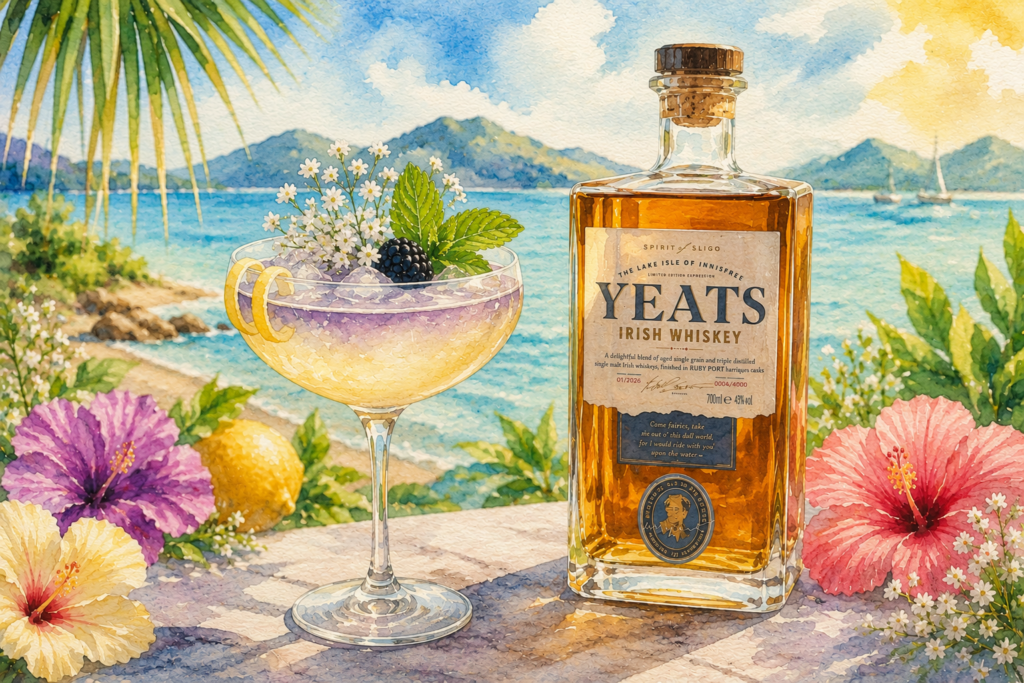
As luck would have it, an email from Yeats Irish Whiskey recently landed in my inbox with a recipe that seemed almost suspiciously well timed: the Innisfree Elderflower Collins. Irish whiskey, elderflower liqueur, fresh lemon, soda water and lots of ice. I don’t need much convincing when it comes to trying whisky in a different way, and with the weather we’re having at the moment, this seemed like the perfect opportunity to give it a go.
And I’m glad I did.
Whisky in Summer
Whisky and hot weather have always had a slightly complicated relationship. As soon as autumn arrives, whisky seems to make perfect sense again. Dark evenings, colder temperatures and a warming dram are an easy combination. In the middle of summer, though, even plenty of dedicated whisky drinkers start reaching for beer, gin and tonics or something involving a heroic amount of ice.
I’ve never really understood why that should mean putting the whisky away completely. There are plenty of ways to drink it beyond pouring 30ml into a Glencairn and spending twenty minutes trying to decide whether you can smell an old leather chair.
Cocktails are one of them. If you’re looking for more recipes be sure to check out my Summer Whisky Cocktails article!
I’m certainly not suggesting that every whisky should disappear beneath syrups, juices and garnishes, but the right cocktail can actually bring out a completely different side of a whiskey. Irish whiskey is particularly good territory for this. Its generally fruitier and softer character lends itself nicely to longer, fresher drinks, and that’s exactly what happens here.
The Innisfree Elderflower Collins is essentially a very simple summer highball built around The Lake Isle of Innisfree, the first release from Yeats Irish Whiskey.
The Whiskey Behind the Cocktail
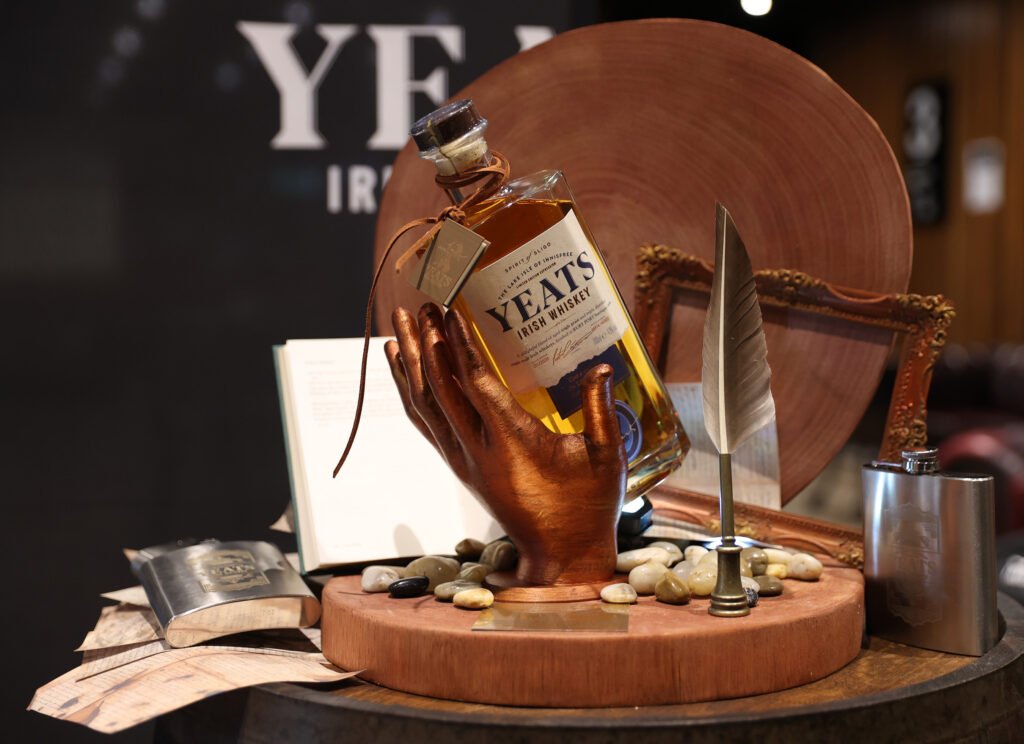
Yeats Irish Whiskey takes its inspiration from W.B. Yeats and his connection to County Sligo. The name of this first release comes, of course, from The Lake Isle of Innisfree, one of Yeats’ best-known poems. I’m always slightly cautious when a whisky comes wrapped in a big story because ultimately the liquid still needs to do the talking, but there is at least an interesting whiskey underneath the literary inspiration here.
The blend consists of 90% aged Irish grain whiskey, predominantly matured in first-fill ex-Bourbon American oak casks, alongside 9% triple-distilled Irish malt finished in Ruby Port casks. The final 1% is peated malt.
That final little detail immediately made the whisky more interesting to me. One percent peated malt obviously isn’t going to turn this into a smoke bomb, but that’s not really the point. Used carefully, such a small amount can provide a little extra weight and structure without you necessarily sitting there thinking, this is a peated whiskey.
The different components have been matured separately for between five and seven years before blending. According to Yeats, the Bourbon maturation provides the vanilla, honey and toasted oak side of the whiskey, while the Ruby Port casks bring in darker and redder fruit. There are only 4,000 individually numbered bottles of this first release, priced at €90, and it recently received a Gold Medal at the 2026 San Francisco World Spirits Competition.
Normally, that would probably be my cue to pour it neat and start taking tasting notes.
Not this week.
This week we’re adding ice.
Making the Innisfree Elderflower Collins
One thing I immediately liked about this recipe is that it doesn’t require half a home bar to make. I enjoy cocktails, but if a recipe starts asking me to make three different syrups the night before, there’s a fairly good chance I’m going to lose interest.
For one Innisfree Elderflower Collins, you need:
- 45ml Yeats Irish Whiskey
- 15ml elderflower liqueur
- 20ml freshly squeezed lemon juice
- 75–100ml chilled soda water
- Plenty of ice
- Fresh mint
- A lemon wheel
- A blackberry or raspberry
There’s also the option of adding 5–10ml sugar syrup if you prefer things a little sweeter, although personally I’d try it without first. Elderflower liqueur already brings plenty of sweetness of its own.
Making it couldn’t be much easier. Fill a highball or large wine glass with ice, add the whiskey, elderflower liqueur and freshly squeezed lemon juice and give it a gentle stir. Top it with cold soda water and finish it with some fresh mint, lemon and a berry or two. Or pour it in a coupe glass if you’re feeling a little extra fancy like I did!
A couple of minutes later, you’ve got something that looks considerably more appropriate for 30-degree weather than a heavily sherried whisky sitting neat in a Glencairn.
But Is It Actually Any Good?
This is always the important bit. A cocktail can have a lovely story, look fantastic in a photograph and come with all the right summer buzzwords, but none of that matters much if you don’t want a second sip.
Thankfully, I did.
The first thing that struck me was how naturally elderflower works with the whiskey. It brings sweetness and a very obvious floral character, but with only 15ml in the drink it doesn’t completely take over. The lemon is really important here because it cuts through that sweetness and keeps everything fresh, while the soda stretches the drink out and makes it properly refreshing.
What I particularly liked was that the whiskey didn’t disappear. That’s always my biggest problem with whisky cocktails. If I could replace the whisky with virtually any other spirit and barely notice the difference, I’m not particularly interested.
Here, there is still enough of the vanilla, honey and fruit underneath to remind you what you’re drinking. The slightly darker fruit character from the Port-finished malt also makes sense alongside the elderflower and berry garnish. Add the freshness of the mint and lemon and the whole thing becomes much lighter than the whiskey would ever be on its own, without becoming anonymous.
It’s not an enormously complicated cocktail, but I don’t think it needs to be. Actually, that’s probably why I enjoyed it. It’s cold, fresh, fruity and floral, but still tastes like a drink built around whiskey rather than a soft drink that happens to contain some alcohol.
And on a hot afternoon, it goes down frighteningly easily.
Good Whisky Doesn’t Always Need a Glencairn
I think we whisky enthusiasts can occasionally become a little too precious about how whisky is supposed to be enjoyed. There’s still this idea that putting an expensive bottle into a cocktail is somehow wasting it, while drinking it neat is automatically showing the spirit more respect.
I’m not convinced.
If you have spent €90 on a bottle, I think you’re allowed to drink it however the hell you like.
More importantly, a good cocktail doesn’t necessarily hide a whisky. Done properly, it can take certain characteristics and push them in another direction. In this case, the sweeter vanilla and fruit notes are given something floral to work with, while lemon and carbonation make the whole thing much brighter and fresher.
Would I still want to try The Lake Isle of Innisfree neat? Absolutely. Actually, after trying it this way, I’m probably more curious about the whiskey itself than I was beforehand.
But that’s exactly why cocktails can be interesting.
They don’t have to replace the dram.
Sometimes they just give you another way into it.
Final Thoughts
After a slightly chaotic week of being sick, starting my new job at Hogshead Imports and finding very little time to sit down and write, this turned out to be a pretty enjoyable way to get back behind the keyboard. It also arrived at exactly the right moment. When the Netherlands suddenly decides it wants to pretend it’s somewhere considerably closer to the equator, a glass full of ice, lemon, elderflower and Irish whiskey makes a lot more sense than forcing myself through a heavy dram simply because that’s how whisky is “supposed” to be drunk.
The Innisfree Elderflower Collins isn’t revolutionary, and that’s probably part of its appeal. You don’t need any unusual ingredients or cocktail-making skills, it takes a couple of minutes to put together, and the whiskey still has enough room to make itself known.
Most importantly, I genuinely enjoyed drinking it.
So if you’ve looked at your whisky cabinet during this tropical weather and thought, not a chance, don’t abandon it completely. Grab the ice instead.
There will be plenty of time for cask-strength single malts when autumn gets here.
Disclosure: The recipe and information about The Lake Isle of Innisfree were provided to DRAM1 by Society PR on behalf of Yeats Irish Whiskey. This article is not sponsored and all opinions are my own.