Bunnahabhain Distillery Spotlight: Islay’s Quiet Outsider
Bunnahabhain Distillery is an Islay whisky distillery founded in 1881 on Scotland’s north-eastern coastline near Port Askaig. Known for its largely unpeated coastal single malt style, maritime character and strong sherry cask influence, Bunnahabhain Distillery has become one of the most respected and distinctive whisky producers on Islay.
Some distilleries announce themselves long before you arrive.
Ardbeg feels dramatic before you even step through the gates. Laphroaig almost wears its reputation like armour. Lagavulin carries that heavy historical gravity whisky drinkers project onto it before the cork is ever pulled.
Bunnahabhain Distillery does something entirely different.
The road slowly narrows as you move further north-east across Islay, away from the island’s more familiar whisky pilgrimage route, until eventually the coastline opens and the distillery appears quietly beside the Sound of Islay. No giant spectacle waiting at the end of the road. No attempt to overwhelm you immediately. Just whitewashed buildings, sea air, warehouses and this strange feeling that the distillery is completely comfortable existing on its own terms.
The first time I visited Bunnahabhain Distillery, I arrived aboard the Tallship Thalassa together with my mother, crossing toward Islay in weather that felt very Scottish in the most honest sense of the word. Grey skies, shifting water, bursts of cold wind and moments where the coastline appeared through the mist almost like something half-remembered rather than properly seen. I still remember standing on deck as Jura slowly disappeared behind us while Islay emerged ahead, and even now I cannot really separate that crossing from the distillery itself in my memory.
And somehow the whisky reflects that exact atmosphere.
Because while much of Islay built its reputation around peat smoke, medicinal intensity and brute coastal force, Bunnahabhain quietly developed a completely different identity. Not un-Islay exactly, because the island still lives inside the whisky unmistakably, but softer around the edges, more textured, more patient and deeply shaped by long sherry maturation rather than smoke alone.
For years, some drinkers treated Bunnahabhain almost like “beginner Islay,” which honestly always felt unfairly reductive to me. The distillery was never simplistic. It simply asked you to pay attention differently.
According to the official distillery history, Bunnahabhain Distillery was founded in 1881 by William Robertson alongside brothers William and James Greenlees, with an entire small village effectively built around the distillery because of the remote location itself. (Official Bunnahabhain History)
Even today, Bunnahabhain still feels slightly detached from the rest of Islay’s whisky identity.
And honestly, that distance may be exactly why people fall in love with it.
If you are still exploring Scotch whisky regions more broadly, this complete guide gives useful context before diving deeper into Islay itself:
👉 https://dram1.com/scotch-whisky-regions/
Bunnahabhain Distillery: Key Facts
- Distillery: Bunnahabhain Distillery
- Location: Port Askaig, Islay, Scotland
- Founded: 1881
- Founders: William Robertson, William Greenlees & James Greenlees
- Current Owner: CVH Spirits
- Style: Coastal, sherried, largely unpeated Islay single malt
- Known For: Bunnahabhain 12, maritime character, sherry cask maturation
- Historic Importance: One of Islay’s most distinctive non-heavily-peated distilleries
The History of Bunnahabhain Distillery
Bunnahabhain Distillery arrived during a period when Scotch whisky was becoming industrial, ambitious and increasingly global.
By the late nineteenth century, blended whisky was expanding rapidly and distilleries across Scotland were scaling production to support growing demand. Islay already had a reputation for powerful whisky, but Bunnahabhain’s founders chose a very different direction from many of the island’s more famous southern neighbours.
Geography shaped much of that identity from the beginning.
Rather than building closer to Islay’s better-established whisky routes, the distillery emerged on the island’s more isolated north-eastern coastline overlooking the Sound of Islay toward Jura. Transporting barley, coal and casks was difficult enough that the surrounding community had to develop alongside the distillery itself. Workers’ cottages were built nearby, infrastructure slowly expanded around production, and over time Bunnahabhain became less a standalone building and more a self-contained whisky outpost carved into the coastline.
You can still feel that isolation when you visit today.
Some distilleries increasingly feel shaped around tourism first and whisky second. Bunnahabhain still feels like a working distillery. Even during busy periods, there remains something unusually calm about the place, as though the warehouses and shoreline exist slightly outside the pace of the modern whisky industry.
Historically, most of Bunnahabhain Distillery’s production disappeared quietly into blends for much of the twentieth century. Like many Scottish distilleries, single malt fame arrived relatively late. Modern whisky drinkers often forget how recently single malt whisky truly became the dominant conversation in Scotch. Distilleries now treated like prestige icons once functioned largely as blending components rather than headline attractions.
That delayed spotlight may actually have benefited Bunnahabhain.
Because while some distilleries aggressively reshaped themselves during the single malt boom, Bunnahabhain retained a slightly old-fashioned confidence that still defines the whisky today. Independent whisky resource ScotchWhisky.com describes it as one of Islay’s largest distilleries historically, despite often receiving less mainstream attention than some neighbouring names. (ScotchWhisky.com Distillery Profile)
And strangely enough, that imbalance between quality and hype still feels present even now.
Why Bunnahabhain Distillery Never Fit the Islay Stereotype
The easiest way to misunderstand Bunnahabhain Distillery is to reduce it to “the non-peated Islay distillery.”
Certainly, the softer peat influence helped separate the distillery from many neighbours, but that explanation misses the more interesting truth. Bunnahabhain does not feel like Speyside whisky transplanted onto an island. The coastal DNA remains unmistakable. There is still salinity running through the spirit, still maritime texture, still a sense of sea air and weather moving underneath the whisky.
It simply expresses Islay differently.
Where southern Islay often confronts you immediately with smoke and medicinal intensity, Bunnahabhain unfolds gradually. The distillery focuses on texture, structure and maturity rather than sheer force. According to the official distillery information, Bunnahabhain operates the tallest stills on Islay, helping create a more refined spirit style despite the whisky’s naturally oily weight.
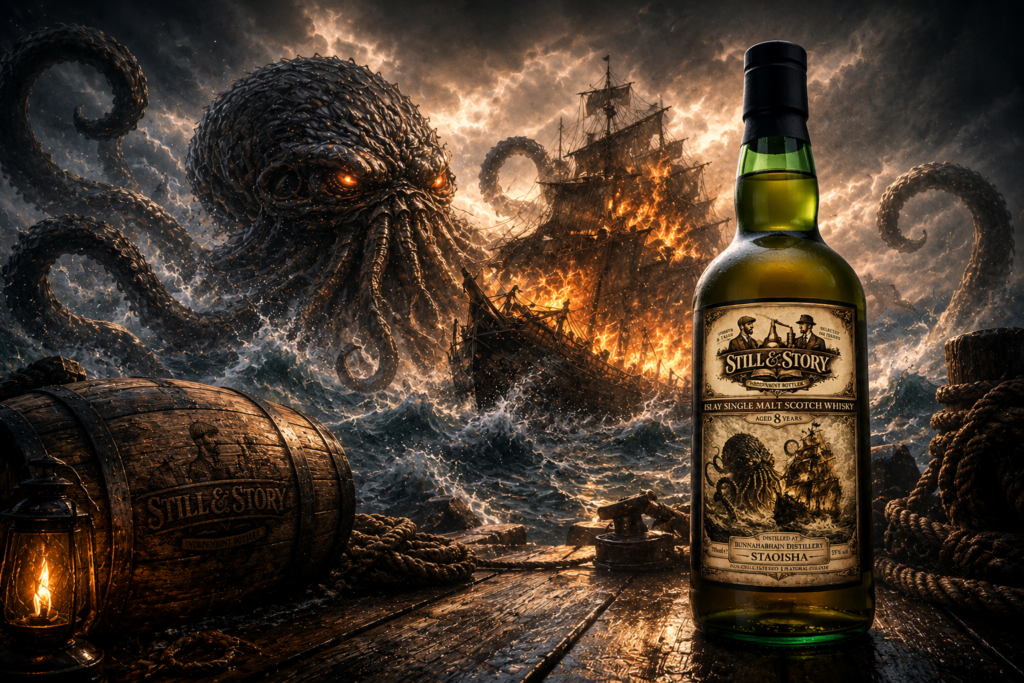
Of course, reducing Bunnahabhain purely to “unpeated Islay” also ignores another side of the distillery entirely. While the core identity remains largely coastal and softly sherried, Bunnahabhain has quietly produced heavily peated spirit for years through releases like Mòine, proving the distillery can handle smoke with the same layered elegance that defines its unpeated whisky. And for whisky geeks, the real rabbit hole often begins with independent bottlings labelled Staoisha — the heavily peated Bunnahabhain spirit that regularly appears through indie bottlers in gloriously raw, coastal and often surprisingly experimental form. Some of the most fascinating modern peated Islay casks I have tasted in recent years have actually come from Staoisha releases, where dense smoke, maritime salinity and bold maturation collide in ways that feel both unmistakably Islay and uniquely Bunnahabhain at the same time.
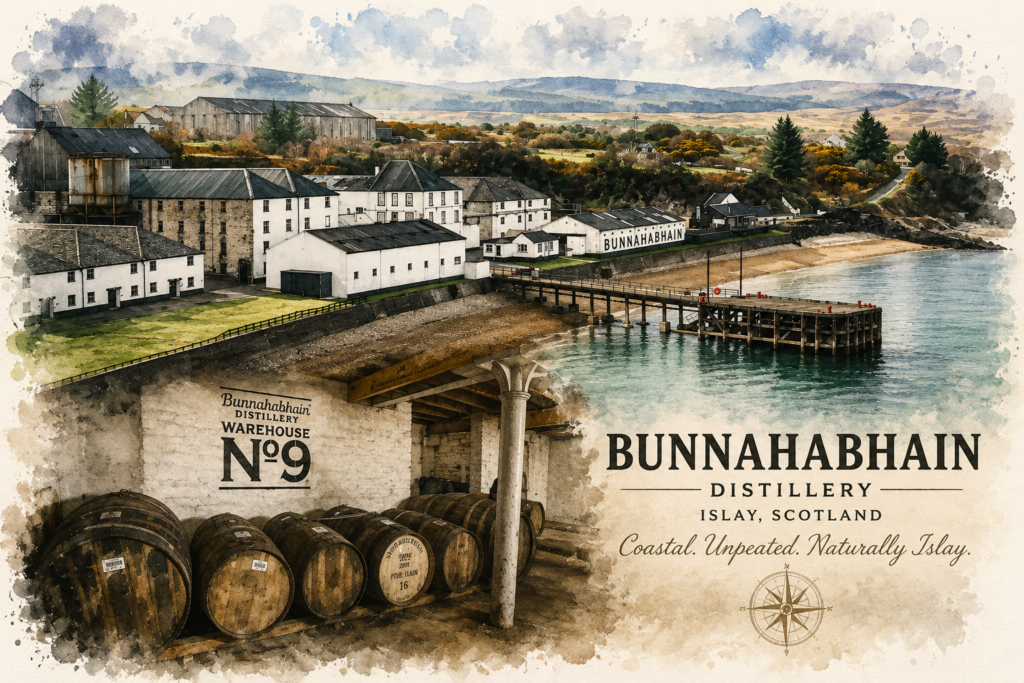
I properly understood this during the Warehouse 9 tasting at Bunnahabhain Distillery, which honestly remains one of my favourite warehouse tastings anywhere in Scotland.
I still remember how cold the warehouse actually felt compared to outside. The sea air seemed to sit inside the walls themselves. Sitting among those coastal casks with the shoreline only metres away changes the way you think about the whisky entirely. You stop viewing Bunnahabhain as “soft Islay” and start understanding it as something much more specific and much more interesting. And there were both stunning unpeated and peated drams to sip and savour!
One of the older warehouse samples almost stopped the conversation completely for a moment. Nobody rushed toward the next dram. Everyone just sort of sat quietly looking back toward the casks.
Those are the moments whisky people remember years later.
The Rise of Sherry Maturation at Bunnahabhain Distillery
Modern Bunnahabhain Distillery’s reputation is deeply connected to sherry cask maturation, and for good reason.
The spirit handles sherry influence beautifully because the distillate already carries enough texture and coastal structure underneath to support long ageing without collapsing into sweetness. Instead of burying the whisky, the casks deepen what is already naturally present within the spirit itself.
That relationship between distillate and maturation became increasingly important as whisky drinkers started paying more attention to cask influence during the 2000s and 2010s. While some distilleries leaned aggressively into louder finishes and increasingly experimental wine casks, Bunnahabhain’s best releases often felt calmer and more mature in their approach.
For readers wanting a deeper understanding of how different sherry casks influence whisky flavour and texture, this guide explores the topic in detail:
👉 https://dram1.com/sherry-casks-in-whisky/
And in many ways, Bunnahabhain became one of the clearest examples of how sherry maturation works best when it complements the spirit rather than trying to dominate it.
Visiting Bunnahabhain Distillery
For many whisky enthusiasts, visiting Bunnahabhain Distillery becomes one of the highlights of travelling across Islay.
Part of that comes from the location itself. The distillery sits near Port Askaig on Islay’s quieter north-eastern coastline, away from the island’s more heavily visited southern whisky route. Getting there feels deliberate. The winding coastal roads, isolated warehouses and shoreline setting all create the sense that Bunnahabhain still belongs more to the island itself than to modern whisky tourism.
But what truly elevates the experience are the warehouse tastings.
The Warehouse 9 tasting at Bunnahabhain Distillery remains one of the best warehouse experiences I have had anywhere in Scotland. There is something unforgettable about standing beside sleeping casks metres from the sea while tasting older Bunnahabhain directly in the environment where it matured.
A week from now, I will actually be returning to Bunnahabhain Distillery during Fèis Ìle 2026 aboard the Tallship Thalassa as Whisky Guide, bringing guests back across the water toward Islay once again. And honestly, out of all the distilleries on the island, Bunnahabhain is still one of the places I look forward to revisiting most.
Official Bunnahabhain Distillery tours and visitor information can be found here:
👉 https://bunnahabhain.com/pages/plan-your-visit
Bunnahabhain Distillery Bottlings Worth Exploring
You can explore the full official Bunnahabhain Distillery range here:
👉 https://bunnahabhain.com/collections/core-range
Bunnahabhain 12 Year Old
Few modern core-range whiskies have earned as much long-term goodwill among enthusiasts as Bunnahabhain 12.
It captures the distillery’s identity beautifully without becoming overly expensive, overcomplicated or overly demanding. The balance between coastal character, sherry influence and soft texture makes it one of the easiest Islay whiskies to revisit repeatedly without growing tired of it.
→ Read my full review:
https://dram1.com/bunnahabhain-12/
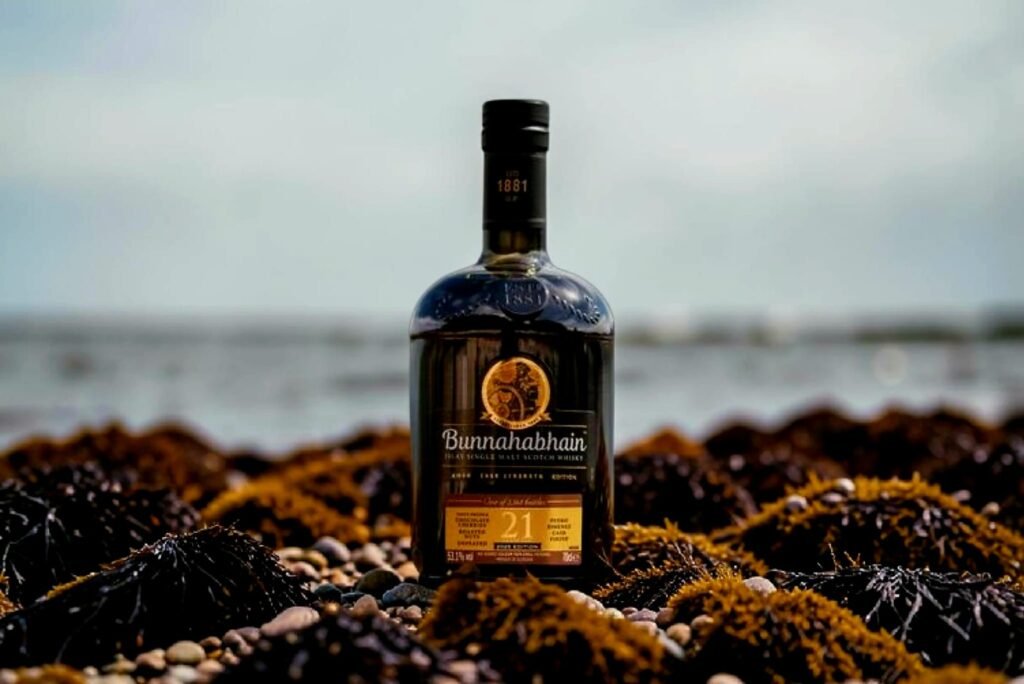
Bunnahabhain 21 Cask Strength 2025
Older cask strength Bunnahabhain releases reveal just how much depth the spirit can develop over time. The richer oak, intensified maritime structure and deeper sherry influence all emerge naturally without losing the elegance that defines the distillery.
→ Read my full review:
https://dram1.com/bunnahabhain-21-cask-strength-2025-review/
My Personal Take on Bunnahabhain Distillery
Bunnahabhain is one of those distilleries I seem to appreciate more every year.
Not because the whisky suddenly changes dramatically, but because your relationship with whisky changes over time. Early on, many drinkers chase intensity constantly. Bigger smoke. Bigger sherry influence. Bigger cask strength. Bigger impact.
Eventually though, you begin noticing the distilleries capable of creating complexity without relying on excess.
That is where Bunnahabhain becomes genuinely impressive.
The whisky rarely feels desperate to impress you immediately. Even older releases usually maintain composure underneath the richness. The coastal influence never feels exaggerated, and the sherry maturation generally supports the spirit rather than burying it beneath oak or sweetness.
And perhaps most importantly, Bunnahabhain still feels emotionally connected to its location.
Not simply through peat smoke, but through texture, atmosphere, salt, weather and restraint.
Very few distilleries manage that balance naturally.
FAQ: Bunnahabhain Distillery
Where is Bunnahabhain Distillery located?
Bunnahabhain Distillery is located on the north-eastern coast of Islay near Port Askaig, overlooking the Sound of Islay.
What does Bunnahabhain mean?
Bunnahabhain comes from the Gaelic “Bun na h-Abhainne,” meaning “mouth of the river.”
When was Bunnahabhain Distillery founded?
Bunnahabhain Distillery was founded in 1881.
Is Bunnahabhain Distillery on Islay?
Yes. Bunnahabhain Distillery is located on Scotland’s whisky island of Islay.
Is Bunnahabhain whisky heavily peated?
No. Most core Bunnahabhain releases are unpeated or lightly peated, although the distillery also produces peated expressions.
What is Bunnahabhain Distillery known for?
Bunnahabhain Distillery is known for coastal, sherried Islay single malt whisky with a softer and less smoky profile than many neighbouring distilleries.
Is Bunnahabhain 12 good for beginners?
Yes. Bunnahabhain 12 is widely considered one of the best beginner-friendly introductions to Islay whisky.
Does Bunnahabhain Distillery use natural colour?
Yes. Bunnahabhain core releases use natural colour and are non-chill filtered.
Can you visit Bunnahabhain Distillery?
Yes. Bunnahabhain Distillery offers tours, warehouse tastings and visitor experiences through its official visitor centre.
Final Thoughts
Bunnahabhain Distillery became one of Islay’s most respected whisky producers not by following the island’s stereotypes, but by quietly resisting them.
While much of Islay built global reputations around smoke and intensity, Bunnahabhain focused instead on texture, elegance, maritime depth and long-form complexity. Over time, that quieter philosophy gave the distillery something increasingly rare in modern whisky:
a genuinely distinctive identity.
There are louder distilleries on Islay.
There are smokier distilleries.
There are more aggressively marketed distilleries.
But very few feel as naturally comfortable in their own skin as Bunnahabhain Distillery.
And perhaps that quiet confidence was always the real secret behind the distillery all along.