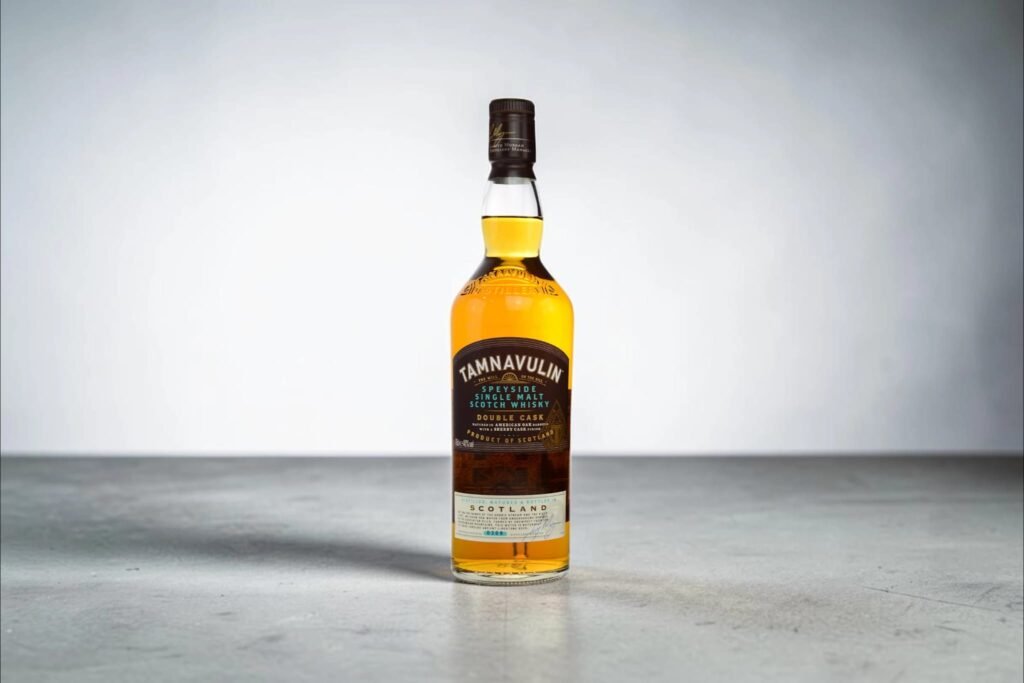
Tamnavulin Double Cask Review | Speyside’s Best Budget Single Malt?
Tamnavulin is one of those distilleries that many whisky enthusiasts seem to skip over. Mention Speyside and names like GlenAllachie, GlenDronach or Glenfarclas are usually the first to come up, while Tamnavulin quietly sits on supermarket shelves with a price tag that almost seems too good to be true. Perhaps that’s precisely why it doesn’t receive the attention it deserves. When a single malt costs little more than many blends, expectations are rarely high before the cork has even been pulled.
Over the years, I’ve learned to ignore price when judging a whisky. Some of the biggest disappointments I’ve ever tasted came wrapped in luxury packaging with three-figure price tags, while a handful of modestly priced bottles have earned a permanent place on my shelf. Whisky doesn’t know how much you’ve paid for it. All that matters is what’s in the glass.
Tamnavulin Double Cask is a whisky I’ve come back to several times over the years. Not because it offers endless complexity or demands your full attention for an evening, but because it consistently reminds me that approachable whisky still has an important place in the industry. As prices continue to climb, bottles like this become increasingly valuable. They provide an accessible gateway into single malt Scotch without asking newcomers to spend €60 or more on their first bottle.
That doesn’t mean affordable whiskies should get a free pass. Quite the opposite. When a distillery bottles at 40% ABV with added colouring and chill-filtration, it’s fair to ask whether too many compromises have been made. So, does Tamnavulin Double Cask simply offer good value, or is it genuinely a good whisky in its own right?
Listen to the Tamnavulin Double Cask Review:
Tasting Notes: Tamnavulin Double Cask
Tamnavulin Double Cask Stats
- Category: Single Malt Scotch Whisky
- Distillery: Tamnavulin Distillery
- Region: Speyside
- Age statement: No Age Statement
- ABV: 40%
- Maturation: Matured in American oak casks before a finish in three different sherry cask types.
- Colouring: Yes
- Chill-filtration: Yes
- DRAM1 flavour profile: Fruit Orchard Symphony meets Sherry Velvet
Tamnavulin has a rather unusual history compared with many Speyside distilleries. Founded in 1966 during the whisky boom, it was built primarily to supply fillings for blends rather than to establish itself as a well-known single malt. Production stopped entirely in the mid-1990s before the distillery was eventually revived under Whyte & Mackay, and only in recent years has Tamnavulin really started to establish itself as a recognisable single malt brand.
That heritage perhaps explains why Double Cask feels so straightforward. It isn’t trying to reinvent Speyside whisky or impress seasoned collectors. Instead, it’s designed to showcase the classic style many people associate with the region: soft fruit, gentle sweetness and easy drinkability.
Nose
The first impression is brighter than I remembered. Rather than leading with oak or sherry, the whisky immediately opens on a basket of fresh fruit. Pear is the first thing that springs to mind, followed closely by ripe apricots and the unmistakable sweetness of those nostalgic fruit salad sweets. It’s youthful, cheerful and surprisingly expressive for a whisky bottled at just 40%.
As it settles, the sweeter notes begin to intertwine with something a little more elegant. Honey gently coats the fruit without becoming sticky, while lemon meringue introduces a creamy citrus freshness that lifts the entire nose. Fresh orange peel follows shortly afterwards, preventing the sweetness from becoming one-dimensional. The result feels remarkably balanced, with each fruity note flowing naturally into the next.
Given more time in the glass, the wood influence starts to emerge. Soft sandalwood develops alongside freshly grated nutmeg, adding warmth rather than spice. They’re subtle additions, but they give the whisky a maturity that belies its modest price. The sherry finish never dominates the experience; instead, it quietly rounds off the brighter bourbon-driven fruit with gentle depth.
This isn’t an especially complex nose, nor does it need to be. What impresses me most is how clean everything feels. Nothing appears forced or overly engineered. There are no intrusive sulphur notes, excessive oak or harsh alcohol. It simply invites you back for another nosing, and sometimes that’s exactly what a whisky should do.
Palate
The palate begins rather differently from the nose. Where I expected another wave of orchard fruit, the arrival is noticeably spicier. Freshly cracked black pepper immediately grabs my attention before slowly making room for softer flavours to develop. It’s an unexpectedly lively opening that gives the whisky a welcome bit of personality.
Almost immediately afterwards, the sweeter elements begin to take over. Sponge cake appears first, still warm from the oven, accompanied by juicy apricots that mirror the fruit found on the nose. Unlike many entry-level Speyside whiskies that lean heavily on vanilla and caramel, Tamnavulin finds its sweetness elsewhere. It feels softer, fruitier and considerably fresher.
A delicate bitterness from cacao nibs gradually builds through the middle of the palate, adding welcome contrast without ever becoming drying. Hazelnuts arrive shortly afterwards, bringing a creamy nuttiness that works beautifully with the chocolate notes. None of these flavours dominate for long. Instead, they drift in and out, each contributing another layer before stepping aside.
Towards the back of the palate, stewed apples become increasingly prominent. They remind me of homemade apple pie filling before the cinnamon has been added, naturally sweet with just enough acidity to keep everything in balance. It’s perhaps my favourite moment of the whisky because it ties together everything that came before: the orchard fruit, the gentle spice and the restrained influence of the sherry casks.
The biggest limitation is also the most obvious one. At 40% ABV, the whisky simply runs out of momentum a little too quickly. Just as the flavours begin to deepen, they start fading away again. I couldn’t help wondering how much more texture and richness Tamnavulin Double Cask could have offered had it been bottled at 46% without chill-filtration. The quality of the spirit is certainly there. It just feels like it’s been asked to speak a little too quietly.
Finish
Thankfully, the finish manages to leave a stronger impression than I expected. Sandalwood returns almost immediately, creating a gentle dryness that feels elegant rather than woody. The cacao nibs from the palate linger beautifully, now joined by the richness of walnuts and toasted almonds.
Then comes my favourite surprise of the entire whisky. A delicate layer of cherry marmalade slowly develops alongside candied redcurrants, introducing a deeper fruit character that hadn’t fully revealed itself earlier. It’s not an explosion of flavour, but it’s enough to make the final moments far more interesting than many whiskies at this price point.
The finish remains medium-short overall, which is hardly surprising given the bottling strength, but it never feels abrupt. Instead, it quietly fades through nutty sweetness and soft oak before disappearing altogether.
Perhaps that’s the best way to describe Tamnavulin Double Cask as a whole. It never tries to overwhelm you. Instead, it gently guides you through a thoroughly enjoyable Speyside experience before politely stepping aside, ready for the next sip.
Tamnavulin Double Cask Verdict
Tamnavulin Double Cask never tries to be something it isn’t, and I think that’s one of its greatest strengths. There are no extravagant claims about rare casks, no inflated price tag suggesting this is a collector’s item and no attempt to convince experienced whisky drinkers they’ve discovered a hidden masterpiece. It’s simply an affordable Speyside single malt that’s designed to be approachable.
The good news is that it succeeds remarkably well.
What impressed me most wasn’t a single standout flavour, but the balance. The bright orchard fruits, gentle honey, subtle spice and restrained sherry influence all work together without any one element dominating the experience. It feels carefully blended and consistently enjoyable from the first sip to the last. That isn’t always the case with whiskies at this price point, where one-dimensional sweetness or youthful spirit can often get in the way.
Its biggest weakness is equally obvious. At 40% ABV, Tamnavulin never quite reaches its full potential. There are moments on the palate where you can almost feel the whisky asking for a little more weight, a little more texture and a longer finish. Had this been bottled at 46% without chill-filtration, I genuinely believe we’d be talking about one of the standout budget single malts on the market.
Even so, judging a whisky for what it could have been rather than what it actually is would be unfair. At around €25 to €30, Tamnavulin Double Cask delivers exactly what most people buying it are looking for: a smooth, fruity and dependable Speyside single malt that offers exceptional value for money.
Strengths
- Excellent value for money.
- Bright, fruity Speyside character.
- Well-balanced sherry influence.
- Very approachable for newcomers.
- Clean, easy-drinking profile without obvious flaws.
Weaknesses
- The 40% ABV limits texture and complexity.
- Finish could be longer.
- Chill-filtered and coloured.
- Experienced drinkers may outgrow it relatively quickly.
Tamnavulin Double Cask vs Glen Moray Sherry Cask Finish
If you’re standing in front of the whisky shelf with around thirty euros to spend, there’s a good chance you’ll also come across Glen Moray Sherry Cask Finish. Having spent time with both bottles, I think they appeal to a very similar audience, but they take slightly different routes to get there.
Tamnavulin is the softer and fruitier of the two. The pear, apricot and citrus notes make it feel fresh and immediately welcoming, while the sherry influence acts as a supporting player rather than taking centre stage. Everything feels rounded and uncomplicated, making it incredibly easy to pour another glass without giving it too much thought.
Glen Moray, on the other hand, leans a little further towards oak and spice. It offers a touch more structure and slightly greater depth, particularly for drinkers who have already explored a handful of single malts. If I wanted to introduce someone completely new to Scotch whisky, I’d probably hand them Tamnavulin. If that same person returned six months later looking for the next step, Glen Moray might well be where I’d point them.
Neither bottle is trying to compete with premium single malts costing twice as much, and that’s perfectly fine. Both prove that excellent everyday whisky doesn’t have to be expensive.
Food Pairing
Tamnavulin Double Cask pairs wonderfully with desserts that complement its orchard fruit character. Warm apple crumble with vanilla ice cream feels like an obvious match, allowing the stewed apple notes in the whisky to shine even brighter. Lemon drizzle cake also works surprisingly well, echoing the lemon meringue I found on the nose while keeping the pairing light and fresh.
For something savoury, I’d opt for a mild, creamy cheese such as young Gouda or a lightly matured Cheddar, served with toasted walnuts and dried apricots. The gentle nuttiness in the whisky ties everything together without either element overwhelming the other.
Who Is Tamnavulin Double Cask For?
This is a whisky I would recommend without hesitation to someone buying their very first single malt. It’s approachable, forgiving and offers enough character to show why Speyside remains such a popular starting point for whisky drinkers. There are no aggressive tannins, overwhelming peat or sharp alcohol edges to navigate. Instead, Tamnavulin introduces classic orchard fruit, gentle spice and soft sherry notes in a way that’s immediately enjoyable.
It’s also an excellent bottle to keep at home when friends or family ask if you have “a nice whisky.” Not every dram needs to be a cask-strength conversation piece, and Tamnavulin is exactly the sort of whisky that appeals to a broad audience.
More experienced enthusiasts are likely to enjoy it too, although perhaps for different reasons. Rather than chasing complexity, they’ll appreciate just how much quality Tamnavulin manages to deliver at such an accessible price. That said, if you’re used to drinking independent bottlings at natural strength, you’ll probably find yourself wishing for a little more intensity before long.
What Others Write About Tamnavulin Double Cask
Reading other reviews afterwards was reassuring because, despite coming from different perspectives, they broadly reinforced my own experience.
Thijs from Words of Whisky praised Tamnavulin Double Cask as an honest, well-made budget single malt that offers excellent value for money, while also noting that it lacks the excitement and depth needed to truly stand out. I found myself nodding along with that conclusion. This isn’t a whisky that tries to reinvent Speyside, but it doesn’t have to. It succeeds by delivering a consistently enjoyable dram at a price that remains refreshingly sensible.
Whisky Saga took an even more positive approach, highlighting the whisky’s creamy texture, gentle chocolate notes and effortless drinkability. Their experience mirrors my own palate remarkably closely, particularly the balance between fruit and sweeter confectionery notes. It’s a whisky that’s easy to return to without demanding your complete attention.
Robbert from Confessions of a Whisky Freak also recognised Tamnavulin Double Cask as an approachable and accessible Speyside, praising its soft fruit character and everyday appeal while acknowledging that more seasoned drinkers may eventually look for something with a little more weight and complexity. That’s probably where I land as well. The low bottling strength ultimately prevents it from becoming truly memorable, but it never stops being enjoyable.
Final Thoughts
I think whiskies like Tamnavulin Double Cask are becoming increasingly important.
As prices continue to rise across the whisky industry, newcomers can easily be left with the impression that good single malt has become an expensive hobby. Bottles like this prove the opposite. You don’t need to spend €70 to experience a genuinely enjoyable Speyside whisky.
Would I choose Tamnavulin over some of my favourite independent bottlings? Of course not. Those whiskies offer greater depth, more texture and often a stronger sense of individuality. But that’s an unfair comparison. Tamnavulin isn’t trying to compete with them.
Instead, it competes in one of the toughest categories in whisky: affordable everyday single malts. And within that category, I think it performs exceptionally well.
If you’re taking your first steps into Scotch whisky, this is an easy recommendation. If you’re an experienced enthusiast looking for a budget-friendly bottle that still delivers quality, it’s well worth considering. You may wish it had been bottled at 46%, as I certainly do, but you’ll probably finish your glass with the same conclusion I reached.
Sometimes, good value really is just good whisky.