After Years Of NAS Whisky, Age Statements Are Returning
Quick Overview: Why Are More Whisky Brands Bringing Back Age Statements?
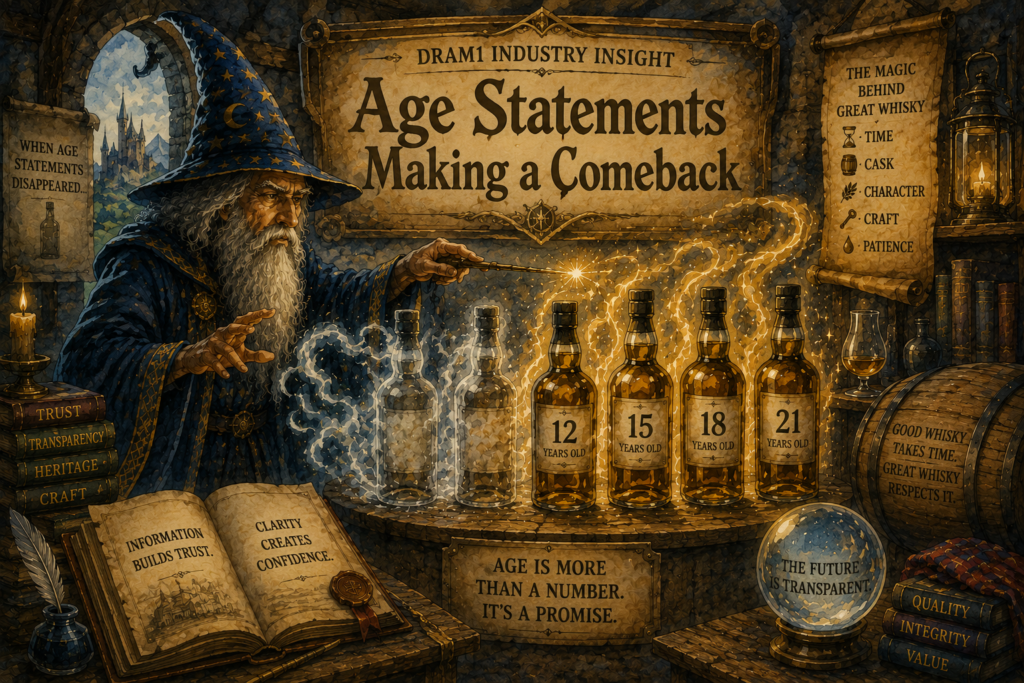
After years of non-age-statement (NAS) releases dominating shelves, age statements are quietly making a comeback. As whisky drinkers become more selective and value-conscious, distilleries are increasingly discovering that transparency matters. In a market where consumers are questioning pricing, limited editions and premiumisation, age statements have once again become one of the simplest and most effective ways to build trust.
Remember When Every Whisky Seemed To Lose Its Age Statement?
There was a time when it felt as though age statements were disappearing everywhere.
Year after year, familiar bottles quietly dropped the numbers that had sat proudly on their labels for decades. In their place came a growing wave of NAS releases, often accompanied by increasingly elaborate packaging, carefully crafted brand stories and steadily rising prices. Distilleries spoke about flavour profiles rather than age, flexibility rather than consistency, and innovation rather than tradition.
At the time, most whisky enthusiasts understood exactly why it was happening. The industry was experiencing extraordinary growth, demand for Scotch whisky was surging across the globe and producers found themselves facing a problem unique to whisky. If stocks of twelve-year-old whisky run low, there is no way to produce more next month. The decisions that determine today’s inventory were made more than a decade ago.
For many distilleries, NAS whisky was not a cynical marketing exercise. It was a practical response to a very real supply challenge.
The interesting thing is that most consumers accepted that explanation. Looking back, I think whisky drinkers were remarkably patient throughout that period because they could see what was happening. Distilleries were expanding. New markets were opening. Demand appeared endless. The trade-off felt understandable.
What few people expected was that age statements would eventually start finding their way back.
I also wrote an entire article on age statements for those looking to explore the subject further! Check out article The Age of Whisky!
The Conversation Has Changed
One of the biggest differences I notice today compared to ten years ago is not the whisky itself. It is the way consumers talk about whisky.
During the height of the boom, many purchasing decisions were driven by urgency. Limited editions disappeared quickly, prices rose consistently and enthusiasts often worried that if they hesitated, the bottle they wanted would either sell out or become significantly more expensive. The market rewarded speed, and for a while that mentality became deeply embedded in whisky culture.
Working at Salud Spirits, I saw countless versions of the same conversation play out.
A customer would be comparing two bottles, one carrying a clear age statement and another relying on branding, cask descriptions or flavour-focused marketing. More often than not, the discussion eventually came back to the same question.
“What am I actually getting for my money?”
Interestingly, very few people were asking because they believed older automatically meant better. Most simply wanted a point of reference. In a category filled with stories, special finishes, limited releases and increasingly creative marketing language, an age statement provided something tangible. It gave consumers a way to compare bottles and make sense of pricing.
That desire never disappeared.
For a while it was simply overshadowed by the excitement of the boom years.
Now that the market is becoming more measured, those questions are returning.
The Problem Was Never NAS Whisky
I think this is where many discussions about age statements go wrong.
The problem was never NAS whisky itself.
Some of the finest whiskies I have tasted carried no age statement whatsoever. Ardbeg Uigeadail remains one of the most influential modern Scotch whiskies despite lacking an age statement. Many exceptional independent bottlings demonstrate every year that flavour, cask quality and distillery character matter far more than a number on a label.
Most enthusiasts understand this.
The problem was that, over time, many consumers felt as though they were receiving less information while simultaneously being asked to pay more money.
That is a very different conversation.
When a bottle loses its age statement but remains affordable, consumers are generally willing to judge it on its merits. When a bottle loses its age statement while prices continue climbing, questions inevitably follow.
Looking back, I think that is where much of today’s renewed interest in age statements originates. Consumers are not suddenly obsessed with age. They are becoming increasingly conscious of value.
Why Age Statements Matter Again
The return of age statements is not really about age.
It is about confidence.
When a distillery places “12 Years Old” or “18 Years Old” on a label, it is making a straightforward promise that consumers immediately understand. Whether somebody is new to whisky or has spent decades collecting bottles, the age statement provides useful context.
That context has become increasingly valuable because the market itself has changed.
The whisky boom created an environment where scarcity often did much of the selling. Consumers worried about missing out. Collectors chased allocations. Retailers struggled to keep popular releases on shelves. In that environment, transparency was certainly appreciated, but it was not always essential.
Today’s market feels very different.
Consumers are comparing prices more carefully. They are questioning value more frequently. They are becoming increasingly selective about where they spend their money. In that environment, transparency becomes a competitive advantage.
Age statements happen to be one of the clearest forms of transparency available.
The Industry Is Rediscovering Trust
What fascinates me most about the return of age statements is that it feels connected to a much larger shift taking place across the whisky industry.
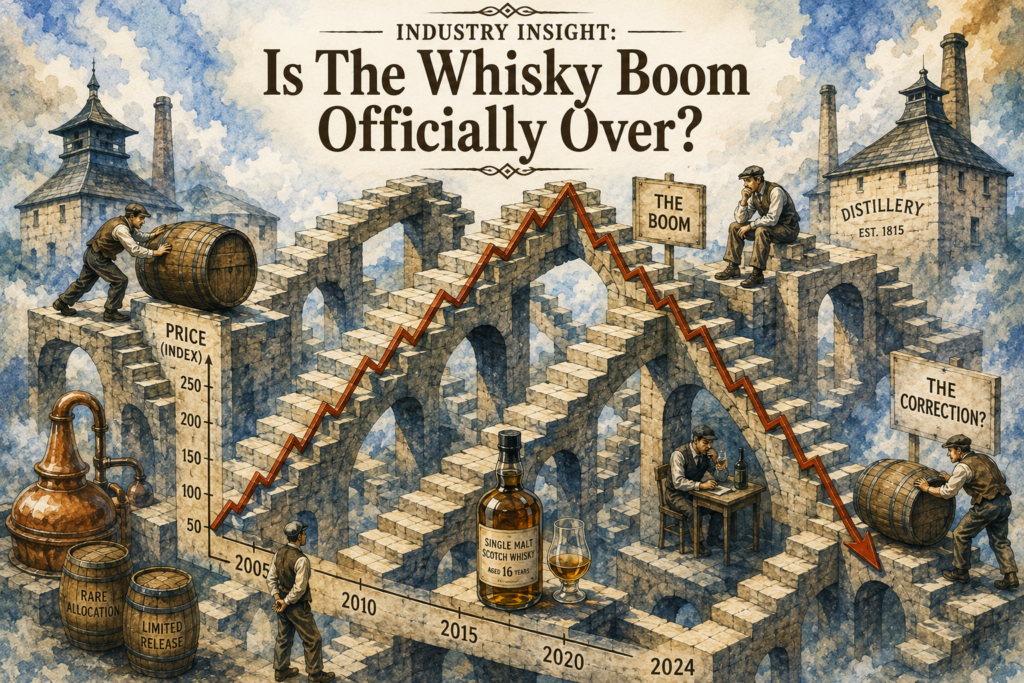
As discussed in our recent industry insight exploring whether the whisky boom is officially over, many of the assumptions that defined the previous decade are beginning to change. Bottles are becoming easier to find. Retailers are competing harder for sales. Distilleries are placing greater emphasis on value. Consumers are becoming more selective.
When demand feels endless, brands can lean heavily on scarcity.
When demand becomes more measured, trust becomes increasingly important.
That distinction explains a lot about what we are seeing today.
The whisky itself has not fundamentally changed.
The customer has.
Consumers who once bought bottles because they feared missing out are increasingly looking for reasons to believe in the value being offered. They want transparency. They want clarity. They want confidence that what they are buying justifies the asking price.
Age statements help provide that reassurance.
Not Every Age Statement Is Worth Celebrating
Of course, none of this means consumers should suddenly assume that every age-stated whisky is automatically superior.
A disappointing eighteen-year-old whisky remains disappointing whisky. A brilliant NAS release remains brilliant whisky. Great whisky has always been about far more than age, and it always will be.
Yet there is a difference between saying age is not everything and pretending age does not matter at all.
It matters because it provides context.
It matters because it helps consumers make informed decisions.
And perhaps most importantly, it matters because it demonstrates a willingness to share information openly with the people buying the bottle.
That openness carries real value in today’s market.
Why I Think We Will See More Age Statements Over The Next Decade
I do not believe the future belongs exclusively to age-stated whisky, nor do I think NAS releases are going anywhere. There will always be room for whiskies that prioritise flavour, innovation and creativity over age.
What I do believe is that the balance is beginning to shift.
Many distilleries expanded production years ago in anticipation of continued growth. As demand softens and inventories become less constrained, producers have greater flexibility than they did during the height of the boom. At the same time, consumers are becoming more selective and more value-conscious than they have been for years.
Those two trends are moving in exactly the same direction.
Distilleries have more stock available, while consumers are demanding greater transparency.
Age statements sit comfortably at the intersection of those realities, which is why I suspect we will continue seeing more of them in the years ahead.
Final Thoughts
For years, the disappearance of age statements felt like an unavoidable consequence of whisky’s success. Demand was growing, stocks were under pressure and distilleries needed flexibility to keep pace with a rapidly expanding market.
Today, the situation looks very different.
Consumers are becoming more selective, value is becoming increasingly important and trust is once again emerging as one of the most valuable currencies in whisky.
That is why I believe age statements are making a comeback.
Not because whisky drinkers have suddenly become obsessed with numbers, and certainly not because every NAS release has somehow become less interesting. Rather, age statements offer something many consumers appear to be searching for after years of scarcity, premiumisation and rising prices.
They offer clarity.
And perhaps that is the real story behind their return. Consumers are not demanding older whisky. They are demanding more transparency. After years of increasingly complicated marketing narratives, many drinkers simply want to understand what they are buying again. In that environment, a straightforward age statement feels less like a number on a label and more like a signal that a distillery is willing to place trust and transparency back at the centre of the conversation.
Sources
Scotch Whisky Association Export Statistics
https://www.scotch-whisky.org.uk
The Spirits Business – Scotch Whisky Market Reporting
https://www.thespiritsbusiness.com/