Does Whisky Go Bad? The Truth Every Whisky Lover Should Know
It’s a question that comes up time and time again, whether you’re new to whisky or have a shelf full of bottles you’ve been meaning to revisit:
Does whisky go bad?
Maybe you’ve found an old bottle tucked away in a cupboard, or you’ve been holding onto something special for years and now hesitate before opening it, wondering if time has worked in your favour—or against you.
The reassuring part is this: whisky is far more resilient than most people think.
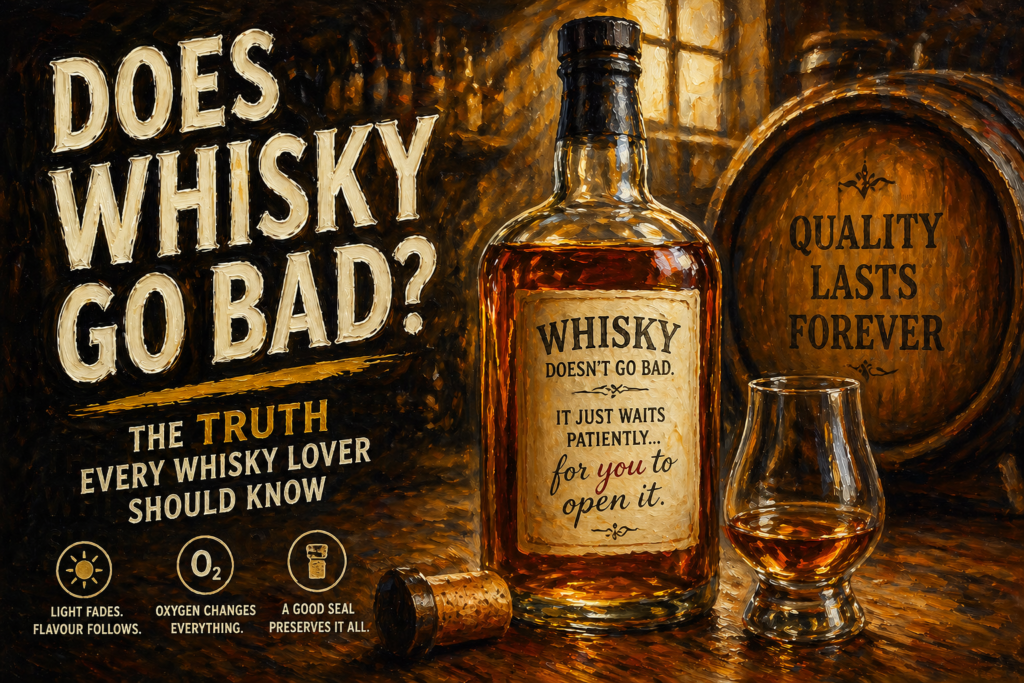
But the answer isn’t just “no”—because while whisky doesn’t go bad, it can quietly lose everything that made it special.
Does Whisky Go Bad? (Quick Answer)
If you’re looking for the simple answer, here it is:
No, whisky does not go bad or expire.
Thanks to its high alcohol content, it remains safe to drink indefinitely.
What can change, however, is the flavour—especially once a bottle has been opened or stored under less-than-ideal conditions.
Whisky Doesn’t Age in the Bottle
One of the biggest misconceptions in whisky is the idea that it continues to age after bottling. It doesn’t.
The moment whisky leaves the cask and is sealed in glass, the maturation process stops completely. A 10-year-old whisky bottled in 1950 is still a 10-year-old whisky today, no matter how much time has passed since.
That doesn’t mean older bottles aren’t interesting—far from it. Differences in production methods, barley varieties, fermentation, and cask management mean that historical bottlings can taste very different from modern equivalents.
I explored that idea in more detail in this comparison:
👉 https://dram1.com/george-dickel-wild-turkey-showdown/
It’s a good reminder that “older” doesn’t mean “aged longer”—but it can still mean something entirely unique.
Can Whisky Ever Become Unsafe to Drink?
This is where whisky separates itself from wine and many other drinks.
With an alcohol content typically sitting at 40% ABV or higher, whisky creates an environment where bacteria and spoilage simply don’t thrive. That means even a bottle that’s been sitting unopened for decades will still be safe to drink.
In reality, the risk isn’t that whisky becomes harmful—it’s that it becomes disappointing.
What Actually Changes Over Time?
If whisky doesn’t go bad, what’s really happening inside the bottle over time comes down to a handful of factors that slowly influence its character rather than destroy it outright.
Oxygen and Oxidation
Once a bottle is opened, oxygen begins interacting with the whisky. This process is gradual, often subtle at first, but over the years it can soften aromas, round off sharper edges, and slowly reduce intensity.
In a well-sealed bottle, this change happens slowly enough that most people won’t notice it unless they return to the same whisky after a long absence.
Sunlight and UV Exposure
If there’s one factor that consistently does real damage, it’s sunlight.
Direct UV exposure can break down flavour compounds, dull complexity, and even fade the colour of the whisky over time. It’s not something that ruins a bottle overnight, but prolonged exposure will leave its mark.
If you take only one piece of advice from this article, let it be this: keep your whisky out of direct sunlight.
The Importance of a Good Seal
A proper seal is what keeps everything stable inside the bottle.
When a cork or cap no longer does its job, air begins to enter and alcohol can slowly evaporate. Over time, this leads to a noticeable loss of flavour, structure, and overall character.
The good news is that this is something you can manage. Store your bottles upright, check the condition of the cork occasionally, and if needed, replace it or use parafilm around the neck to limit further exposure. Once oxidation has started, you can’t reverse it—but you can stop it from getting worse.
Cork Problems: Seal Failure vs Cork Taint
Cork-related issues are often misunderstood, so it’s worth separating them clearly, because they behave very differently.
Cork Seal Failure
This is the more practical and manageable issue.
Over time, a cork can dry out, shrink, or become damaged, especially if a bottle has been stored on its side. Whisky’s higher alcohol content can degrade cork more aggressively than wine, which is why bottles should always be stored upright.
When the seal fails, oxygen enters the bottle and evaporation begins. This leads to a gradual loss of flavour, but it’s something you can often catch early and manage by replacing the cork or sealing the bottle more securely.
Cork Taint (The One You Can’t Prevent)
Cork taint is something else entirely.
It’s typically linked to compounds such as TCA, which can introduce musty, damp cardboard-like aromas and flatten the whisky’s flavour profile completely. While it’s far more common in wine, it can occasionally affect whisky as well.
The key point here is that cork taint has nothing to do with storage, age, or how long a bottle has been opened.
You can store a bottle perfectly for decades and still encounter it. It’s simply a fault in the cork itself—rare, but unavoidable.
It won’t make you sick, but it can make a whisky so unpleasant that it’s simply not worth drinking.
What About Half-Full Bottles?
A half-full bottle naturally contains more air, which means oxidation will progress slightly faster—but in practical terms, this is still a slow process.
As long as the bottle is properly sealed, you’re looking at years before noticeable changes occur. Whisky doesn’t suddenly fall apart once it reaches the halfway mark; it simply evolves, often so gradually that it goes unnoticed.
How to Store Whisky Properly
If your goal is to preserve flavour for as long as possible, a few simple habits make all the difference:
- Store bottles upright
- Keep them out of direct sunlight
- Maintain a relatively stable, cool environment
- Ensure the seal remains tight
You don’t need perfect conditions to keep whisky in good shape. After all, bourbon matures in the intense seasonal swings of Kentucky warehouses and still develops beautifully.
If you want a deeper dive into storage, I’ve covered it in full here:
👉 https://dram1.com/how-to-store-whisky/
Does Price Affect How Whisky Ages?
Not in the bottle—but it does affect how much you care if something goes wrong.
A standard bottle losing a bit of its edge is one thing. A rare or expensive whisky suffering from poor storage or a faulty cork is another entirely.
If you’re curious why some bottles are worth protecting more than others:
👉 https://dram1.com/whisky-price-explained/
What Experts Say About Whisky Shelf Life
For additional perspective, these sources all reinforce the same core idea:
- Scotch Whisky Association – https://www.scotch-whisky.org.uk/discover-scotch/faqs/
- Whisky Advocate – https://whiskyadvocate.com/buying-and-storing-whisky
Whisky is one of the most stable spirits you can own—but preserving its quality still comes down to how it’s handled.
FAQ: Does Whisky Go Bad?
Does whisky go bad after opening?
No, whisky does not go bad after opening, but it can gradually lose flavour due to oxidation over time.
How long does whisky last once opened?
When stored properly, an opened bottle can last for many years, with flavour changes happening slowly.
Can old whisky make you sick?
No, whisky does not spoil or become unsafe due to age.
Can whisky become corked?
Yes, although rare. Cork taint can introduce musty or unpleasant flavours, but it is not harmful.
Why does my whisky taste weaker?
This is usually caused by oxidation, evaporation from a poor seal, or in rare cases, cork-related issues.
Should whisky be stored upright?
Yes. Whisky should always be stored upright to protect the cork and maintain a proper seal.
Final Thoughts: Does Whisky Go Bad?
So, does whisky go bad?… No, or at least not in the way most people expect.
It won’t spoil, it won’t become unsafe, and it won’t suddenly turn on you after a few years on the shelf. What it will do, slowly and quietly, is change—especially if it’s exposed to light, air, or a compromised seal.
Handled well, a bottle can hold its character for decades. Neglected, it may lose the very qualities that made you reach for it in the first place.
And if you’ve ever opened a bottle you were excited about, only to find it hollow or faded, you’ll know that’s the part that really matters.