Glendronach Distillery: A True Benchmark for Sherry Cask Scotch
The Glendronach Distillery is one of those distilleries I keep coming back to when something feels off.
You know what I mean—when you’ve been working through a few “sherry cask” whiskies and they all start blending into the same soft, slightly sweet profile. Nothing wrong with them, but nothing really grabs you either.
That’s usually when I pour a Glendronach.
Because whatever else you can say about it, the glendronach distillery doesn’t feel diluted. There’s weight, structure, and a sense that the whisky has actually been given time to become what it is. Not rushed, not adjusted, just left to do its thing in the cask.
And once you reset your palate with it, you start noticing just how much that matters.
The Story Behind Glendronach Distillery
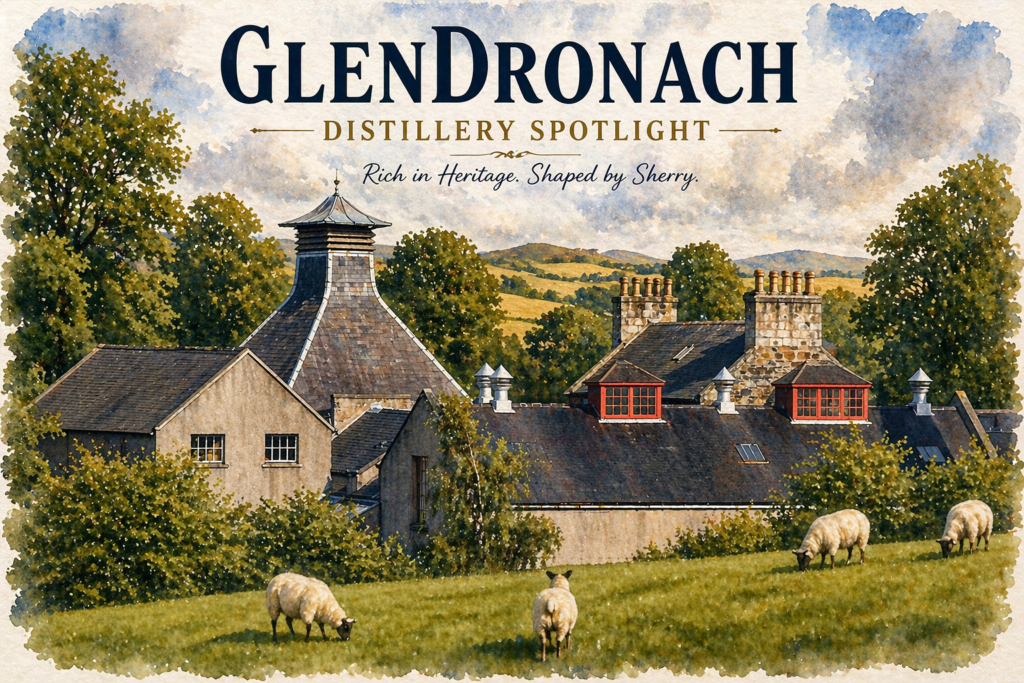
The glendronach distillery was founded in 1826 by James Allardice and sits in the Forgue valley in the eastern Highlands. It’s not a place that built its name on tourism or presentation—it built it on what went into the cask, and how long it stayed there.
Sherry casks have always been central here. Not as a finishing tool, but as the full maturation strategy. Oloroso for structure and dryness, Pedro Ximénez for richness and depth.
The timeline isn’t perfectly smooth either, which adds a bit of character once you look into it. The distillery was mothballed between 1996 and 2002, and that gap still plays into how certain age statements and releases are understood today.
The modern reputation really took shape from 2008 onwards under Billy Walker. That period brought a renewed focus on older stock, single cask releases, and a clear decision to double down on the distillery’s strengths rather than reshape them.
Even after the move to Brown-Forman in 2016, the core identity of the glendronach distillery has stayed intact—which is exactly what you’d hope for.
What Defines the Glendronach Distillery Style
Before getting into specific bottles, it’s worth grounding what the glendronach distillery actually does in the glass.
You’re looking at:
- Dense dried fruits—raisins, figs, dates
- Dark chocolate with a slightly bitter edge
- Spice that builds gradually
- Oak that adds structure, not just dryness
- A full, sometimes oily texture
This is whisky that leans into depth rather than brightness.
It sits firmly in the Sherry Velvet profile:
https://dram1.com/tag/sherry-velvet/
But more than that, the glendronach distillery is one of the clearest reference points for that style. When people talk about “proper” sherried whisky, this is usually somewhere in the background.
The Core Range: One Style, Different Depths
One thing the glendronach distillery gets right is restraint. The core range isn’t trying to cover every possible flavour direction—it’s exploring one idea properly.
The 12, 15 Revival, and 18 Allardice all feel connected. Not identical, but clearly part of the same structure.
The 12 sets the foundation. You get the dried fruit, spice, and a touch of oak, but it still feels relatively open.
The 15 Revival is where things start to tighten up. More depth, more richness, and a better balance between sweetness and structure.
By the time you reach the 18 Allardice, everything feels more integrated. The cask influence is fully embedded, and the whisky carries itself with more confidence.
And if you step into something like the 21 Parliament:
https://dram1.com/glendronach-21/
that’s where long-term maturation really shows. It’s not louder—it’s more complete. The edges soften, the flavours settle, and everything feels like it’s working together rather than competing.
Some of the newer releases explore slightly different angles without losing that core identity:
- https://dram1.com/glendronach-ode-to-the-valley-review/
- https://dram1.com/the-glendronach-ode-to-the-dark-review/
They don’t reset the style—they just shift the emphasis slightly.
The same applies to the Port Wood release:
https://dram1.com/glendronach-port-wood/
It adds a layer of red fruit and sweetness, but the underlying structure stays intact. You still recognise it immediately as Glendronach, which says a lot about how defined that base profile is.
Why Glendronach Distillery Tastes the Way It Does
The identity of the glendronach distillery comes down to a few decisions that haven’t been compromised.
First, the spirit itself has enough weight to handle long-term sherry maturation. The stills are large, and the distillate isn’t overly refined, which gives the casks something substantial to work with.
Second, maturation happens in traditional dunnage warehouses. Slower temperature changes, less aggressive ageing, and more time for the spirit and wood to integrate.
But the defining factor is the cask strategy.
Full-term maturation in Oloroso and Pedro Ximénez casks changes everything. You’re not adding flavour at the end—you’re building it from the start.
That’s why the whisky feels layered rather than coated.
Visiting Glendronach Distillery
If you’re in that part of Scotland, the glendronach distillery is worth the visit—but it’s not a polished, high-production experience.
It’s quieter. More grounded. You’re walking through working warehouses and seeing casks that have been sitting there for decades.
That gives you a better understanding of what actually shapes the whisky, beyond branding or presentation.
If you’re planning a visit:
- https://www.glendronachdistillery.com/
- https://www.tripadvisor.com/Attraction_Review-g7208096-d1832308-Reviews-The_Glendronach_Distillery-Forgue_Aberdeenshire_Scotland.html
- https://www.whiskysaga.com/blog/visiting-glendronach-distillery
FAQ: Glendronach Distillery
Where is the Glendronach Distillery located?
The Glendronach Distillery is located in Forgue, Aberdeenshire, in the eastern Highlands of Scotland.
What is the Glendronach Distillery known for?
It is known for heavily sherried single malt Scotch whisky, matured in Oloroso and Pedro Ximénez casks.
Who owns the Glendronach Distillery?
The distillery is owned by Brown-Forman.
Is Glendronach whisky chill-filtered?
Most core releases are non-chill filtered, although this can vary depending on the bottling.
What does Glendronach Distillery whisky taste like?
Rich dried fruits, dark chocolate, spice, oak, and a full-bodied texture—firmly within the Sherry Velvet profile.
Is Glendronach Distillery worth visiting?
Yes, especially if you’re interested in traditional maturation and a less commercial distillery experience.
Final Thoughts
The glendronach distillery doesn’t try to cover everything—and that’s exactly why it works.
It focuses on one style and follows it through properly. Not every cask lands perfectly, and there’s always some variation, but the direction is consistent.
And that consistency matters more than perfection.
Because when you want to understand what sherry cask whisky can be when it’s given time, weight, and the right casks, the glendronach distillery is still one of the clearest places to start.