How Is Whisky Made? The Complete Guide to How Whisky Is Made (From Grain to Glass)
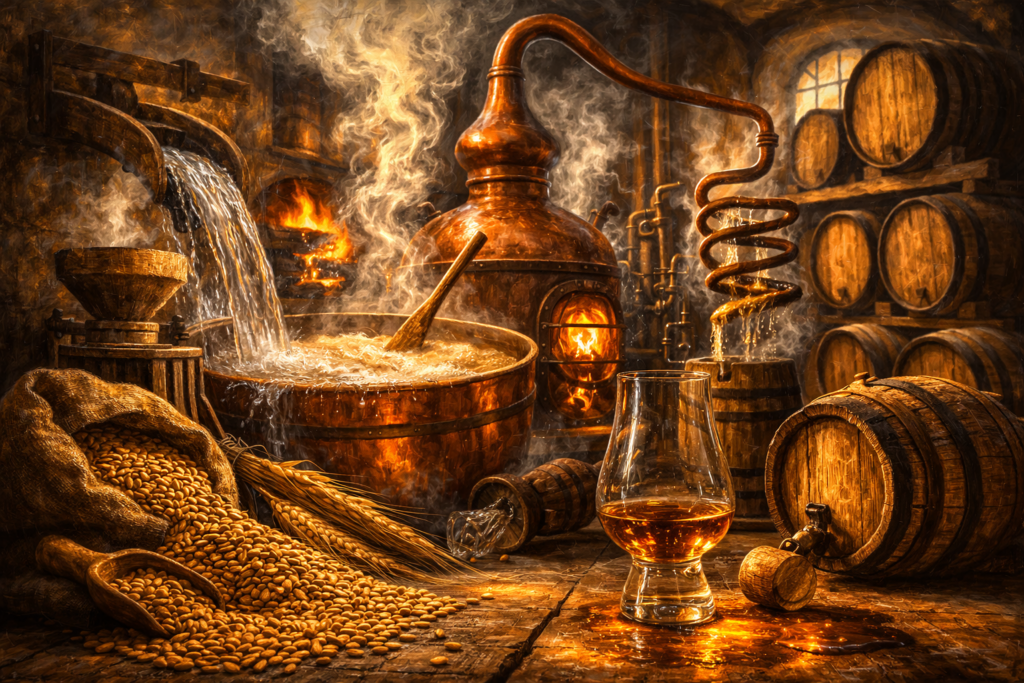
Whisky doesn’t begin in a cask. It begins in a field.
It begins with grain, water, yeast, copper, fire, and time — and a series of decisions that quietly shape everything you later taste in the glass.
If you’ve ever wondered how whisky is made, this is your deep dive. We’re going to walk through every stage of the process — clearly, passionately, and without drowning in jargon — while still respecting the science that makes it all work.
Whether you’re brand new to whisky or you’ve been chasing single casks for years, understanding the process changes how you taste forever.
Table of Contents
- Grain Selection & Mash Bills
- Malting: Floor vs Drum
- Milling & Mashing
- Fermentation & Washbacks
- Distillation: Pot Stills vs Coffey Stills
- Condensers: Worm Tubs vs Shell & Tube
- The Spirit Cut
- Maturation & Oak Influence
- Why Small Production Choices Matter
1. Grain Selection: Where Style Begins
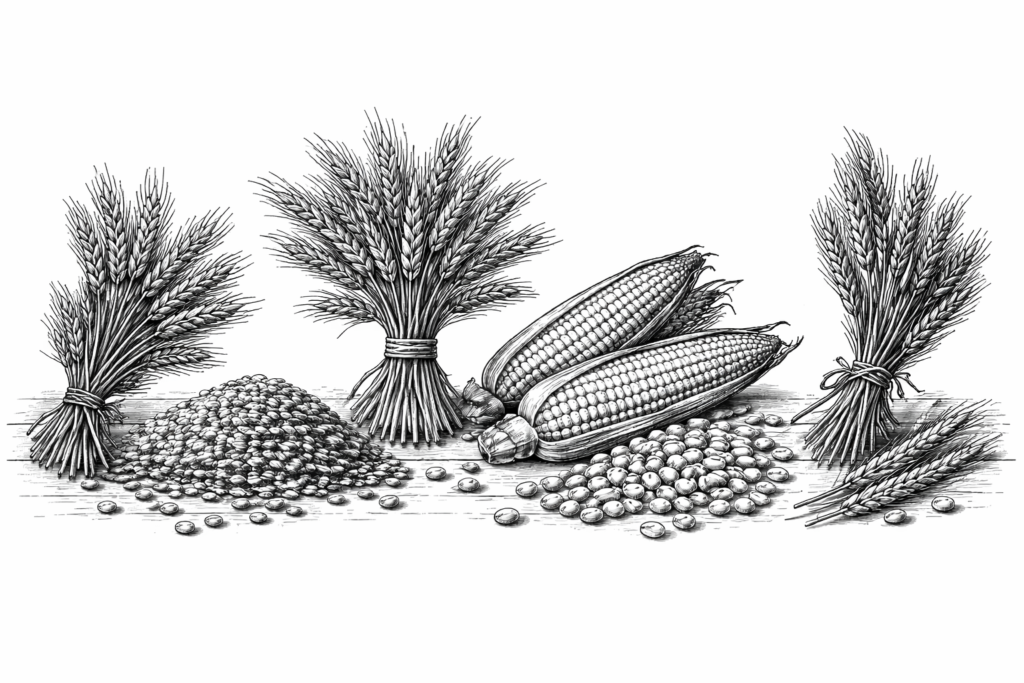
If you want to understand how whisky is made, start with the grain bill. The choice of grain defines the personality long before distillation begins.
Single Malt Whisky
- 100% malted barley
- Distilled in pot stills
- Made at one distillery
Malted barley contains natural enzymes (alpha and beta amylase) that convert starch into fermentable sugar. It brings cereal sweetness, nuttiness, and depth.
Bourbon
- At least 51% corn
- Often 60–75% corn
- Rye or wheat as the secondary grain
Corn delivers sweetness and body. Rye adds spice and edge. Wheat softens and rounds the texture.
Grain Whisky
- Usually corn or wheat
- Small amount of malted barley for enzymes
- Distilled in continuous column stills
Grain whisky is lighter and cleaner — often used in blends, but capable of elegance in its own right.
Single Pot Still Irish Whiskey
- Mix of malted and unmalted barley
- Distilled in pot stills
The unmalted barley increases protein and oil content, creating the creamy, spicy character Ireland is famous for.
The science bit:
Different grains have different starch structures, lipid levels, and protein content. Those variables influence fermentation chemistry — and that chemistry becomes flavour.
There are some very cool bottlings nowadays that look at different types of grain like Spelt, like for example Thy as you’ll read about in my Thy Spelt-Rye Review. But there’s also distilleries like the (now closed) Waterford Distillery that experiment with Heritage Barley like their Waterford Heritage Hunter release.
2. Malting: Waking the Grain Up
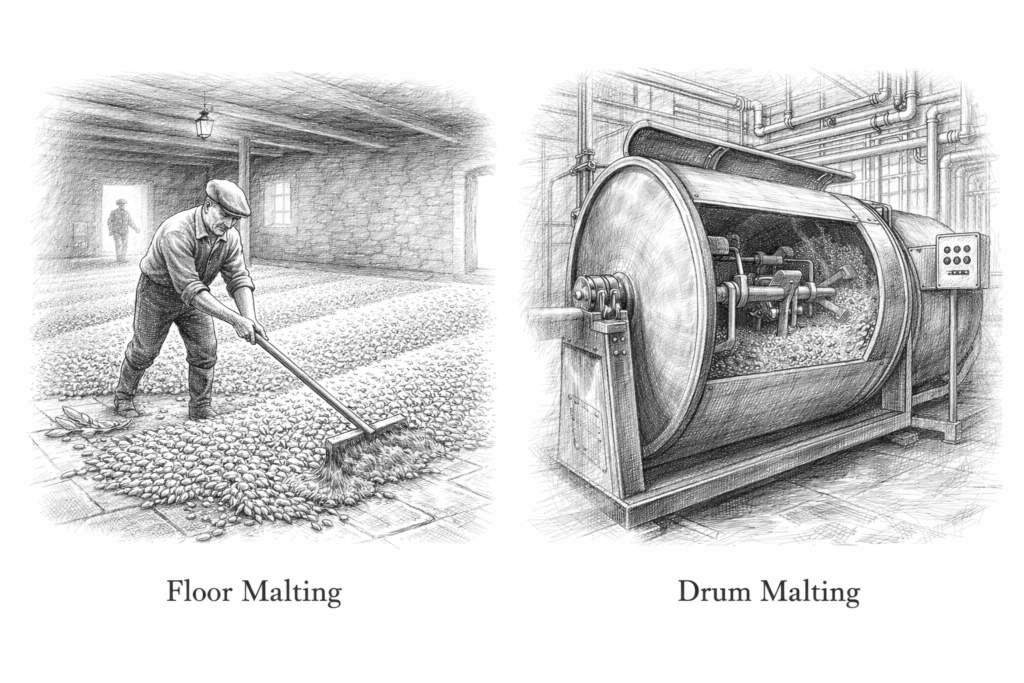
Barley is a seed. Malting tricks it into thinking it’s about to grow.
When soaked in water, the barley begins to germinate. Enzymes develop. Starch becomes accessible. The grain transforms from agricultural product into brewing material.
During germination:
- Alpha amylase breaks long starch chains
- Beta amylase releases maltose
- Cell walls soften and open
Kilning then stops the process.
Floor Malting
Traditional floor malting involves spreading barley across stone floors and turning it by hand. Distilleries like Laphroaig still maintain this method.
It’s slower. It’s more labour-intensive. It can be slightly less uniform.
But that variability can create subtle texture differences — and for some distilleries, that connection to tradition matters just as much as the chemistry.
A few distilleries still operate their own malting floor and one of the most famous in today’s pop culture has to be Springbank Distillery. You can read all about their operations in my Springbank Distillery Spotlight article!
Drum (Industrial) Malting
Most modern distilleries use commercial maltsters with large rotating drums.
Precise temperature control. Consistent airflow. Reliable enzyme development.
It’s efficient, repeatable, and scalable — essential when you’re producing at volume.
Neither method is “better.” They’re different philosophies applied to the same biological process.
A good example of a Drum Malting can be seen and visited at Thy Distillery. They actually malt much more than just for their own whisky production, they malt for breweries as well!
3. Milling & Mashing: Extracting the Sugar
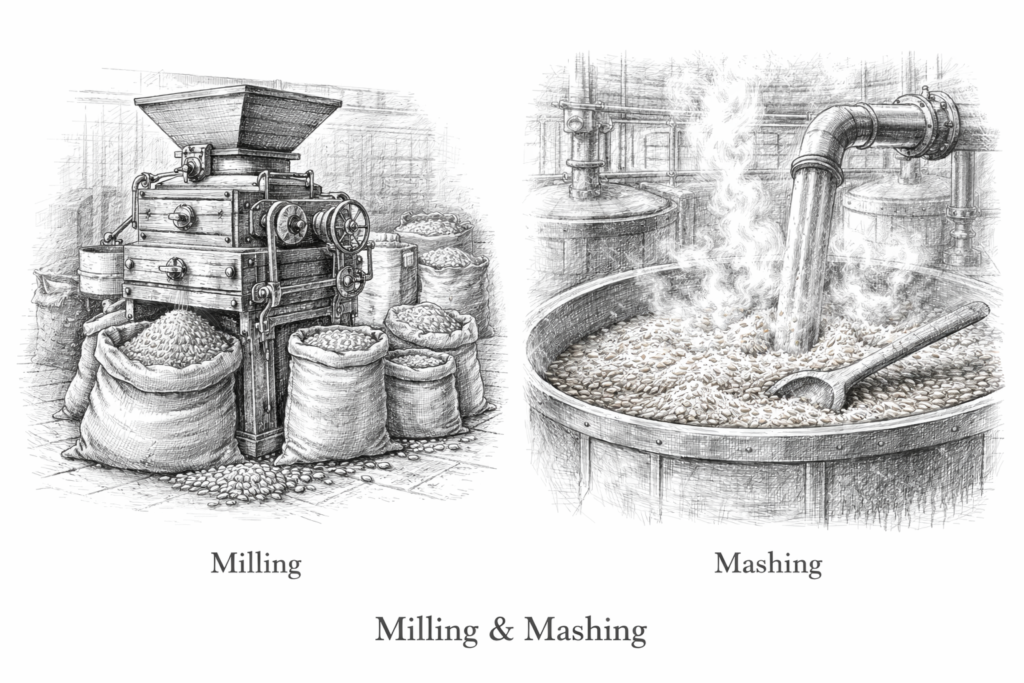
The dried malt is milled into grist — ideally:
- 70% coarse grits
- 20% husk
- 10% flour
Too fine and you risk clogging the mash. Too coarse and you lose efficiency.
Hot water is added in stages. Temperature matters:
- 62–65°C: beta amylase produces fermentable sugars
- Around 72°C: alpha amylase creates dextrins (which add body)
The result is sweet liquid called wort.
At this point, whisky is essentially unhopped beer.
4. Fermentation: Where Character Is Born
Now things get exciting.
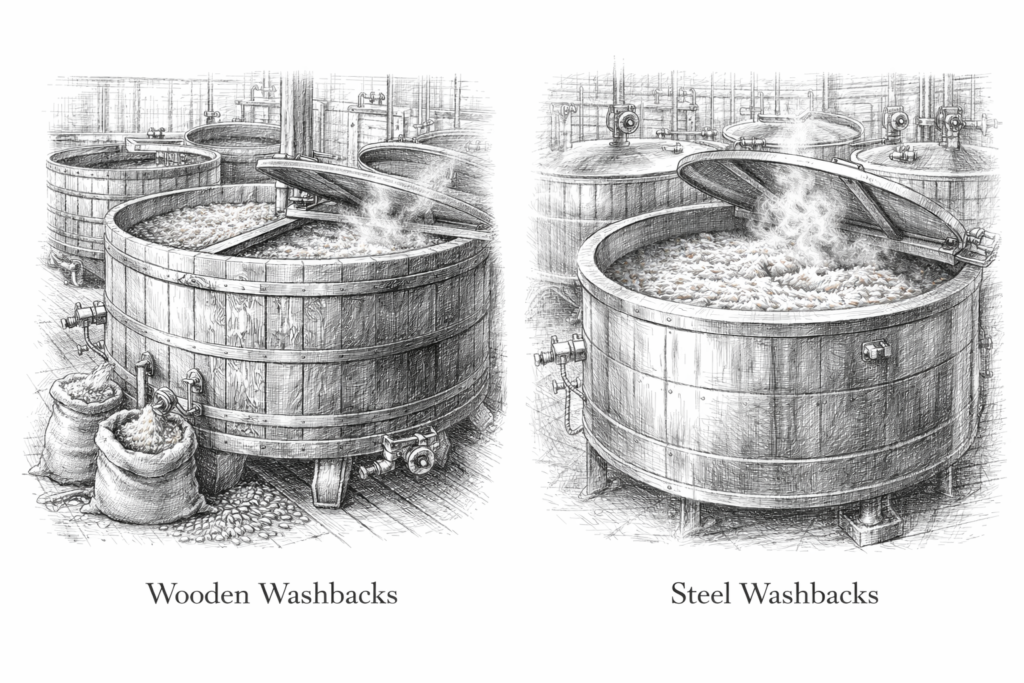
Wort is transferred to fermentation tanks called washbacks. Yeast is added. Sugar becomes alcohol.
The core equation looks simple:
Glucose → Ethanol + Carbon dioxide + Heat
But whisky flavour doesn’t come from ethanol. It comes from the by-products.
During fermentation, yeast also creates:
- Esters (fruity aromas)
- Higher alcohols
- Organic acids
- Aldehydes
Those compounds form the backbone of flavour before distillation even begins.
Wooden Washbacks
Often made from Oregon pine or larch, wooden washbacks are slightly porous. They can harbour beneficial microflora and may encourage subtle lactic character during longer fermentations.
A beautiful example of this is Chichibu Distillery, where master distiller Ichiro Akuto opted for Mizunara Washbacks because of the porous quality of the wood that leads to a profound impact on the eventual flavours and aromas of the spirit. Read all about it in my Chichibu Distillery Spotlight!
They feel traditional. They also genuinely behave differently from steel.
Stainless Steel Washbacks
Easier to clean. Highly consistent. Minimal microbial influence.
If wood introduces subtle variability, stainless steel delivers precision.
Fermentation Time Matters
- Around 48 hours: cereal-forward, robust spirit
- 72+ hours: increased fruitiness and ester formation
- Extended fermentation: more tropical and lactic complexity
Longer fermentation often equals more expressive spirit.
This stage is hugely underrated when discussing how whisky is made.
5. Distillation: Sculpting the Spirit
Distillation doesn’t create flavour from nothing. It selects and concentrates what fermentation created.
Ethanol boils at 78.37°C. Water at 100°C. But whisky contains hundreds of volatile compounds with different boiling points.
The still acts like a flavour filter.
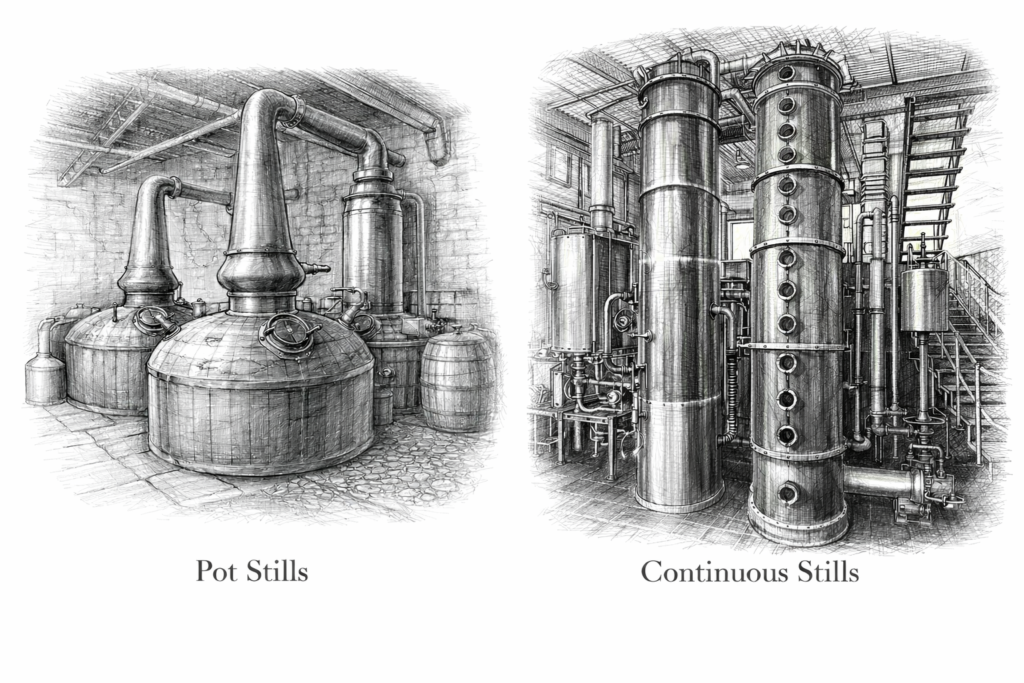
Pot Stills
Used by distilleries such as The Macallan and Midleton Distillery.
Pot stills operate in batches.
Key characteristics:
- Heavy copper contact
- Lower final distillation strength
- Richer congeners
Copper removes sulphur compounds by reacting with them chemically. That’s not romance — that’s chemistry.
Still shape matters too:
- Tall, narrow stills encourage reflux and lighter spirit
- Short, squat stills create heavier spirit
- Upward-angled lyne arms produce elegance
- Downward angles create weight
Pot still whisky often feels textured and characterful.
Coffey (Continuous) Stills
Invented by Aeneas Coffey, the Coffey still revolutionised whisky production.
Continuous column stills:
- Run non-stop
- Reach higher ABV (up to ~94%)
- Produce lighter, cleaner spirit
- Are far more energy-efficient
Grain whisky and most bourbon rely on column distillation.
Grain whiskies can have a bad reputation for being cheap and predominantly used in blends, but when you give grain the time or distill it to a lower maximum ABV it can give you an incredibly pleasant spirit. Just check out my Nikka Coffey Grain review to see what I’m talking about!
Less copper interaction and higher distillation strength mean fewer heavy compounds survive. The result is lighter spirit, often shaped more by wood than by distillation character.
6. Condensation: Worm Tub vs Shell & Tube
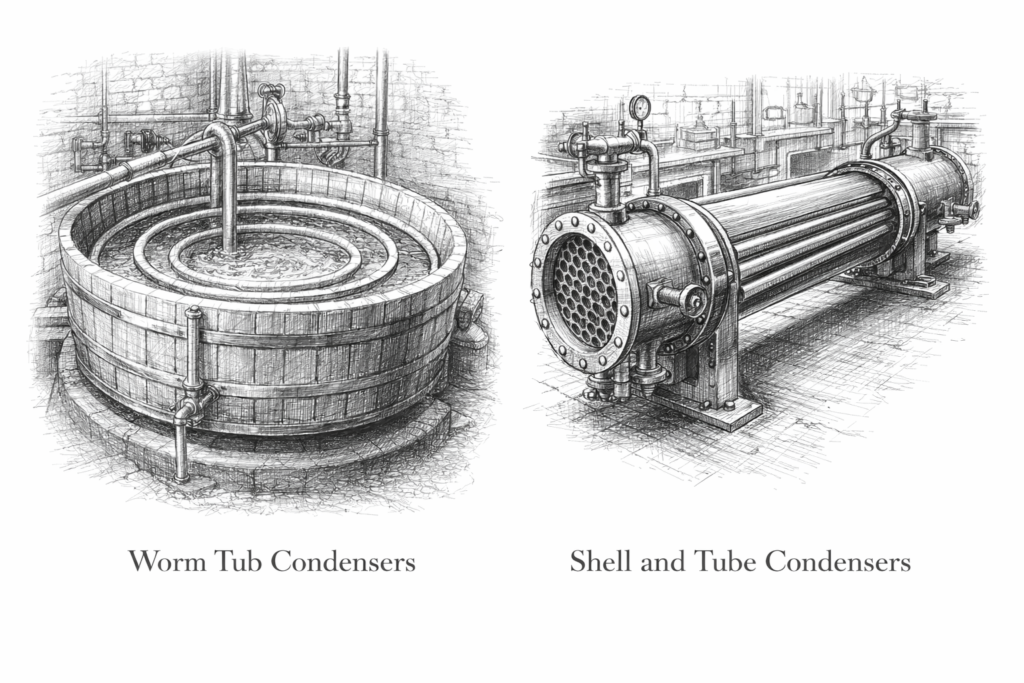
After vapour rises, it must cool and return to liquid.
This step is rarely discussed — but it matters.
Worm Tubs
Used at distilleries like Craigellachie Distillery. But also newer distilleries like Ardnahoe are bringing back the worm tub to whisky distillation.
A long copper coil sits submerged in cold water. Vapour travels through it slowly.
- Slower cooling
- Less copper contact during condensation
- Heavier, meatier spirit
Worm tub whisky often feels muscular and dense.
Shell & Tube Condensers
Modern condensers use multiple narrow copper tubes.
- Faster cooling
- More copper contact
- Cleaner spirit
More copper interaction strips out heavier sulphur notes and can enhance fruit-forward clarity.
Two distilleries can share the same still shape but taste dramatically different due to condenser design.
7. The Spirit Cut: Precision and Instinct
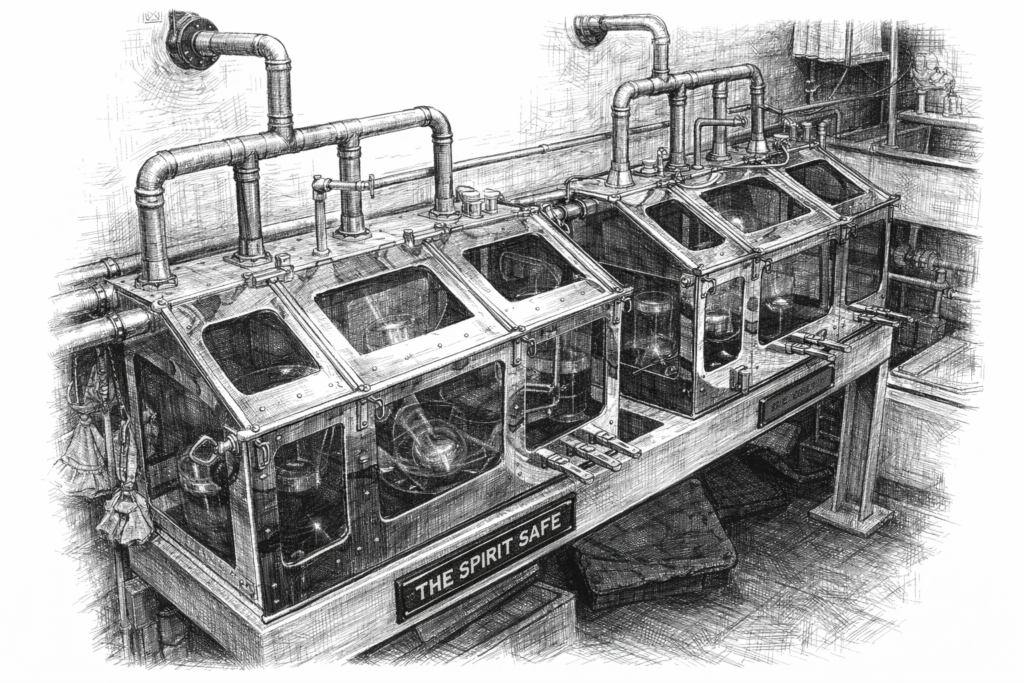
During distillation, not all liquid is collected.
Distillers separate:
- Foreshots (heads)
- Hearts (the spirit kept for maturation)
- Feints (tails)
A narrow cut produces a cleaner, lighter profile.
A wider cut keeps more weight and texture.
This is where human judgement plays a decisive role.
A great example is Midleton, where the mash bill for each of their Pot Still whiskies is the same. But the difference between Redbreast, Power’s and the Spot Whiskies comes from the cut. Each expression has a different sized heart.
8. Maturation: Time, Wood, and Transformation
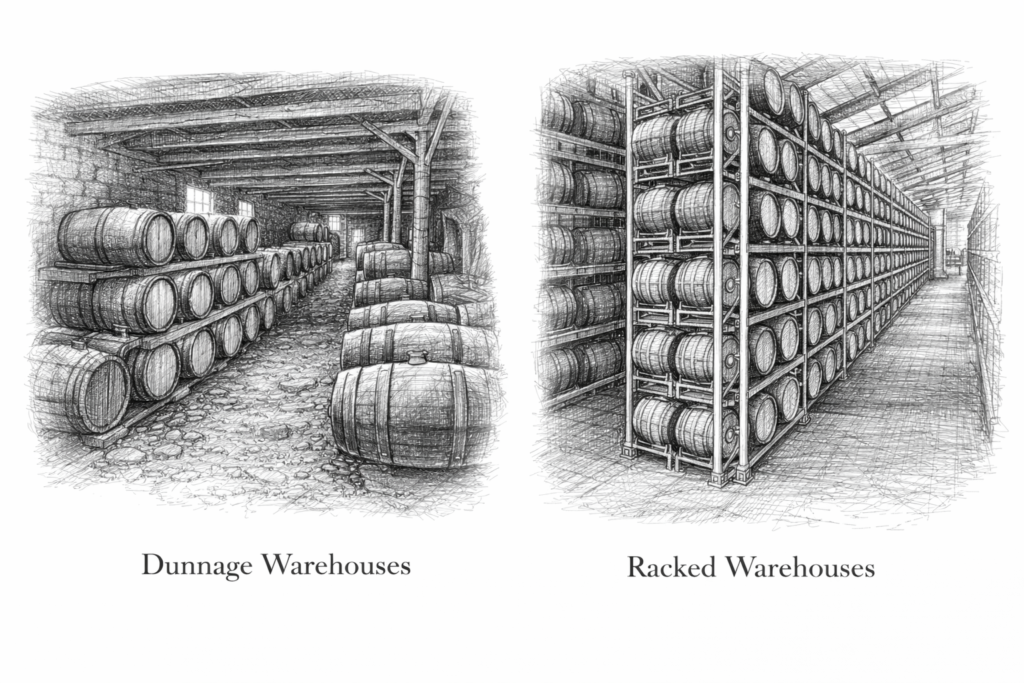
New make spirit enters oak at controlled strength.
Inside the cask:
- Lignin breaks down into vanillin
- Hemicellulose creates caramel notes
- Tannins influence structure
- Oxygen slowly interacts with spirit
Bourbon must use new charred oak.
Scotch often uses ex-bourbon or sherry casks.
Temperature fluctuations push spirit into and out of the wood, accelerating extraction.
Whisky maturation is shaped not only by time and cask type, but by climate and warehouse style. Temperature swings drive expansion and contraction of the spirit within the oak, accelerating extraction in warmer climates and slowing it in cooler ones. Humidity influences whether alcohol or water evaporates more quickly, subtly shifting strength and texture over the years. A traditional dunnage warehouse, with its earth floor, thick stone walls, and low stacking, tends to offer stable, humid conditions and gentle maturation. Racked warehouses, where casks are stacked high in metal frames, create greater airflow and temperature variation, often leading to more active ageing. Palletised warehouses sit somewhere between the two, offering efficiency and consistency while still allowing moderate environmental influence. Where a cask rests is never neutral — it quietly shapes the whisky every single day it matures.
Frequently Asked Questions About How Whisky Is Made
How is whisky made step by step?
Whisky is made by converting grain into sugar, fermenting it into alcohol, distilling the liquid to concentrate flavour, and ageing the spirit in oak casks. Each stage shapes the final character of the whisky.
What ingredients are used to make whisky?
Whisky is made from grain, water, and yeast. Oak casks are essential for maturation and are responsible for much of the final flavour. And different types of peat for smoky whiskies can also make a difference.
What is the difference between pot still and column still whisky?
Pot still whisky is distilled in batches and usually produces a richer, heavier spirit. Column still whisky is distilled continuously and typically results in a lighter, cleaner, higher-strength spirit.
How long does it take to make whisky?
The production process before ageing takes only days. However, whisky must mature in oak for years. Scotch requires a minimum of three years, while straight bourbon requires at least two.
Why is whisky aged in oak?
Oak adds flavour, softens harsh elements, and allows slow oxidation. Notes like vanilla, caramel, spice, and structure develop during cask maturation.
What is a mash bill?
A mash bill is the recipe of grains used to make whisky. The proportions of corn, barley, rye, or wheat determine sweetness, spice, texture, and body.
What happens during fermentation?
During fermentation, yeast converts sugar into alcohol and produces flavour compounds such as esters and acids. These compounds create fruitiness and complexity in the spirit.
What is new make spirit?
New make spirit is freshly distilled alcohol before it enters oak. It is clear, high in strength, and full of raw character. It becomes whisky only after ageing.
Does floor malting make better whisky?
Floor malting does not automatically make better whisky. It can introduce subtle variation and traditional character, while modern drum malting offers consistency and precision. Both methods can produce excellent spirit.
What is the difference between worm tubs and shell and tube condensers?
Worm tubs cool vapour slowly and often create a heavier style of spirit. Shell and tube condensers allow more copper contact and usually produce a cleaner, lighter profile.
Is whisky just distilled beer?
In simple terms, whisky begins as something similar to unhopped beer. The difference lies in distillation and long maturation in oak, which transform it completely.
Why do whiskies taste so different?
Whiskies taste different because every production decision matters. Grain choice, fermentation time, still type, condenser design, cask selection, and ageing conditions all influence the final flavour.
Why Understanding How Whisky Is Made Changes Everything
Once you understand how whisky is made, you stop tasting “flavours” and start tasting decisions.
Long fermentation? Expect fruit.
Worm tubs? Expect weight.
Tall stills? Expect elegance.
Column distillation? Expect clarity.
Whisky is not just tradition. It is a series of technical choices layered together.
And that’s why two single malts from neighbouring distilleries can taste completely different.
Final Thoughts
So, how is whisky made?
Through grain, water, yeast, copper, wood, and patience.
Through chemistry guided by human hands.
Through science that feels like art.
Once you understand the process, every dram becomes more than flavour. It becomes story, structure, and intention.
And that’s when whisky truly becomes fascinating.