Ardbeg Trudernish Review – 15 Years of Ardbeg for €80?
Ardbeg releases quite a lot of whisky. Between Committee bottlings, Ardbeg Day releases and the occasional experiment, there always seems to be something new coming out of the distillery, but I find a new addition to the actual core range considerably more interesting. Limited editions are fun to try, but ultimately most of them disappear again. A new core-range bottle has to earn a place next to Ten, Uigeadail, Corryvreckan, An Oa and Wee Beastie, and presumably stay there for years.
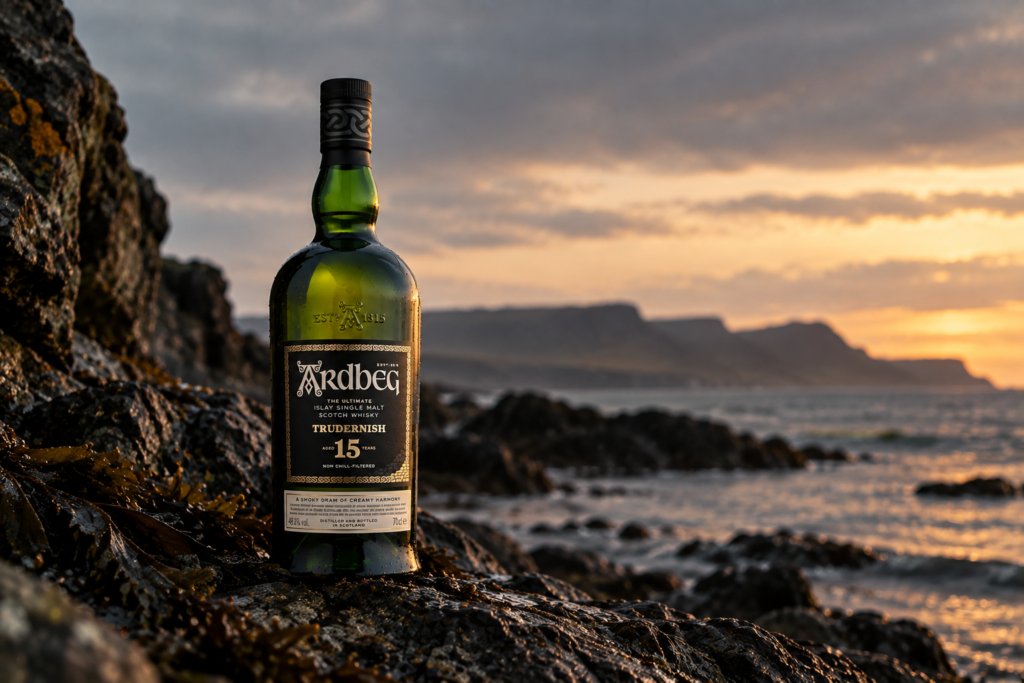
So when Ardbeg announced Trudernish, there were two things that interested me immediately: the big 15 on the label and the price. Around €80 for a 15-year-old Ardbeg bottled at 48.4% is, at least by current Scotch whisky standards, surprisingly reasonable. I realise how depressing that sentence would probably have sounded fifteen years ago, but here we are. We’ve become accustomed to age statements creeping down while prices creep up, and Ardbeg certainly isn’t a name I normally associate with being particularly restrained when it comes to pricing its older whisky. I therefore expected a new 15-year-old Ardbeg to comfortably break the €100 barrier. It didn’t.
Apparently plenty of people here in The Netherlands reached the same conclusion, because the first bottles disappeared remarkably quickly. Trudernish is supposed to be part of the permanent range, so there shouldn’t really be any reason to chase one, but at the time of writing that’s easier said than done. Hopefully we’re simply seeing the usual rush surrounding a new Ardbeg and in six months I’ll look slightly silly for even mentioning availability.
The name required a little more investigation because I had absolutely no idea what Trudernish was. Uigeadail I know. Corryvreckan I know. Trudernish could have been a place, a person, an obscure piece of distilling equipment or simply something Gaelic that I’d been pronouncing incorrectly for twenty years.
It is, thankfully, a place. Trudernish is an old settlement in the southeast of Islay, relatively close to Ardbeg, and the story surrounding the whisky also takes us to the nearby Trudernish Well. That puts it in familiar territory for Ardbeg, which has been borrowing names from the landscape around the distillery for years. Uigeadail takes its name from the loch connected to Ardbeg’s water supply, while Corryvreckan refers to the enormous whirlpool between Jura and Scarba. Trudernish continues that tradition with another little piece of the island most of us probably wouldn’t have known existed otherwise.
I’m not going to spend another thousand words on Ardbeg itself here, because I’ve already done exactly that in my Ardbeg Distillery Spotlight. If you want the closures, the almost absurdly unlikely resurrection of the distillery and how Ardbeg eventually became one of the biggest cult names in Scotch whisky, you can find the whole story there.
What matters for this review is that we now have a 15-year-old Ardbeg in the regular range, matured in bourbon casks, charred new oak and Oloroso sherry casks, bottled at 48.4% and initially priced around €80. On paper, I can’t find much to complain about, so now I just need it to taste good.
Listen to the review:
Tasting Notes: Ardbeg Trudernish
Stats
- Distillery: Ardbeg
- Type: Islay Single Malt Scotch Whisky
- Age: 15 Years Old
- ABV: 48.4%
- Cask Type: Bourbon, Charred New Oak & Oloroso Sherry Casks
- Country: Scotland
- Flavour Profile: Smoke & Storm
Fifteen years is an interesting age for Ardbeg. The peat, citrus and slightly dirty character of the distillate can be wonderfully aggressive when young, and part of what I like about Ardbeg is that it has never tasted particularly interested in being elegant. Give that spirit fifteen years in oak, however, and there is always the possibility of sanding away some of the bits that made it interesting in the first place. The charred new oak adds another potential complication, because there is only so much wood spice I want between myself and the whisky.
Thankfully, the first sniff suggests that nobody has managed to clean Ardbeg up too much.
Nose
Cold ash is the first thing I find, followed by charcoal, damp earth and that familiar mixture of peat smoke and sea air that makes identifying Ardbeg blind considerably easier than many distilleries. There’s seaweed somewhere underneath it and something slightly medicinal, but the smoke itself isn’t particularly aggressive. It feels as though it has had time to sink into the whisky rather than sitting in a big cloud above everything else.
The citrus starts to appear once it has been in the glass for a while. Lemon peel first, then grapefruit and eventually something sweeter that reminds me of mandarin. Pear and yellow apple follow, with vanilla, caramel and honey slowly building underneath. There’s a creamy note in there as well that keeps taking me towards vanilla custard, and every now and then I find a little pineapple or mango. I wouldn’t call this a tropical Ardbeg, but there are little flashes of fruit that I don’t immediately associate with the younger bottles.
I particularly like the herbal side of the nose. Rosemary, liquorice root and something slightly mentholated keep moving in and out of the smoke, together with dried herbs and a mineral quality that reminds me of wet stones. It gives the sweeter vanilla and fruit something to push against and, more importantly, keeps the whole thing recognisably Ardbeg.
It isn’t the sort of nose that Corryvreckan has, where you can practically smell it from the other side of the table, but I’m perfectly fine with that. Trudernish needs a little more time in the glass, and I keep finding enough new things when I go back to it that I’m happy to give it that time.
Palate
The first sip is much fuller than the nose had me expecting. There’s a lovely creamy, oily texture to it, with vanilla, sweet malt and caramel spreading across the tongue before the peat starts working its way through. The 48.4% ABV works particularly well here. There’s enough alcohol to give the whisky some weight, but I never get the impression that I’m drinking something close to 50%.
Then the ash really arrives. Cold fireplace ash, charcoal and smouldering wood, followed by a little tar, dried seaweed and plenty of salty mineral notes. This is probably the point where I stop worrying about those fifteen years making Ardbeg too polite. There’s still enough dirt here to keep me happy.
The fruit is brighter on the palate than it was on the nose. Pear and baked apple are joined by mandarin, grapefruit peel and something like a grilled lemon, where you get the acidity of the citrus together with a slightly charred bitterness. Peach appears occasionally as well, and after a few sips I start getting a little pineapple underneath the smoke.
As it develops, the oak becomes considerably easier to spot. Black pepper, ginger and nutmeg arrive first, before espresso and dark chocolate start pulling things in a more bitter direction. There’s liquorice as well, and eventually the sweetness from the vanilla and caramel is sitting opposite coffee, charred wood and increasingly dry spice. It’s quite a lot of oak, but on the palate I think it works.
The Oloroso influence is considerably harder for me to separate from everything else. If I didn’t know it was part of the cask recipe, I’m not convinced I would have guessed it. There’s perhaps some darker fruit buried underneath the smoke and wood, but anyone coming here hoping for something resembling the sherry influence in Uigeadail is going to be disappointed. Bourbon and charred oak are doing most of the talking.
A few drops of water bring out more yellow apple and peach while softening some of the spice, and there’s perhaps a little more vanilla as well. It’s worth trying, but after going back and forth between the two I prefer Trudernish neat. I think Ardbeg got the bottling strength pretty much right.
Finish
The smoke survives beautifully into the finish, with cold ash and charcoal hanging around while the citrus becomes increasingly bitter. Grapefruit peel, liquorice and ginger are joined by espresso, dark chocolate and eventually something very close to strong black tea.
This is also where the oak gets closest to being too much for me. The finish becomes noticeably dry and woody after a while, and there’s a combination of charred oak, coffee and black-tea bitterness that could probably divide opinion. I don’t dislike it, especially because there’s still enough grapefruit and smoke hanging around to keep things interesting, but I’d happily trade a little of that wood for more of the fruit from the palate.
Thankfully, it doesn’t disappear quickly. The sweeter flavours are the first to leave, but the ash, citrus oil, dark chocolate and dry oak continue for quite some time. Even several minutes later there’s still a faint mixture of smoke and espresso sitting on my tongue.
I can live with that.
Food Pairing
After spending most of the tasting notes talking about smoke, char and citrus, I’m not going to make life unnecessarily difficult here. Give me smoked pork belly with a sticky glaze containing a little honey and citrus. The fat should stand up nicely against the peat and drying oak, while the caramelised outside has plenty in common with the vanilla, charred wood and sweeter notes in the whisky.
An aged Gouda would work particularly well too, preferably one old enough to have developed plenty of those little crunchy crystals. There’s enough nuttiness and caramel in the cheese to meet the oak and vanilla, while the salt should be rather lovely with the maritime side of the Ardbeg.
Although I’ve also got a bar of dark chocolate with sea salt sitting in the cupboard, and after tasting Trudernish I’m starting to think its chances of surviving the evening are fairly slim.
Who Is Ardbeg Trudernish For?
If you already like Ardbeg, Trudernish is probably most interesting as a chance to taste the familiar distillery character with considerably more age than you normally get in the standard range. Compared with Ten, it’s rounder, creamier and more settled, but there’s still enough cold ash, citrus, seaweed and tar underneath to stop it becoming overly polished. Wee Beastie sits at almost the opposite end of the spectrum, with all those young, sharp edges still intact.
Uigeadail and Corryvreckan are harder comparisons because both have much bigger personalities. Uigeadail has the rich sherry influence that Trudernish very deliberately doesn’t, while Corryvreckan has considerably more power. I don’t think Trudernish replaces either of them, and I’m not sure I’d want it to. What Ardbeg was missing was something between the younger core-range bottles and the considerably more expensive old whisky, and fifteen years seems a rather sensible place to put it.
The €80 price is a fairly important part of the equation for me. I’m not going to pretend eighty euros is cheap, but I’ve seen enough 15-year-old Scotch creeping towards and well beyond €100 that I expected Ardbeg to go the same way. At the launch price, I think there’s plenty of whisky here for the money.
Of course, that argument works considerably better when you can actually buy a bottle. The first allocation here in The Netherlands disappeared quickly, so hopefully supply catches up with demand and Trudernish actually gets the chance to behave like the core-range whisky it is supposed to be.
Verdict
There was a lot about Trudernish that appealed to me before I tasted it. I like the 15-year age statement, I like the 48.4% ABV and, in the context of current Scotch whisky prices, I like that Ardbeg managed to put it on shelves at around €80. None of that would matter very much if the whisky itself were disappointing, but thankfully it isn’t.
The nose takes a little time to open up, but there’s plenty to find once it does. Cold ash, lemon and grapefruit sit alongside pear, vanilla, herbs, wet stone and the occasional flash of tropical fruit. The palate is where I think Trudernish is at its best, particularly because of that creamy texture. The ash becomes much more pronounced, the citrus gets brighter and there’s enough tar, seaweed and mineral character to remind me exactly what I’m drinking.
I’m slightly less enthusiastic about the amount of oak towards the end. Espresso, dark chocolate and char work nicely with the smoke, but the black-tea bitterness and drying wood come close to overstaying their welcome. Not enough to spoil the whisky, but enough that I notice it every time I reach the finish.
Still, this is exactly the sort of addition I want to see in a core range. Ardbeg hasn’t tried to completely reinvent its spirit or cover it in an enormous cask finish. Instead, Trudernish gives us a chance to see what another five years can do to something broadly recognisable as Ardbeg, and thankfully those years have added more than they’ve taken away.
At around €80, I’d happily buy another bottle.
I just need somebody to keep one on a shelf long enough for me to do it.
Rating:
Final Thoughts
There’s nothing wrong with limited releases, and some of the most interesting whisky I drink every year comes from precisely those sorts of bottles, but there’s something satisfying about finding a whisky you like and knowing that theoretically you can simply buy another one when it’s empty.
That’s what I hope happens with Trudernish.
Ardbeg certainly hasn’t been short of new releases over the years, but putting a 15-year-old into the regular range at a fairly sensible strength and price is considerably more useful to me than another bottle I’ll taste once, write about and then watch disappear. It also gives the range something it was missing. Ten remains the obvious starting point, Uigeadail gives you the darker sherried side of Ardbeg, Corryvreckan turns everything up considerably further, and Trudernish now gives us a more mature version of the distillery without immediately moving into luxury-whisky territory.
Most importantly, I can still taste Ardbeg underneath those fifteen years. The cold ash is there, the seaweed is there, the citrus is there and occasionally there’s still enough tar and charcoal to make me wonder why flavours that sound so unpleasant on paper work quite so brilliantly in whisky. The extra age has mainly changed the texture and the way those flavours sit together rather than removing them.
I could do with a little less oak in the finish, and I wouldn’t mind seeing slightly more of that fruit surviving towards the end, but those are fairly minor complaints about a whisky I’ve thoroughly enjoyed drinking.
Now Ardbeg just needs to do the difficult bit and make enough of it.
Because a permanent 15-year-old Ardbeg at around €80 is a rather good idea.
It would be nice if it were permanently available too.
Affiliate Disclaimer: Some links in this article are affiliate links. If you make a purchase through them, DRAM1 may receive a small commission at no extra cost to you. This helps support the site and keeps DRAM1 independent.