International Whisky Competition 2026 Results: What They Tell Us About the Future of Whisky
Every year around this time, my inbox starts filling up with award announcements. Some proclaim the world’s best whisky, others celebrate the best distillery or blender, and before long social media is flooded with medal-winning bottles. It’s easy to become a little numb to it all.
The International Whisky Competition (IWC) has always been one of the competitions I pay attention to, though. Unlike many awards that simply hand out a seemingly endless stream of medals, the IWC focuses on ranking whiskies against one another. That doesn’t mean I always agree with the results, but it does make them interesting to analyse.
If you’re looking for the complete list of winners, I’d encourage you to browse the official results yourself, as there are hundreds of category winners worth exploring. Instead, I want to look at what actually stood out to me and, perhaps more importantly, what these results tell us about where the whisky industry is heading next.
You can find the complete results on the official International Whisky Competition website:
https://www.whiskycompetition.com/results
Kavalan Isn’t Chasing Scotland Anymore
The biggest headline is impossible to ignore.
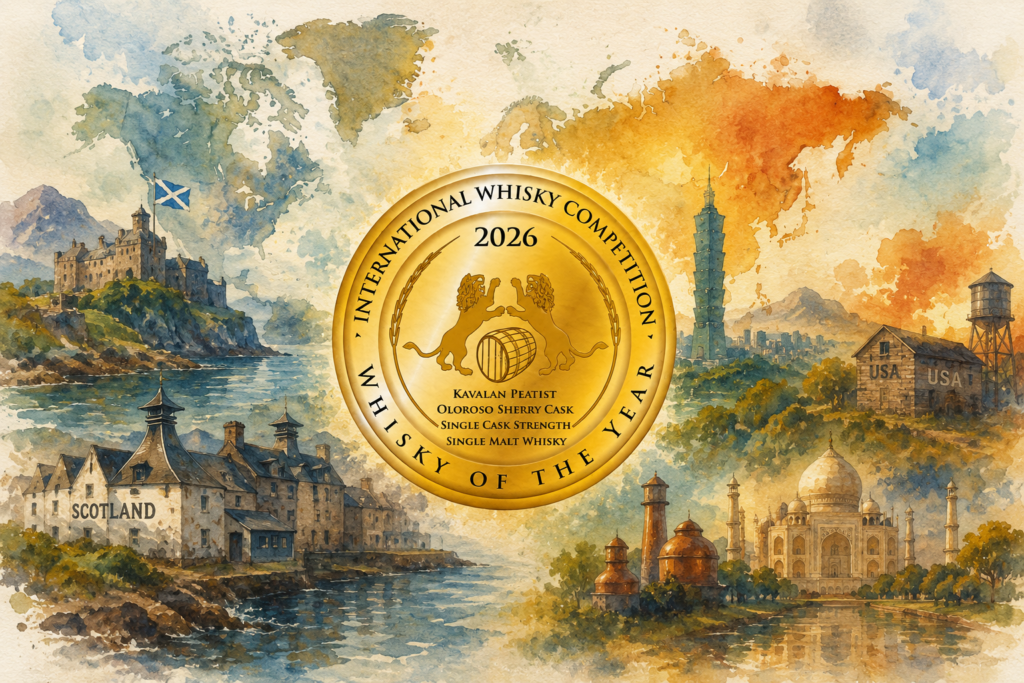
Kavalan Peatist Oloroso Sherry Cask Single Cask Strength was crowned Whisky of the Year with an astonishing 96.97 points, while Kavalan’s Head of Research & Development, Zerose Yang, took home Master Distiller of the Year.
On its own, that would already be impressive.
But when I started scrolling through the overall rankings, something else became clear. Kavalan didn’t just produce the winning whisky; it dominated the competition. The Taiwanese distillery occupies a remarkable number of places in both the Top 15 and the list of whiskies scoring above 90 points, with expressions matured in ex-Bourbon, Madeira, Oloroso, PX, Port, Virgin Oak, Vinho Barrique and several other cask types all receiving outstanding scores.
A decade ago, many whisky drinkers still referred to Taiwan as an emerging whisky nation.
I don’t think that’s an accurate description anymore.
At this point, Kavalan has proven itself time and again on the international stage. Whether you personally prefer Scotch, bourbon or Japanese whisky doesn’t really matter. If these results reinforce anything, it’s that Taiwan now belongs firmly among the world’s elite whisky producers.
Scotland Is Still Exceptional, But No Longer Alone
Perhaps the most interesting takeaway isn’t who won. It’s who didn’t.
The overall podium wasn’t dominated by Scotland. Instead, it paints a picture of an increasingly global whisky landscape. Alongside Kavalan, Chinese distilleries such as Laizhou and The Chuan secured places among the highest-scoring whiskies, while Indri Diwali Collector’s Edition 2025 once again demonstrated that Indian single malt continues to improve at an incredible pace.That’s something I’ve been noticing for several years now.
When I first started exploring whisky, conversations almost always revolved around Scotland, Ireland and Kentucky. Today, I find myself recommending bottles from Taiwan, India and Australia more often than ever before, not because they’re different or unusual, but because they’re genuinely excellent. Scotland remains the benchmark, but it no longer owns the conversation. And thats reflected in the International Whisky Competition 2026 results.
Scotland’s Strength Lies in Premium Whisky
That certainly doesn’t mean Scotland had a disappointing year. Far from it. Looking through the Scottish category winners, I noticed that many of the highest honours went to whiskies that emphasise mature stock and thoughtful cask management rather than novelty.
Among the highlights were:
- Aberfeldy Sherry Cask 25 Years Old taking Best Single Malt Scotch.
- Bruichladdich Port Charlotte 10 Years Old once again proving why it remains one of my favourite core-range peated whiskies.
- Royal Brackla Oloroso 12 Years Old winning Best 12-Year-Old Single Malt.
- Dewar’s Double Double 21 Years Old claiming Best Blended Scotch while also helping Stephanie Macleod secure Master Blender of the Year.
What stands out to me is that these aren’t gimmicky releases.
They’re whiskies built around quality spirit, long maturation and carefully selected casks. In a market that has sometimes seemed obsessed with limited editions and flashy packaging, that’s actually quite refreshing.
Sherry Casks Continue to Rule
Another trend becomes almost impossible to miss once you read through the winners: Oloroso, PX, Madeira, Palo Cortado, Amontillado.
Those names appear over and over again throughout the results. Whether it’s Kavalan, Royal Brackla, Aberfeldy, Indri or Laizhou, fortified wine casks continue to dominate many of the highest-scoring whiskies. We’ve seen this direction developing for years, but the 2026 results reinforce it even further.
That doesn’t mean bourbon casks are disappearing. Some of my favourite whiskies are still beautifully refill-driven or ex-bourbon matured. But if producers are looking for complexity and judges continue rewarding rich flavour profiles, I suspect we’ll see even more experimentation with premium sherry and fortified wine casks over the coming year.
Why I Always Enjoy Comparing Awards
Whenever award season comes around, someone inevitably asks which competition is “right.”
The honest answer? None of them. Every competition reflects the judging panel behind it. That’s exactly why I enjoy comparing different competitions rather than treating any single one as gospel.
Here at DRAM1 we’ve taken a very different approach with both the DRAM1 Whisky Award and the DRAM1 Indie Award. Instead of relying on a relatively small expert panel, our competitions bring together more than 150 whisky enthusiasts from different backgrounds, all tasting blind. The idea isn’t to prove one judging system is better than another, but to offer another perspective on what makes a whisky truly enjoyable.
Interestingly, there are often overlaps. Rich cask influence, well-balanced peat and whiskies with genuine character consistently perform well, regardless of whether they’re judged by industry professionals or enthusiastic consumers.
If you’re curious how our community voted, you can explore both competitions here:
- DRAM1 Whisky Award 2025: https://dram1.com/dram1-whisky-award-2025-2/
- DRAM1 Indie Award 2026: https://dram1.com/dram1-indie-award-2026-results/
What Do These Results Mean for 2027?
If I had to make one prediction based on this year’s competition, it’s this: The future of whisky will become even more international. Scotland isn’t losing its position as the spiritual home of whisky, but producers elsewhere are no longer trying to imitate Scotch. They’re developing their own identities, experimenting with different climates, different cask types and different production philosophies.That’s incredibly exciting as a whisky drinker.
The 2026 International Whisky Competition suggests we’ll continue to see Taiwan setting the pace, India pushing further into the premium segment and China establishing itself as a whisky nation worth taking seriously. And if that’s where whisky is heading, I think we’re in for a fascinating few years.
External Sources
- International Whisky Competition – Results: https://www.whiskycompetition.com/results
- International Whisky Competition – About & Judging: https://www.whiskycompetition.com/
- The Whiskey Wash – International Whisky Competition coverage: https://thewhiskeywash.com/whiskey-guides/whiskey-awards/international-whisky-competition/