English Whisky Explored: How England Went From Whisky Outsider to One of the Industry’s Most Exciting Nations
For a long time, English whisky simply wasn’t part of the conversation.
When enthusiasts debated the world’s great whisky-producing nations, Scotland naturally dominated the discussion. Ireland was enjoying an impressive revival, Japan had become the darling of collectors, while countries such as Taiwan and India were proving that outstanding whisky could be made far beyond the traditional heartlands. England, despite its rich brewing heritage and centuries of distilling history, rarely received so much as a passing mention.
That has changed remarkably quickly.
Over the past few years, I’ve watched English whisky evolve from an interesting curiosity into a category I actively seek out, whether that’s visiting distilleries like Fielden, tasting new releases from producers across the country or simply following the pace at which the industry continues to develop. Today, bottles from distilleries like Bimber disappear within minutes of release, Wire Works has become one of my favourite recommendations for anyone curious about the category and producers such as The Lakes and Cotswolds are collecting international awards on a regular basis. What was once considered an experiment has quietly become one of the most exciting movements in modern whisky.
If you’re only just beginning your whisky journey, I’d also recommend reading my Whisky 101: A Beginner’s Guide to Whisky, which explains many of the production methods and terminology I’ll briefly touch on throughout this article.
What makes England’s success particularly fascinating isn’t simply the quality of the whisky. Plenty of countries produce excellent whisky these days. It’s the speed of the transformation that’s so remarkable. Scotland spent centuries building its reputation as the home of single malt. England has managed to establish itself as a serious whisky-producing nation in little more than two decades. New distilleries continue to appear across the country, established producers are refining their house styles and a growing number of enthusiasts now actively seek out English bottles rather than stumbling across them by chance.
Perhaps even more importantly, English whisky has developed a personality of its own. Instead of trying to become another Scotland, many producers have embraced experimentation, local ingredients and fresh ideas. Different barley varieties, heritage grains, extended fermentations and innovative cask management have all helped shape a category that feels confident enough to write its own story instead of borrowing somebody else’s.
So how did England go from having virtually no modern whisky industry to becoming one of the most exciting whisky-producing nations in the world? To answer that, we need to go back much further than most people realise.
England’s Forgotten Whisky History
One of the biggest misconceptions surrounding English whisky is that it’s something entirely new. In reality, whisky has been distilled in England for centuries, although never on the same scale or with the same cultural significance as it was in Scotland.
Historical records suggest whisky production was already taking place during the seventeenth century, but while Scotland gradually built an identity around whisky, England found success elsewhere. Beer remained the nation’s drink of choice, cider flourished in several regions and, by the eighteenth century, gin had firmly established itself in English drinking culture. Whisky never disappeared completely, but it never became woven into the country’s identity in quite the same way.
As the Industrial Revolution gathered pace, the gap between Scotland and England only became wider. Improvements in transport, advances in distilling technology and the introduction of the continuous still allowed Scotch whisky to reach an ever-growing international audience. Distilleries expanded, exports increased and Scotland steadily cemented its reputation as the world’s leading whisky-producing nation. England, meanwhile, saw much of its distilling expertise shift towards gin, neutral spirits and industrial alcohol. Commercial whisky production gradually faded into the background until, by the early twentieth century, it had effectively disappeared altogether.
For well over a century there wasn’t a single English distillery producing single malt whisky on a commercial scale.
That absence shaped the way generations of whisky drinkers viewed the category. Ask someone where great whisky came from and England simply wasn’t part of the answer. By the time whisky experienced its global boom during the early twenty-first century, most enthusiasts assumed England had never really made whisky in the first place. The country’s earlier history had quietly slipped into obscurity.
Ironically, that long absence may have become one of English whisky’s greatest strengths. Without centuries of expectations weighing on their shoulders, modern distillers weren’t burdened by tradition. When the revival finally arrived, they had the freedom to build something entirely their own.
The Distillery That Changed Everything
Every whisky-producing nation has a distillery that altered its course, and for modern English whisky that honour undoubtedly belongs to The English Whisky Company.
When the Nelstrop family opened St George’s Distillery in Norfolk in 2006, they weren’t joining an established industry. They were rebuilding one. It had been more than a hundred years since England last had a registered whisky distillery producing single malt commercially, and there was no guarantee that enthusiasts would embrace the idea. Convincing people that England could produce world-class whisky was always going to be every bit as challenging as making the spirit itself.
Those first bottlings were met with equal measures of curiosity and scepticism. Drinkers wanted to know whether English single malt was genuinely worth exploring or whether it was simply an interesting novelty. The answer didn’t arrive overnight, but with every new release confidence grew. The whisky was good. Then it became very good. More importantly, it wasn’t trying to imitate Scotch. It was beginning to develop a character of its own.
Looking back now, it’s difficult to overstate just how important that moment was. The success of The English Whisky Company gave other entrepreneurs the confidence to invest in English whisky. Distilleries that today rank among the country’s most respected producers might never have been built without someone first proving that the concept could work.
England’s modern whisky revival had begun, and with no established rulebook to follow, the next generation of distillers would take the category in directions few people could have predicted.
A New Generation With No Rulebook
One of the biggest advantages England’s modern distilleries had was that they weren’t trying to preserve centuries of tradition. That might sound strange at first, especially in a whisky industry where heritage is often treated as the ultimate badge of honour, but it gave English producers something many established distilleries simply don’t have: complete freedom.
Most Scottish distilleries have house styles that drinkers expect them to maintain. A familiar character built up over generations becomes part of the brand, and with that comes a certain responsibility not to stray too far from what people know and love. English distillers started with no such expectations. They weren’t replacing something that already existed. They were creating it from scratch.
That freedom can be seen throughout the production process. Some producers have spent years experimenting with different barley varieties to understand how grain influences flavour long before spirit reaches a cask. Others have deliberately extended fermentation times to create a fruitier new make spirit, while several distilleries have embraced wine casks, STR casks and maturation techniques that would have seemed unconventional only a generation ago. Even rye, a style more commonly associated with North America, has found a comfortable home in England thanks to producers like Fielden.
None of this means English whisky ignores tradition. Quite the opposite. Many producers still use traditional copper pot stills, mature their spirit in familiar bourbon and sherry casks and take inspiration from centuries of whisky-making knowledge. The difference is that they rarely feel constrained by it. If a particular fermentation, yeast strain or barley variety produces a more interesting whisky, they’re generally willing to explore it.
That willingness to experiment has become one of the defining characteristics of English whisky. Rather than every distillery chasing the same flavour profile, each seems determined to discover what makes its own spirit unique. As someone who has spent the past few years tasting more and more English whisky, I think that’s exactly what keeps drawing me back. There’s a genuine sense of discovery every time a new bottle arrives because you never quite know what direction the distillery has chosen to take.
If you’d like to dive deeper into subjects like fermentation, cask maturation and how production choices shape flavour, you’ll find much more detail in my Whisky Academy, where I explore each stage of whisky making in far greater depth.
Why English Whisky Tastes Different
Ask ten whisky enthusiasts what English whisky tastes like and you’ll probably receive ten different answers. Unlike Scotland, where regional styles have gradually emerged over hundreds of years, England is still defining itself. That’s precisely what makes the category so enjoyable to explore.
One evening with three English whiskies on the table illustrates the point perfectly. Pour a rich sherry-matured dram from The Lakes and you’re greeted by dried fruit, chocolate and polished oak. Replace that with a glass of Wire Works and suddenly the whisky becomes brighter, fresher and driven by orchard fruit, vanilla and gentle spice. Finish the evening with a rye from Fielden and you’re in completely different territory again, with pepper, herbs and baking spices taking centre stage. The common thread isn’t a particular flavour profile, but the confidence each distillery has in expressing its own identity.
That diversity is something I genuinely hope never disappears. One of the criticisms sometimes levelled at more mature whisky regions is that many distilleries have gradually converged towards styles the market expects. England still feels refreshingly unpredictable. Producers aren’t making whisky because that’s how it’s always been done. They’re making the whisky they believe best represents their distillery.
Of course, certain themes do appear across the category. English single malts often display a wonderfully expressive fruitiness, supported by creamy malt, vanilla and well-integrated oak. Even relatively young whiskies frequently taste remarkably mature without feeling overworked by the cask. That’s partly down to thoughtful production, partly to careful wood management and partly to the fact that many English distillers seem remarkably patient when deciding whether a cask is actually ready to bottle.
Rather than asking what English whisky tastes like, I think it’s far more interesting to ask what each individual distillery tastes like. The answer changes from county to county and sometimes even from warehouse to warehouse. That’s a luxury whisky drinkers don’t often get with a category that’s already had centuries to establish a recognisable style.
Climate, Barley and Maturation
Although England shares much of its climate with southern Scotland, subtle differences still influence the whisky produced there. Average temperatures tend to be slightly higher in many parts of England, encouraging a more active interaction between spirit and oak during maturation. It’s nothing like the accelerated ageing seen in countries such as India or Taiwan, where whisky can mature at remarkable speed, but it does help explain why many young English whiskies already display impressive richness and balance.
For me, however, one of the most interesting stories lies much earlier in the production process.
England has been recognised for producing high-quality barley for generations. Long before the modern whisky revival began, English grain was already being supplied to breweries and distilleries throughout Europe. Today’s whisky producers have increasingly started viewing that barley as more than simply the raw material needed to make alcohol. Different varieties, locally grown grain and closer relationships with farmers have become central to the identity of several distilleries.
Nowhere is that philosophy more obvious than at Fielden, where the conversation often starts in the field rather than the warehouse. During my visit, it became clear that regenerative agriculture, biodiversity and heritage grains aren’t marketing buzzwords but genuinely influence the decisions being made throughout production. It’s a fascinating approach because it borrows ideas more commonly associated with wine, where the concept of terroir has long been accepted, and applies them to whisky.
The result is a category that increasingly celebrates where its ingredients come from, not just where they’re distilled. Whether every drinker can identify the contribution of a specific barley variety in a blind tasting is almost beside the point. The willingness to ask those questions and keep exploring them says a great deal about the direction English whisky is taking.
By the time spirit finally reaches the warehouse, that same curiosity continues. Some distilleries favour traditional ex-bourbon barrels, others build complex flavour through sherry casks, while producers like The Lakes have become internationally recognised for the way they approach maturation and cask management. Instead of searching for a single English style, what emerges is a collection of distilleries that each interpret whisky through their own lens.
That’s ultimately what keeps English whisky so exciting. The story is still being written, and every distillery seems determined to write a different chapter.
The Distilleries Shaping Modern English Whisky
One of the things I enjoy most about English whisky is that there isn’t a single distillery everyone agrees you should start with. Ask ten enthusiasts where to begin and you’ll probably receive ten different answers. Some will point you towards Bimber because of its rich, cask-driven style. Others will recommend Wire Works as the perfect introduction, while plenty of people will insist that nobody understands cask maturation quite like The Lakes.
The reality is that they’re all right.
What makes English whisky so fascinating isn’t that every distillery is chasing the same idea of perfection. Quite the opposite. Each producer has developed its own philosophy, its own priorities and, perhaps most importantly, its own personality. That’s why tasting your way through England feels less like exploring one whisky style and more like discovering half a dozen completely different interpretations of what modern whisky can be.
These are the distilleries that, in my opinion, have played the biggest role in shaping that story.
The English Whisky Company: The Pioneer
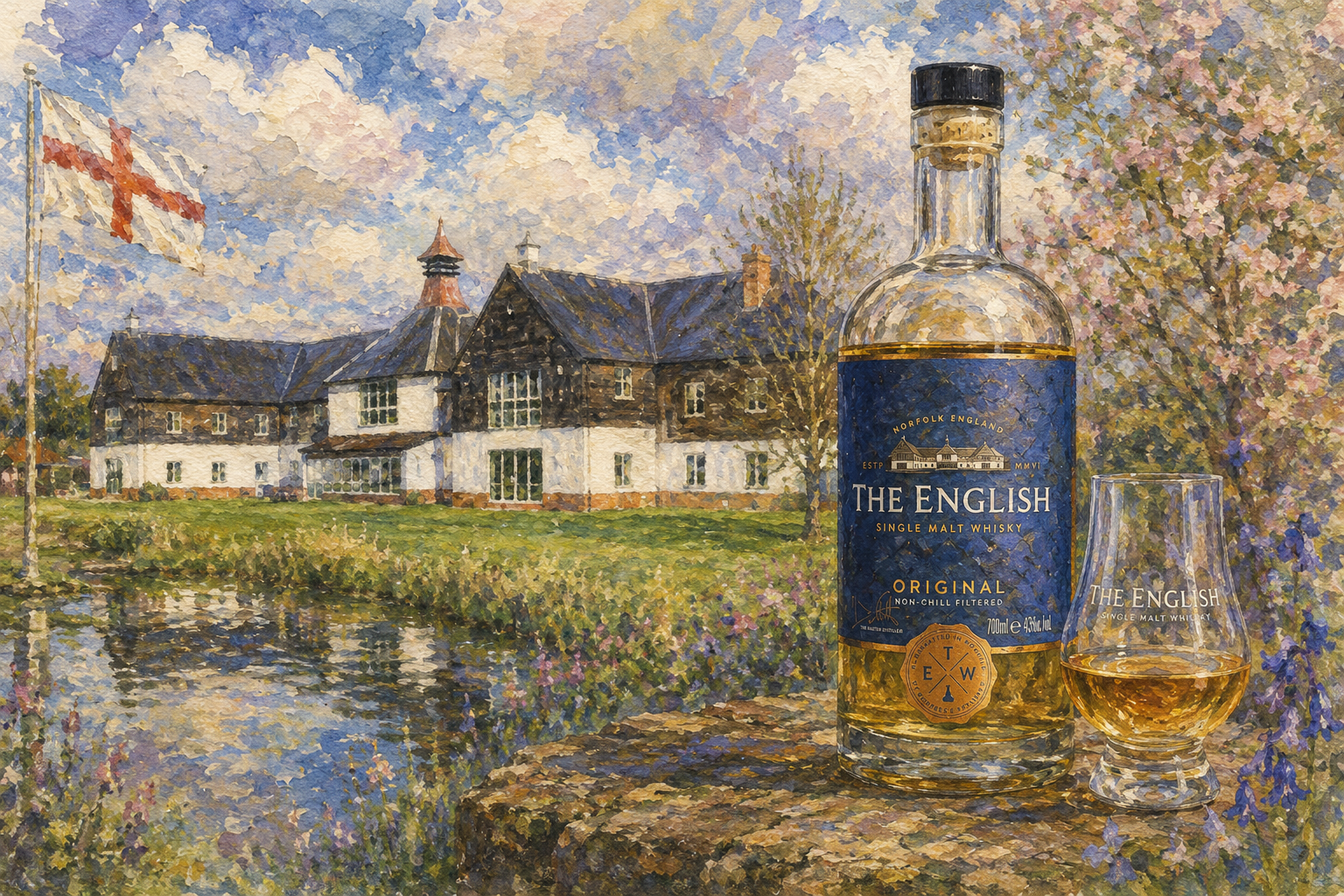
Every whisky-producing nation has its pioneers, and modern English whisky simply wouldn’t exist in its current form without The English Whisky Company.
When St George’s Distillery filled its first casks in Norfolk back in 2006, there was no established English whisky scene waiting for them. There were no neighbouring single malt distilleries to collaborate with, no proven market for English whisky and no guarantee that drinkers would take the idea seriously. Looking back now, it’s easy to forget just how much of a gamble it really was.
Fortunately, the whisky quickly demonstrated that England was capable of producing far more than a novelty.
Over the years, the distillery has released everything from approachable everyday drams to heavily peated expressions and limited editions, but what has impressed me most is the consistency of the spirit itself. Rather than chasing headlines with increasingly unusual releases, The English Whisky Company has quietly focused on building a solid reputation through well-made whisky. That may not generate the same excitement as a bottle that sells out in minutes, but it’s arguably been far more important for the category as a whole.
Without that early success, it’s difficult to imagine many of today’s English distilleries finding the confidence—or the investment—to open their own doors.
Bimber: London’s Modern Success Story
Mention English whisky in almost any enthusiast’s discussion and one name appears remarkably quickly: Bimber.
For a distillery that only began production in 2015, the reputation Bimber has built is extraordinary. It has become one of those producers whose releases generate genuine excitement long before they’re bottled, and it’s not unusual to see limited editions disappear almost immediately before finding their way onto the secondary market.
The impressive part is that the enthusiasm hasn’t been driven by clever marketing alone. Bottle after bottle, Bimber has produced whisky that justifies the attention.
Traditional floor malting, long fermentations, carefully selected oak and a meticulous approach throughout production have resulted in whiskies that deliver remarkable richness despite their relatively young age. I’ve always found Bimber to have an almost luxurious texture, combining ripe fruit, creamy vanilla, gentle spice and beautifully integrated oak in a way that feels far older than the number on the label might suggest.
In many ways, Bimber represents the confidence of modern English whisky. It didn’t rely on centuries of history to earn respect. It earned that respect one bottle at a time.
Fielden: Putting Grain Back at the Centre
Few distilleries have challenged the way I think about whisky quite as much as Fielden.
Formerly known as The Oxford Artisan Distillery (TOAD), Fielden has built its philosophy around a question that surprisingly few whisky producers ask: what if the grain itself deserves just as much attention as the cask?
That idea sits at the heart of everything the distillery does. Heritage rye varieties, regenerative farming and close partnerships with local farmers aren’t simply part of the marketing story; they’re the foundation upon which the whisky is built. During my visit, it became obvious that conversations about soil health and biodiversity weren’t being treated as fashionable buzzwords. They were genuine production decisions that influence every bottle leaving the distillery.
The resulting whiskies feel distinctly different from many American rye whiskies. Rather than delivering aggressive spice, Fielden’s rye tends to balance gentle pepper, orchard fruit, floral notes and a creamy texture that makes it incredibly approachable, even for people who normally shy away from rye altogether.
White Peak: Derbyshire’s Industrial Character
Walk through the former wire works that now house White Peak Distillery and it’s immediately clear that this is a distillery with a strong sense of place.
Instead of hiding the site’s industrial past, White Peak has embraced it completely. The old buildings, the surrounding Peak District landscape and the history of the location all feed into the identity of the distillery and its flagship Wire Works range. It feels authentic rather than manufactured, which somehow makes the whisky itself even more enjoyable to explore.
Wire Works has become one of the English whiskies I recommend most often to people discovering the category for the first time. It strikes a wonderful balance between accessibility and individuality, offering fresh orchard fruit, creamy vanilla, gentle spice and beautifully judged oak without ever feeling overly complicated. Some expressions introduce a touch of smoke, but always with restraint, allowing the spirit itself to remain centre stage.
What I appreciate most is that White Peak never feels like it’s trying to be the English version of something else. It simply tastes like White Peak, and that’s perhaps the greatest compliment I can give any distillery.
The Lakes: Masters of Maturation
If there is one English distillery that has elevated cask management into an art form, it’s The Lakes.
Situated on the edge of the breathtaking Lake District National Park, the distillery has developed a style that revolves around maturation rather than age statements. Instead of viewing the warehouse as the place where whisky simply waits to become older, The Lakes approaches every cask as another opportunity to shape flavour and texture.
That philosophy was guided for many years by the late Dhavall Gandhi, whose influence helped establish the distillery as one of England’s most respected producers. His work demonstrated that thoughtful maturation isn’t about overpowering spirit with expensive wood, but about allowing both elements to complement one another.
The result is a portfolio that consistently delivers layers of dried fruit, chocolate, baking spices and polished oak while still allowing the underlying spirit to shine through. Even younger releases often display a level of balance that many distilleries spend decades trying to achieve.
Whenever I pour a dram from The Lakes, I’m reminded that age is only one chapter in the story of maturation. How a whisky spends those years can be every bit as important as how many there are.
Cotswolds: Winning Over the Sceptics
If I had to choose one bottle that’s persuaded more people to take English whisky seriously than almost any other, Cotswolds would be high on the list.
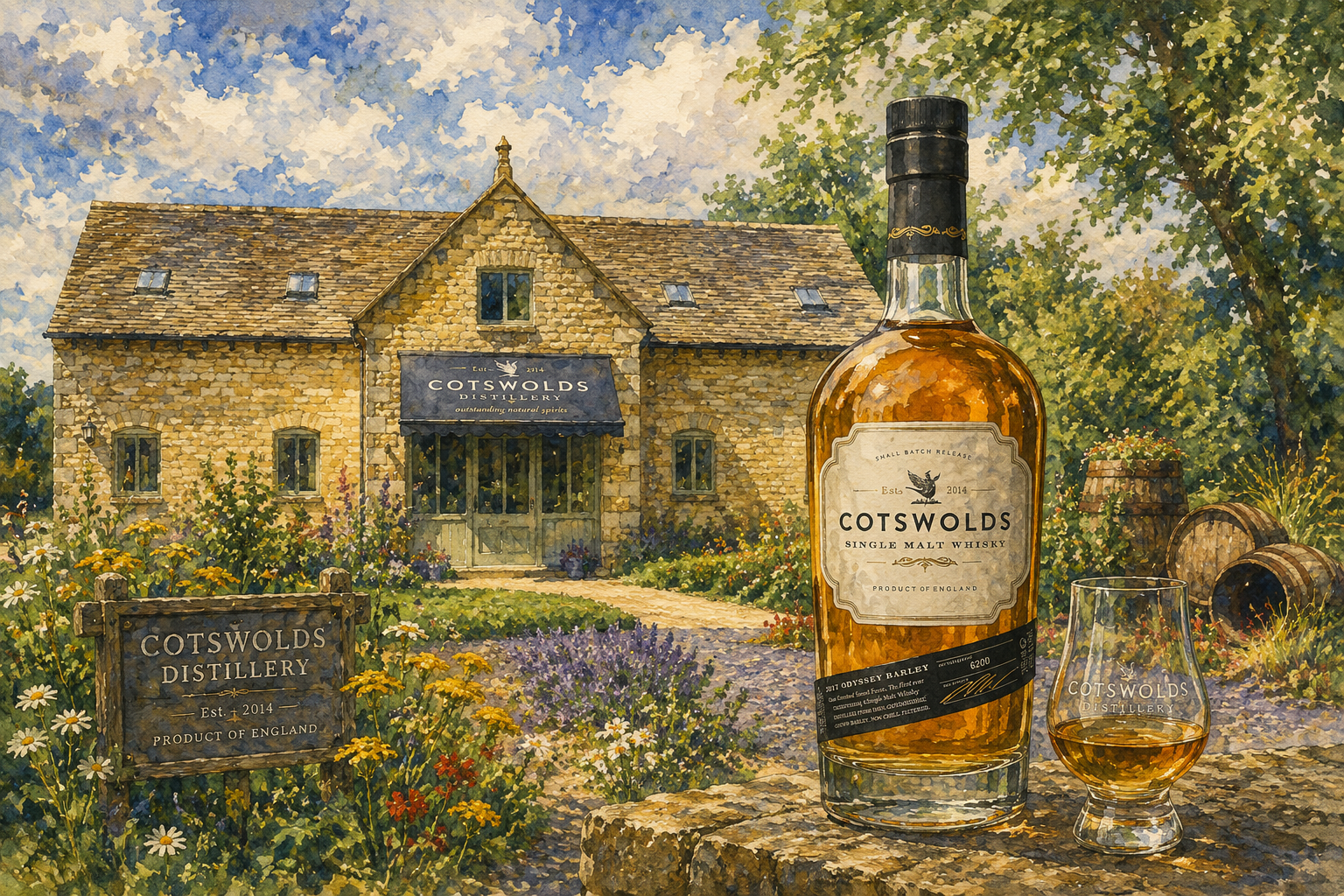
Founded in 2014, the distillery quickly developed a house style that felt generous from the very first sip. Rich first-fill bourbon barrels, active red wine casks and an exceptionally characterful spirit combine to produce whiskies packed with honey, ripe orchard fruit, vanilla and warming spice. They’re approachable enough for newcomers while offering enough depth to keep experienced enthusiasts interested.
That combination has helped Cotswolds become one of the most recognisable names in English whisky. Awards have followed, international recognition has continued to grow and, for many drinkers, a bottle of Cotswolds has become the moment they realised English whisky wasn’t simply catching up—it was carving out its own identity.
It’s a distillery that has done more than produce excellent whisky. It has changed minds, and that’s a far more difficult achievement.
Visiting the distillery also proved to be an absolute blast and I can highly recommend it if you ever find yourself in the Cotswolds!
Six Distilleries, Six Different Stories
Although these six distilleries are often mentioned together, what strikes me every time I revisit them is just how different they are from one another.
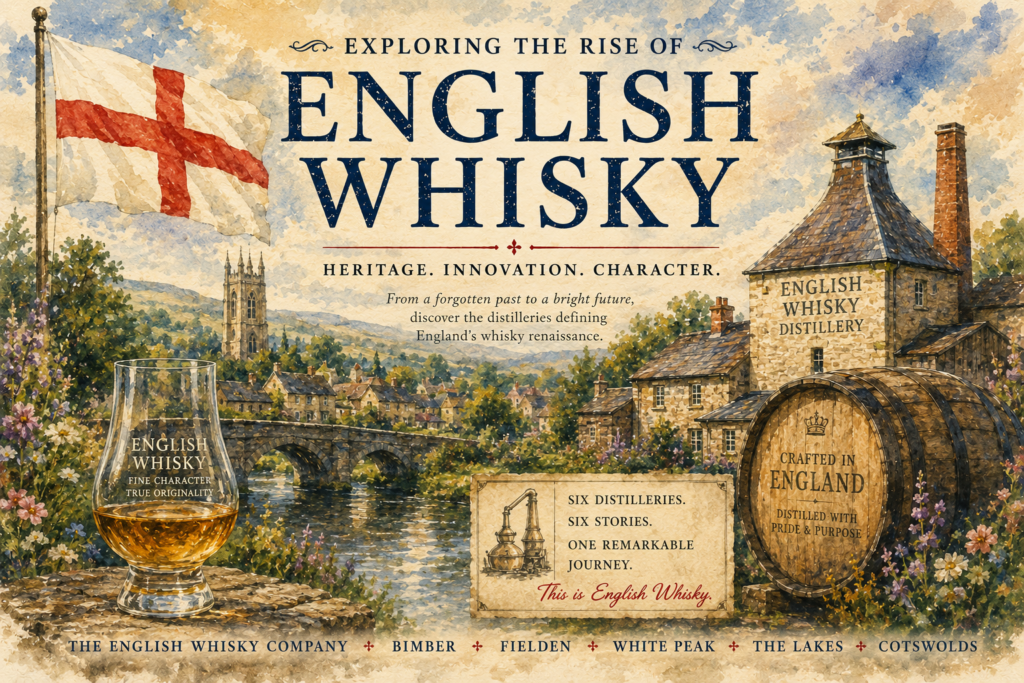
The English Whisky Company proved the revival was possible. Bimber demonstrated that young English whisky could compete with some of the most sought-after bottles in Europe. Fielden reminded the industry that flavour begins in the field long before spirit reaches a cask. White Peak found inspiration in Derbyshire’s industrial heritage, The Lakes redefined what thoughtful maturation can achieve and Cotswolds introduced countless whisky drinkers to the category for the very first time.
Together, they tell a story that’s far more interesting than any single bottle ever could.
English whisky isn’t trying to discover its identity anymore. It’s confidently showing the whisky world that there isn’t just one way to make outstanding whisky in England, and I have a feeling we’re still only seeing the beginning of what this category will eventually become.
Looking Ahead: Why English Whisky Is Only Just Getting Started
One of the things I enjoy most about following English whisky is the feeling that the story is still unfolding. Scotland has centuries of history behind it and Ireland has firmly re-established itself as one of the world’s great whisky-producing nations, but England is in a rather unique position. It already produces whisky that can comfortably compete with some of the best in the world, yet the category still feels young enough that every year brings something genuinely new.
That’s an exciting place to be as a whisky enthusiast.
Many of today’s English distilleries are only just beginning to release older stock. House styles continue to evolve, warehouses are quietly filling with spirit that won’t be bottled for another decade and new producers are joining the industry with ideas that would have seemed unconventional only a few years ago. Rather than looking back at tradition, English whisky still spends much of its time looking forward, and I suspect that’s one of the reasons it has captured the imagination of so many enthusiasts.
The category itself is also becoming better organised. The English Whisky Guild has played an important role in promoting English whisky both at home and abroad, while also working towards establishing a recognised geographical indication that will help protect the identity and reputation of English whisky for generations to come. If you’d like to learn more about the work they’re doing, it’s well worth visiting the English Whisky Guild website and reading more about the proposed English Whisky Geographical Indication. Those efforts will become increasingly important as the category continues to grow.
Growth, however, isn’t something that should simply be measured by the number of distilleries opening their doors. What impresses me far more is the overall quality. When I first started exploring English whisky, finding a great bottle still felt like discovering a hidden gem. Today, I find myself recommending English whiskies with complete confidence, whether someone is taking their very first steps beyond Scotch or they’re seasoned enthusiasts looking for something different.
I don’t believe English whisky is trying to replace Scotch, nor should it. The two categories complement one another beautifully. Scotland’s incredible diversity was built over hundreds of years, while England has been able to learn from that history before confidently following its own path. That’s why I don’t compare the two nearly as much as I used to. English whisky has reached the point where it deserves to be judged on its own merits.
If this article has sparked your curiosity, there are plenty of ways to continue exploring. During English Whisky Week 2026, I highlighted some of the bottles that impressed me most, making it a great place to start if you’re wondering which distilleries deserve a spot on your shelf first. If you’re completely new to whisky, my Whisky 101: A Beginner’s Guide to Whisky covers the fundamentals, while the Whisky Academy dives much deeper into everything from fermentation and distillation to maturation and cask influence.
For those who enjoy discovering new bottles regularly, I also recently took a closer look at the Digital Distiller English Whisky Subscription. It’s one of the most interesting ways I’ve come across to experience the breadth of English whisky, introducing subscribers to distilleries and styles they might never otherwise encounter.
Whatever route you choose, my advice is simple: don’t treat English whisky as an alternative to Scotland. Treat it as an entirely different whisky journey.
Twenty years ago, very few people would have predicted that England would become one of the most exciting whisky-producing nations in the world. Today, that statement feels almost obvious.
Personally, I think the most interesting chapters are still waiting to be written.
Affiliate Disclosure: Some of the links in this article may be affiliate links. If you decide to make a purchase through them, DRAM1 may earn a small commission at no extra cost to you. These commissions help support the website and allow me to continue producing independent whisky content. As always, every recommendation and opinion in this article is entirely my own.