Whisky Price Explained: What Really Determines the Cost of a Bottle of Whisky
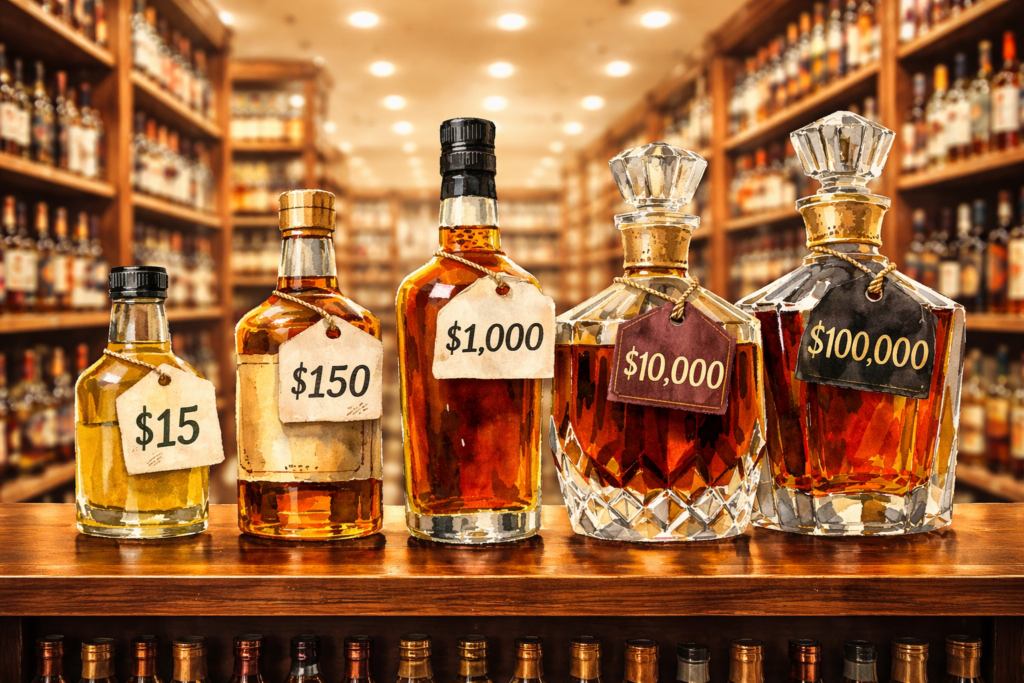
“Why is this bottle so expensive?” is one of the most common questions in whisky — and honestly, one of the most sensible. Whisky price can look wildly inconsistent on the surface: two bottles with similar ABV, similar age, and the same broad “style” can sit in completely different price brackets. That isn’t random, and it isn’t always hype either.
The truth is that whisky price is shaped by a long chain of costs and decisions that start years before the bottle ever exists: brand positioning, time in cask, the cost of wood, evaporation losses, production choices, logistics, and simple market forces. Some of these factors genuinely increase cost. Others increase perceived value. Most bottles are a mix of both.
Let’s break down the major drivers behind whisky price so you can look at a label — and the number on the shelf — with far more clarity.
Brand Strategy and Whisky Price
A meaningful portion of whisky price often comes from the brand’s strategy, not the distillate itself.
Brand positioning is expensive. Packaging design, bottle moulds, labels, cartons, marketing campaigns, ambassadors, events, visitor centres, and distribution relationships all cost real money. When a distillery aims at the premium or luxury segment, pricing becomes part of the message: higher price signals exclusivity, gift-worthiness, and prestige.
That doesn’t automatically mean the whisky is “overpriced.” It means the bottle is doing more than delivering alcohol; it’s delivering brand identity. Some drinkers love that. Some don’t care. But it’s one of the cleanest explanations for why whisky price varies even within the same distillery range.
Age and Why Time Raises Whisky Price
Age is still one of the most reliable structural drivers of whisky price, because time ties up resources.
A cask sitting in a warehouse isn’t just “waiting.” It occupies space, requires monitoring, insurance, warehousing management, and working capital. That capital could have been used elsewhere, which matters to any business.
And then you have evaporation. As whisky ages, the volume in the cask drops — meaning fewer bottles are available at the end. Older whisky is often priced higher because each remaining litre has to carry more of the original cost.
This is also why distilleries with deep mature stocks have an advantage. They can release older whisky without disrupting their pipeline as severely as a smaller producer would.
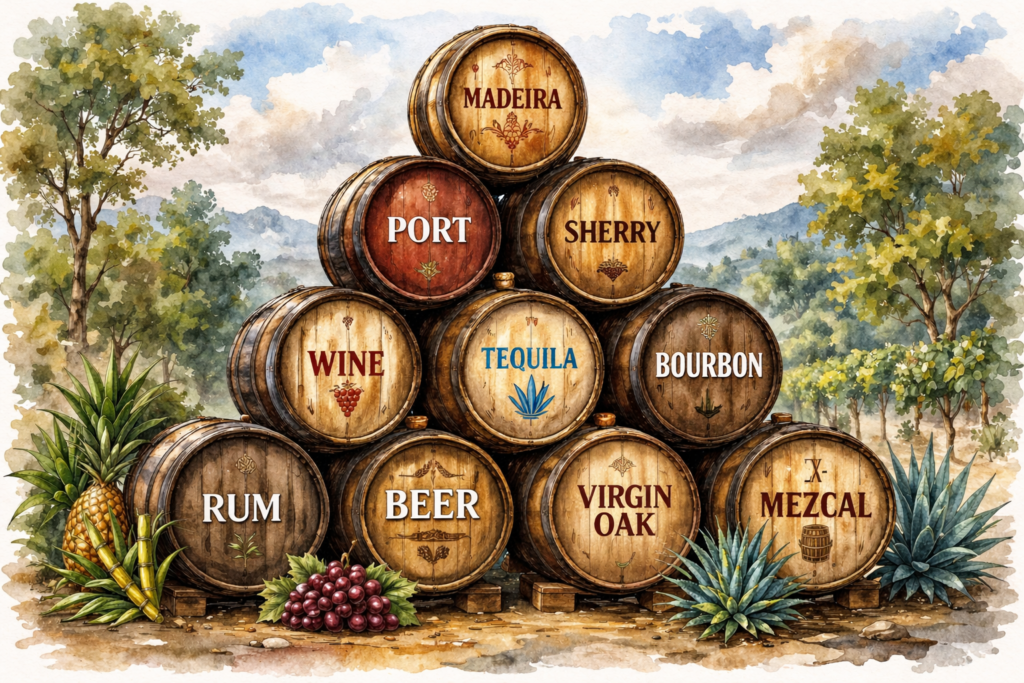
Cask Maturation: The Cost of the Cask Matters More Than People Realise
When people talk about cask maturation, they often focus on what it “adds” to whisky. But for whisky price, the key issue is simpler: casks are a major raw material cost, and the spread between cask types can be huge.
Bourbon Casks: The Affordable Baseline
Ex-bourbon casks are relatively plentiful because the bourbon industry creates a steady flow of used barrels. Since bourbon producers must use new charred oak, they generate a large supply of once-used barrels that can be sold on. That volume keeps prices comparatively stable.
In practical terms: using bourbon casks helps control costs, especially for core ranges where consistent supply is vital.
Sherry Casks: Expensive, Controlled Supply
Sherry casks are more complicated and typically more expensive. Modern “sherry casks” used for whisky are often seasoned specifically for the whisky industry rather than being true transport casks from historic sherry shipping. That seasoning process costs money: wine has to be sourced, casks must be prepared and stored, cooperage work is required, and logistics between Spain and maturation warehouses add further expense.
There’s also limited supply relative to demand. More distilleries want high-quality sherry casks than the market can easily provide, and that scarcity feeds directly into whisky price.
Mizunara Casks: Rare, Difficult, and Costly to Make
Mizunara is expensive for reasons that go beyond simple rarity. The oak itself is slow-growing and uncommon, but the real cost driver is cooperage difficulty: mizunara wood can be challenging to work with, requires careful seasoning, and tends to be less forgiving as a barrel material. That translates to higher cooperage costs, higher risk, and often higher loss rates.
So when you see a mizunara-matured whisky priced far above the norm, it’s frequently reflecting the reality that the wood and the cooperage work are dramatically more expensive than standard options.
The short version: when casks become premium inputs, whisky price follows.
Scarcity: Small Releases, Finite Stocks, Big Price Swings
Scarcity is where whisky price can start to feel emotional — and the market absolutely behaves that way.
Single casks, limited annual batches, discontinued expressions, and closed distilleries all create genuine scarcity. Whisky is not something you can quickly “make more of” when the world decides it wants it. Once a particular cask is bottled, it’s done. That finality matters.
Scarcity also has a feedback loop: when bottles sell out instantly, the market learns that demand exceeds supply, and the next release often lands at a higher price.
Supply & Demand: The Engine Behind Whisky Price
A huge amount of whisky price is just economics playing out over time.
If demand rises faster than distilleries can increase supply, prices rise. Japanese whisky is the clearest modern example: demand surged globally while mature stocks were limited, and the market adjusted in the only way it can — with higher prices and tighter allocations.
Even without hype, basic supply constraints influence price: oak availability, cooperage capacity, glass and packaging costs, shipping disruptions, and labour shortages can all tighten supply and push pricing upward.
Export & Import Costs: Why Whisky Price Changes Across Countries
Where you buy whisky has a bigger impact on whisky price than most people realise.
Exporting whisky means freight, insurance, warehousing, compliance, local distributor margins, retailer margins, and often import duties or excise differences. Add currency fluctuations, and the same bottle can vary dramatically across regions.
Japanese whisky is a useful example because many bottles are already limited domestically; exporting them adds another layer of cost and scarcity. By the time they hit European shelves, they’re carrying the weight of both demand pressure and logistics overhead. Learn more in my Japanese Whisky Explained article!
Angel’s Share: Evaporation, Climate, and Why Hotter Regions Often Cost More
Angel’s share isn’t a romantic footnote — it’s a measurable cost driver. In hotter climates, evaporation can be significantly higher, meaning fewer litres remain to bottle and sell.
If you want a deeper explanation of how climate changes evaporation and why that affects both production planning and pricing, check out my DRAM1 The Academy Angel’s Share Article.
The key point for whisky price: if a cask loses more volume each year, the surviving whisky becomes more expensive per bottle, even if it’s relatively young.
Production Techniques: Craft Choices That Raise Whisky Price
Some production decisions increase cost because they reduce efficiency — often in pursuit of flavour, texture, or identity.
Longer fermentations tie up washbacks and limit throughput. Smaller stills mean fewer litres per run. Lower filling strength, specific cut points, more manual handling, and small-batch processes can all raise the cost per litre.
Even choices like bottling strength and filtration can affect yield and therefore cost. More craft usually means more labour, more time, and less scale — and that reality shows up in whisky price.
The High Cost of Starting a Distillery
This one is often overlooked, but it matters: building a distillery is brutally expensive.
You need land, stills, mash tuns, washbacks, condensers, spirit safes, warehouses, casks, filling lines, compliance systems, staff, and cash flow to survive while stock matures. A new distillery can be producing excellent spirit and still have to price young releases higher simply because the business costs are front-loaded.
That’s why some newer distilleries and new-world whisky producers can feel expensive compared with established Scotch brands. They don’t yet have decades of mature inventory and scale behind them — but they still have real-world bills.
Whisky Price FAQ
Why is whisky price higher for limited editions?
Limited editions usually combine restricted supply with higher demand. Even when production costs are similar to standard releases, small allocations and collector interest often push pricing upward.
Does older whisky always have a higher whisky price?
Often, yes, because ageing increases storage costs and reduces yield through evaporation. But older does not automatically mean better — it simply means more time and usually higher cost.
Why does sherry cask whisky often have a higher whisky price?
Because sherry casks are typically more expensive to source and prepare, and supply is tighter relative to demand. The cask cost can significantly raise overall production cost.
Why is Japanese whisky price so high outside Japan?
Limited mature stocks, strong global demand, export logistics, import duties, distributor margins, and currency changes all contribute. It’s a perfect storm for higher whisky price.
Do production techniques really affect whisky price?
Yes. Small-scale production, long fermentations, manual processes, and low-throughput choices raise cost per litre. Efficiency is cheaper; character often costs more.
Why can new distilleries charge higher whisky prices for young whisky?
Because start-up costs are enormous and revenue arrives late. Early releases help fund maturation and infrastructure while the distillery builds long-term inventory.
Final Thoughts: Reading Whisky Price with Context
Once you understand what goes into whisky price, the shelf starts to make more sense. Some bottles are expensive because they’re genuinely costly to produce. Some are expensive because demand is intense. Some are priced to match a brand’s position. And plenty are a mix of all three.
The win here isn’t judging bottles — it’s buying smarter. When you know what you’re paying for, you can spot genuine value, avoid empty premiums, and choose whiskies that match your own priorities.