
Scotch Whisky Regions Explained
Scotch whisky is where regional identity still carries the most weight — not as a set of rigid flavour rules, but as a living map of history, geography, and tradition. Scotland’s regions reflect how whisky evolved in different landscapes, under different pressures, with different intentions. Understanding them doesn’t lock you into expectations; it gives you context.
Think of Scotch regions as accents rather than scripts. They suggest tone, rhythm, and structure — but there’s always room for surprise.
Highland
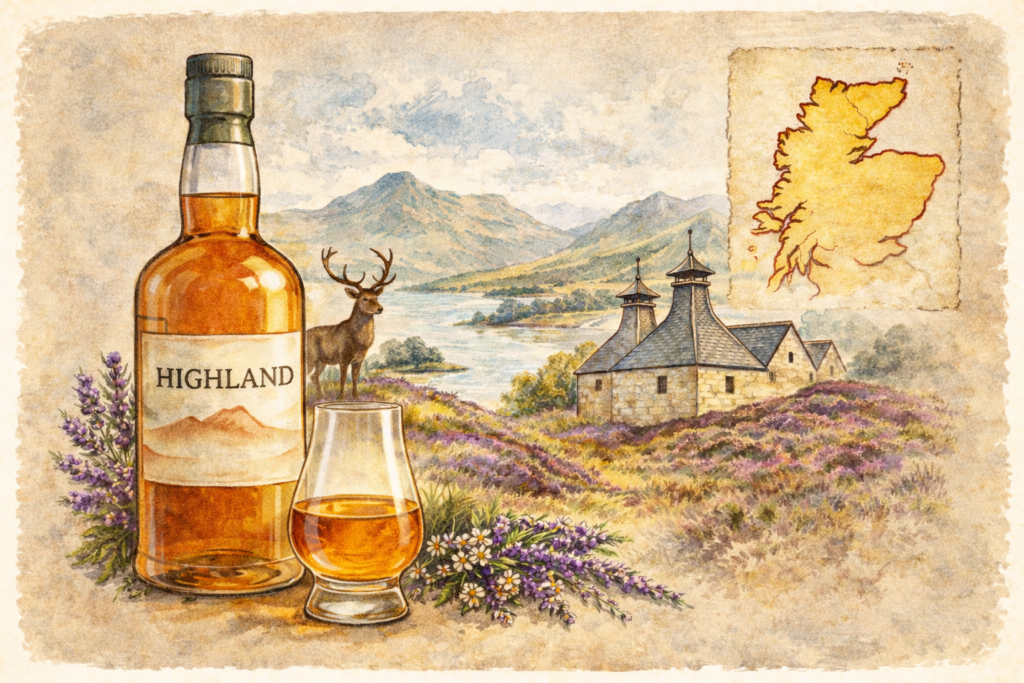
The Highlands are Scotland’s largest and most diverse whisky region, stretching from the rolling fields north of Glasgow to the rugged edges of the north coast. Because of this sheer size, Highland whisky resists easy definition — and that’s precisely its strength.
Historically, Highland whiskies were shaped by remote distillation, limited resources, and local character. Today, the region encompasses an enormous range of styles. You’ll find light, floral drams alongside rich, sherried expressions; coastal whiskies with salt and brine alongside inland malts built on honey, malt, and gentle spice.
What often unites Highland whisky is balance. Even the more powerful examples tend to show structure and restraint rather than outright aggression. The spirit character is usually clear and expressive, giving cask influence room to enhance rather than dominate.
For many drinkers, the Highlands act as a bridge — approachable enough for newcomers, yet varied enough to reward deeper exploration. It’s a region that encourages curiosity rather than conclusions.
Popular Distilleries
- Aberfeldy
- Ardmore
- Ardnamurchan
- Balblair
- Ben Nevis
- Blair Athol
- Clynelish
- Dalmore
- Dalwhinnie
- Deanston
- Edradour
- Glencadam
- Glendronach
- Glen Garioch
- Glengoyne
- Glenmorangie
- Glen Ord
- Glenturret
- Knockdhu
- Loch Lomond
- Macduff
- Oban
- Fettercairn
- Old Pulteney
- Royal Brackla
- Royal Lochnagar
- Teaninich
- Tullibardine
- Tomatin
- Wolfburn
Speyside
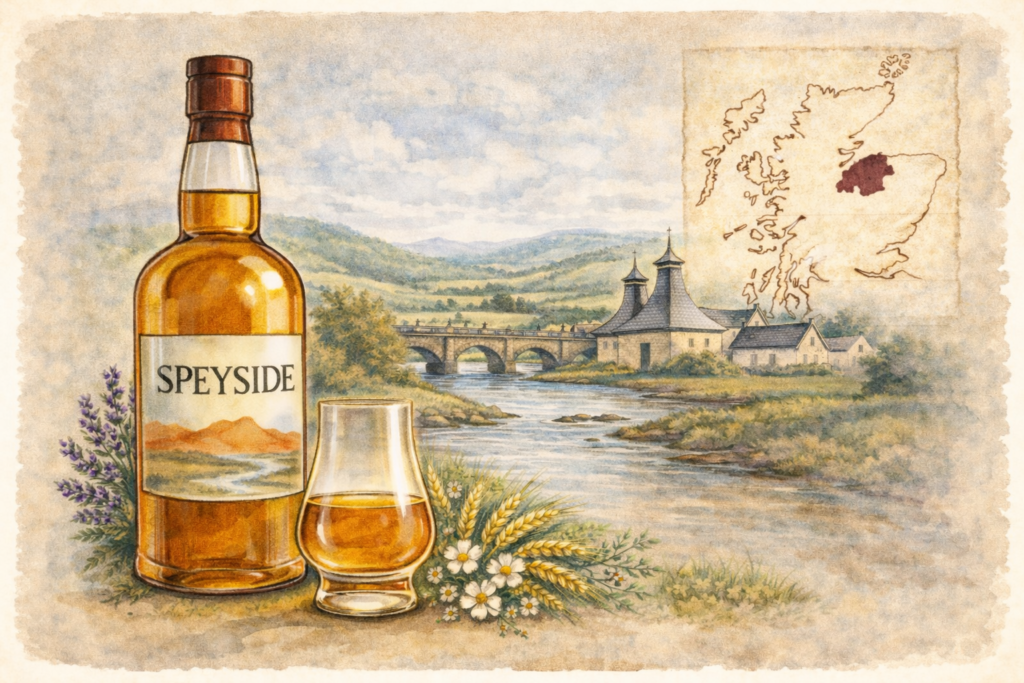
Nestled within the Highlands, Speyside earns its separate identity through concentration and consistency. Home to the highest density of distilleries in Scotland, Speyside developed around access to water, barley, and transport — and refined its style through generations of repetition and expertise.
Speyside whiskies are often associated with elegance: orchard fruit, honey, vanilla, soft spice, and a rounded mouthfeel. Sherry cask maturation plays a major role here, lending richness and sweetness without overwhelming the underlying spirit.
Peat is generally minimal, if present at all, which makes Speyside a natural entry point for many drinkers. But that accessibility shouldn’t be mistaken for simplicity. Beneath the polished surface, there’s depth, nuance, and an almost architectural sense of balance.
Speyside excels at consistency — not sameness, but reliability. It’s the region where refinement became a virtue, and where whisky learned to be quietly confident.
Popular Distilleries
- Aberlour
- Allt-A-Bhainne
- Auchroisk
- Aultmore
- Balmenach
- Balvenie
- BenRiach
- Benrinnes
- Benromach
- Braeval
- Cardhu
- Cragganmore
- Craigellachie
- Dailuaine
- Dalmunach
- Dufftown
- Glen Elgin
- Glen Grant
- Glen Keith
- Glen Moray
- Glen Spey
- Glenallachie
- Glenburgie
- Glendullan
- Glenfarclas
- Glenfiddich
- Glenlivet
- Glenlossie
- Glenrothes
- Glentauchers
- Inchgower
- Kininvie
- Knockando
- Linkwood
- Longmorn
- The Macallan
- Mannochmore
- Miltonduff
- Mortlach
- Roseisle
- Speyburn
- Strathisla
- Strathmill
- Tamdhu
- Tamnavulin
- Tomintoul
- Tormore
Islay
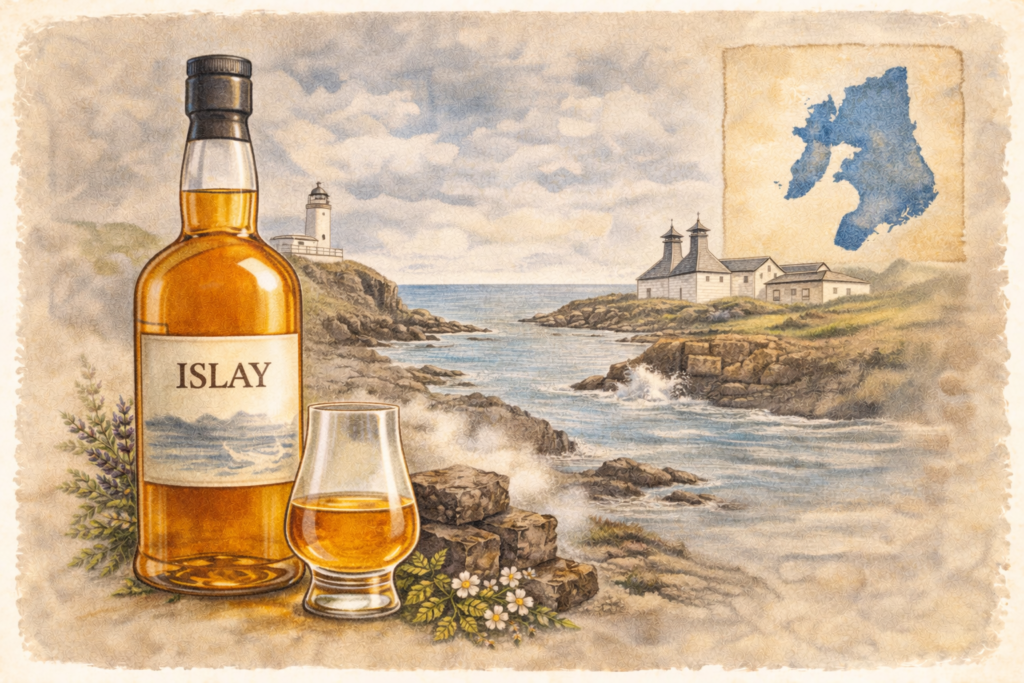
Islay’s reputation is built on peat, but peat alone doesn’t explain the island’s pull. What makes Islay whisky compelling is how intensity is balanced by precision.
Smoke here can be medicinal, earthy, ashy, or sweet — sometimes all at once. Maritime influences bring salt, seaweed, and minerality, while citrus and malt sweetness keep the whisky from tipping into brute force. Despite the power, many Islay whiskies are surprisingly transparent, revealing clear spirit character beneath the smoke.
Islay is also a study in contrast. Distilleries sit just miles apart yet produce dramatically different styles, shaped by fermentation choices, peat levels, cut points, and cask strategy.
And Islay is more than just peated whisky. Bunnahabhain and Bruichladdich make amazing unpeated spirits and even Caol Ila produces an unpeated expression from time to time!
For some, Islay is a rite of passage. For others, it’s a lifelong home. Either way, it proves that bold whisky can still be thoughtful whisky.
Popular Distilleries
Lowland
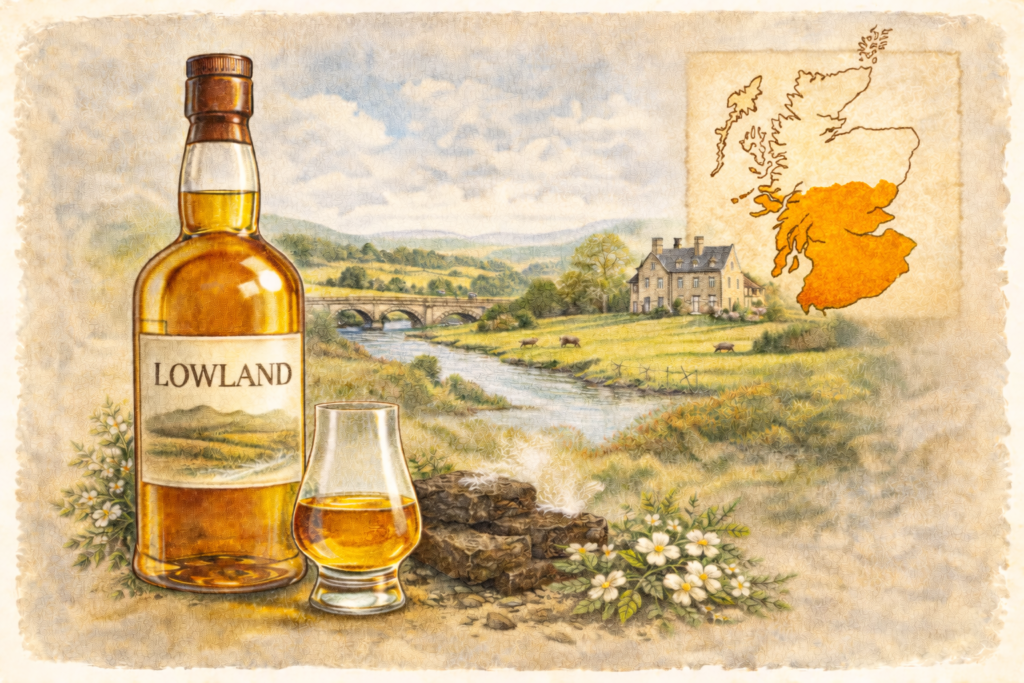
The Lowlands have long been associated with lighter, gentler Scotch — a reputation rooted in history rather than limitation. Traditionally linked to triple distillation and large-scale production, Lowland whiskies emphasised smoothness, delicacy, and approachability.
Expect flavours like fresh grass, citrus peel, soft cereal sweetness, and subtle floral notes. Alcohol integration is often seamless, making Lowland whisky particularly suited to relaxed, contemplative drinking.
In recent years, the region has experienced a quiet renaissance. New distilleries and revived sites are reinterpreting Lowland tradition, introducing bolder flavours while retaining the region’s core elegance.
The Lowlands remind us that intensity isn’t the only marker of quality. Sometimes restraint is the point.
Popular Distilleries
- Ailsa Bay
- Annandale
- Ardgowan
- Auchentoshan
- Bladnoch
- Borders
- Clydeside
- Daftmill
- Eden Mill
- Glasgow 1770
- Glenkinchie
- Holyrood
- InchDairnie
- Kingsbarns
- Lagg
- Lindores Abbey
- Lochlea
- Port of Leith
- Rosebank
Campbeltown
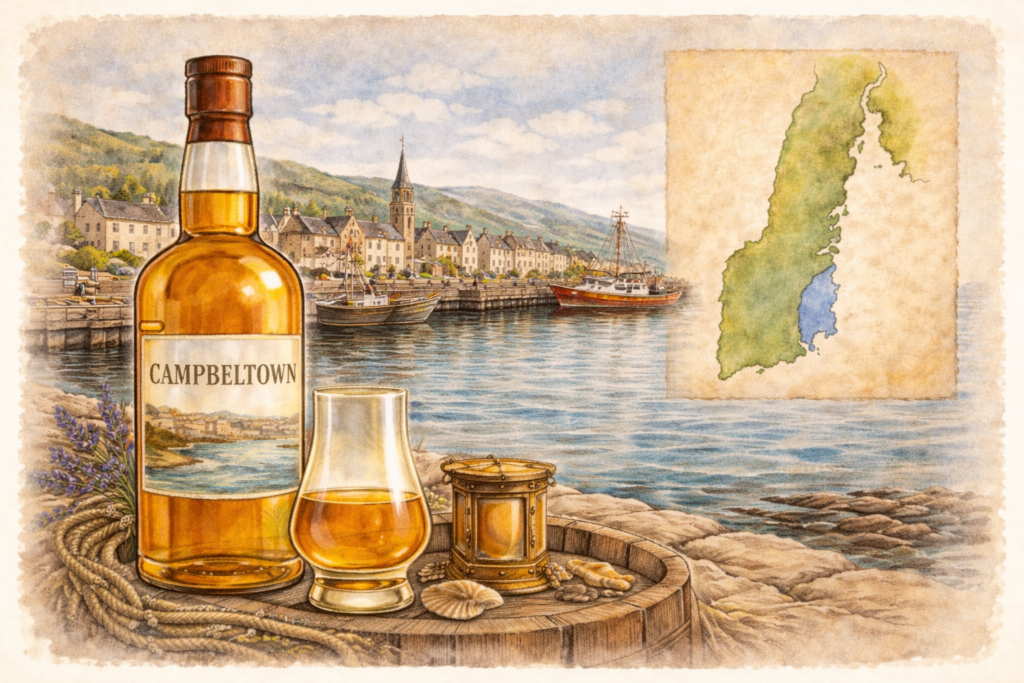
Once home to dozens of distilleries, Campbeltown is now one of the smallest whisky regions in Scotland — and one of the most distinctive.
Campbeltown whiskies are often described as oily, coastal, and slightly funky, with layers of maritime salt, industrial notes, dried fruit, and smoke. There’s a weight and texture here that feels old-fashioned in the best sense — whisky with heft and personality.
Historically, Campbeltown thrived due to its location, access to barley, and proximity to shipping routes. Its decline only sharpened its identity. What remains today is intensely characterful and unapologetically individual.
Campbeltown whisky doesn’t chase trends. It rewards patience, attention, and repeat visits.
Distilleries
- Springbank
- Glen Scotia
- Glengyle (Kilkerran)
Islands
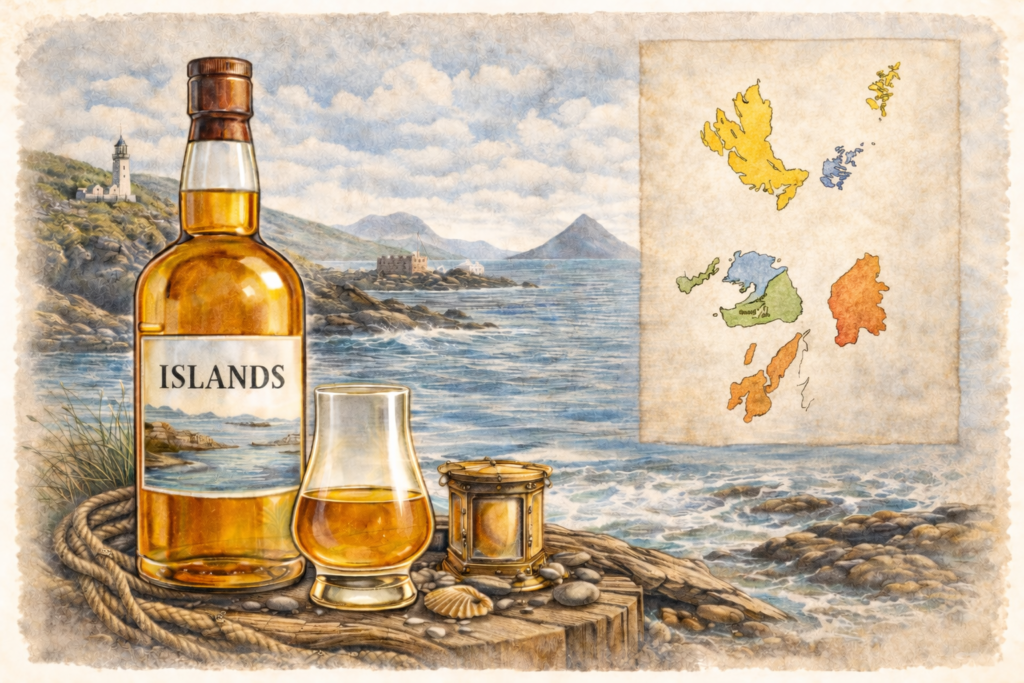
Often folded into the Highlands, the Islands deserve recognition in their own right even though it’s not officialy a recognised category. From windswept coastlines to remote communities, island whiskies are shaped by exposure — to sea air, to isolation, to necessity.
Styles vary widely, but many island whiskies share a maritime backbone: salt spray, mineral notes, gentle peat, and robust spirit character. There’s often a sense of place in the glass — rugged, elemental, and honest.
Island whisky feels less polished and more elemental than many mainland styles. It embraces imperfection and individuality, making it a favourite among drinkers who value character over conformity.
Closing Thought on Scotland’s Whisky Regions
Scotch regions don’t tell you what to like — they help you understand why. They offer context, history, and shared language, while leaving space for discovery.
And that’s the real joy of exploring Scotch by region: every glass adds another layer to the map. And while styles may crossover more often than ever nowadays, it might still be usefull to guide yourself for your next tasting, or perhaps even while planning your next trip to Scotland!