Laphroaig 10 vs Laphroaig 10 Cask Strength – When Peat Grows Up
Some whiskies ease you in gently. Laphroaig does not.
When I first started exploring peated whisky, Talisker was my entry point — smoky, coastal, but still friendly. Laphroaig 10, on the other hand, felt confrontational. The first time I nosed it, I was genuinely repelled. As a child I suffered from severe eczema and was prescribed an ointment containing actual tar. That sharp, medicinal, deeply pungent smell came flooding back the moment I lifted the glass.
And yet, I couldn’t stop thinking about it.
I kept returning to that bottle, not because it was pleasant, but because it was fascinating. Looking back, Laphroaig 10 is the whisky that taught me how to pay attention. It’s the dram that sparked my obsession with tasting notes and flavour dissection.
Years later, with a more experienced palate, my relationship with the standard 10 began to shift. The flavours were still there — but at 40% ABV, they started to feel restrained. I missed the moment where Laphroaig knocks the wind out of you.
So the comparison became inevitable.
Laphroaig 10 – Tasting Notes
Stats
- Region: Islay
- Age: 10 years
- ABV: 40%
- Flavour Profile: Smoke & Storm
- Chill-filtered: Yes
- Colouring: Yes
Nose
With water, tobacco notes appear — but the tarry punch softens noticeably.
Still instantly recognisable. Tar ointment, iodine, and band-aids dominate, pulling you straight into apothecary territory. Beneath that medicinal blast sit softer notes of vanilla and liquorice, adding a touch of sweetness to keep the peat from becoming overwhelming.
Palate
This is where the lower ABV starts to show. Wood smoke, liquorice, vanilla ice cream, seaweed, and a grassy citrus note reminiscent of lemongrass are all present, but the flavours feel slightly diluted — as if too much water was added.
Interestingly, adding water helps. The profile becomes more cohesive, with soft honeyed sweetness replacing that watery edge. Pleasant, yes — but arguably too polite for a Laphroaig.
Finish
Longer than expected. Tar returns, joined by yellow grapes that almost veer into white wine territory. Liquorice lingers nicely. Water improves the finish significantly, sharpening the liquorice and reducing the sense of dilution.
Food Pairing
- Smoked haddock or mackerel
- Salted peanuts or smoked almonds
- Sharp cheddar or young Gouda
Who Is This Whisky For
- Drinkers new to heavily peated whisky
- Fans of medicinal Islay profiles
- Anyone looking for strong character at an accessible price
- Excellent as a highball base
What Do Others Write About This Whisky
- WhiskyNotes praises its classic medicinal character and value
https://www.whiskynotes.be/2011/scotch-whisky/laphroaig-10-years/ - The Whiskey Wash notes its divisive but iconic nature
https://thewhiskeywash.com/reviews/whisky-review-laphroaig-10-year-old/
Verdict
Strengths
- Classic Laphroaig DNA
- Outstanding value
- Long finish despite low ABV
Weaknesses
- Palate can feel diluted
- Lacks intensity for experienced peat lovers
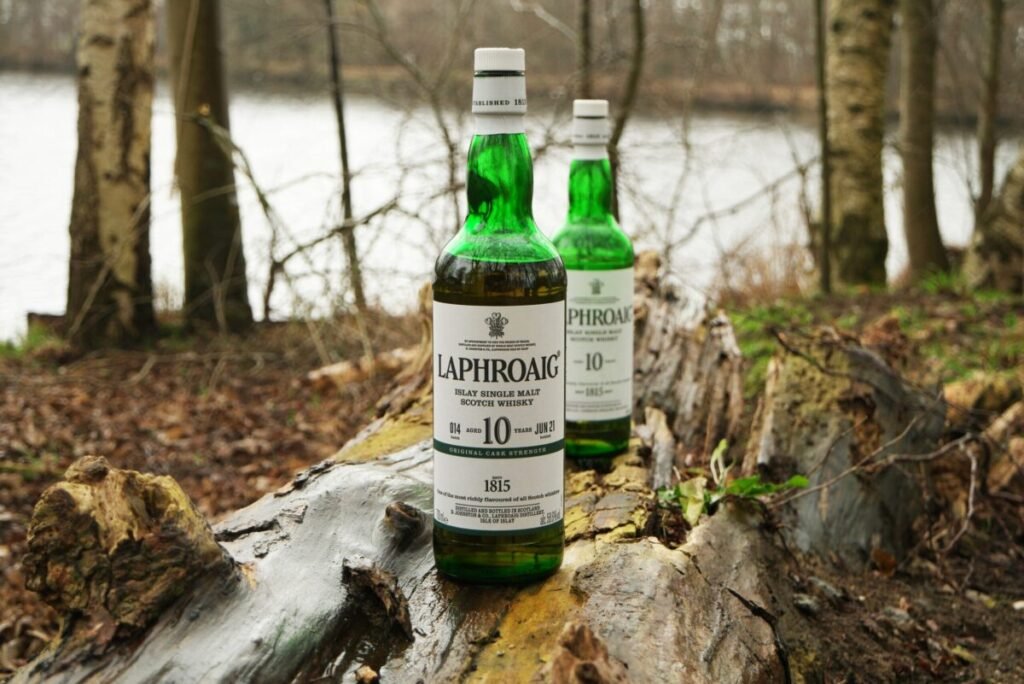
Laphroaig 10 Cask Strength (Batch 14) – Tasting Notes
Stats
- Region: Islay
- Age: 10 years
- ABV: 58.6%
- Flavour Profile: Smoke & Storm
- Chill-filtered: No
- Colouring: No
Nose
Approach carefully — the alcohol announces itself immediately. Push past that and the nose becomes dense and rewarding. Coffee, toffee, mocha, empty cigar boxes, vanilla, and grass dominate. The signature tar is present but no longer the star.
With water, honeyed sweetness rises and the nose opens beautifully.
Palate
This is where the whisky truly shines. Tar returns in force, surrounded by honey loops, cinnamon, nutmeg, beef jerky, and the standout note: bacon pancakes soaked in thick molasses.
It’s rugged, bold, and unapologetic. Water first brings caramel, then unleashes the peat fully — powerful but controlled.
Finish
Long, rich, and indulgent. Liquorice coats the tongue, sweet at first, then slightly bitter. Compared to the standard 10, the flavour profile isn’t radically different — but everything is amplified, deeper, and more confident.
With water, the finish stretches further and becomes more bitter, recalling Dutch “wybertje” liquorice.
Food Pairing
- Crispy bacon or pork belly
- Dark chocolate with sea salt
- Blue cheese
Who Is This Whisky For
- Experienced peat drinkers
- Fans of bold, high-strength Islay malts
- Slow sippers who enjoy experimenting with water
- Not for casual drinking — this demands attention
What Do Others Write About This Whisky
- WhiskyNotes highlights its intensity but questions value
https://www.whiskynotes.be/2019/scotch-whisky/laphroaig-10-cask-strength/
Verdict
Strengths
- Huge flavour intensity: Everything the standard 10 does, but louder, deeper, and more textured.
- Brilliant balance at high ABV: Powerful peat, sweetness, and spice without feeling chaotic.
- Water-friendly: A few drops dramatically open it up, adding honey, caramel, and extra dimension.
- Long, satisfying finish: Liquorice, smoke, and warmth that sticks around in the best way.
Weaknesses
- Price-to-value is hard to justify: The jump in cost compared to the standard 10 can feel wildly disproportionate.
- Less medicinal than expected: If the tar/iodine/band-aid profile is what you love most about Laphroaig, it can be slightly muted here.
- Demands attention: Not a casual sipper — the alcohol can dominate if you rush it or drink it without water.
Final Thoughts – The Comparison
Both whiskies deliver unmistakable Laphroaig character — but they serve very different roles.
The standard Laphroaig 10 remains a phenomenal value dram. These days, I appreciate it most as a mixer or casual pour — assertive, characterful, and affordable.
The Cask Strength delivers the intensity I crave, but at a price that’s increasingly difficult to justify. Paying triple the cost for roughly 50% more ABV simply doesn’t sit right, especially when other Laphroaig releases offer better balance between power and value.
In the end, I enjoy both — just not in the way I once did. The standard 10 is practical and fun. The Cask Strength is luxurious and demanding. Neither is perfect. Both are unmistakably Laphroaig.
And perhaps that’s exactly the point.