Jim Beam Halts Production in 2026: A Rare Pause for a Bourbon Giant
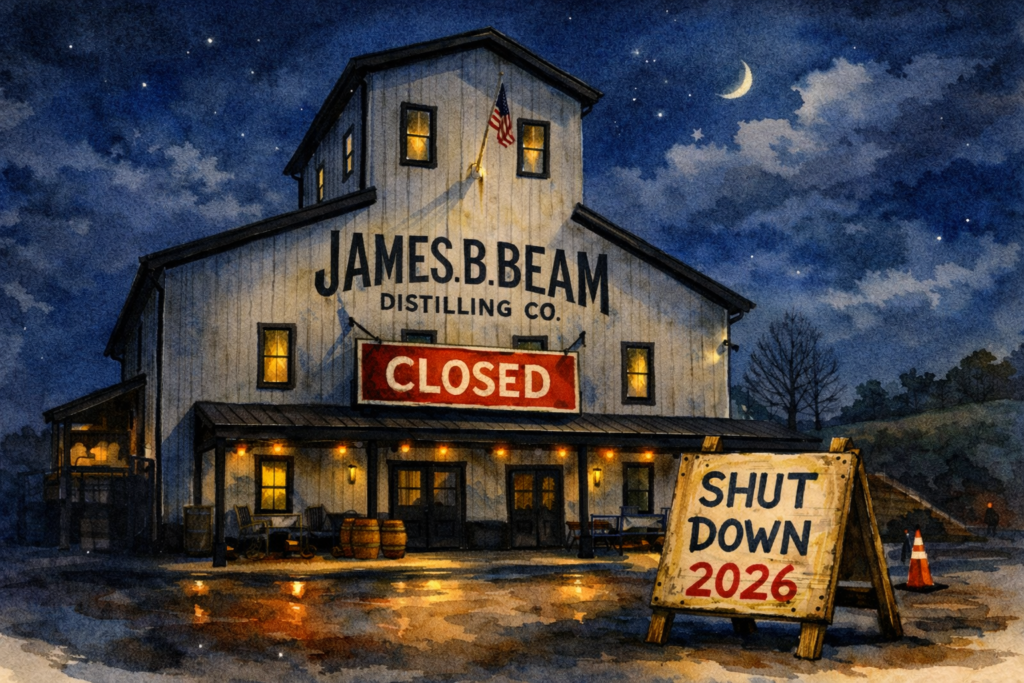
In a move that has sent a ripple through the global whiskey industry, Jim Beam has confirmed it will pause bourbon production at its main Kentucky distillery for the entirety of 2026. For a brand that has been distilling continuously for generations, the decision represents one of the most significant operational slowdowns in modern bourbon history—and a clear signal that the post-boom era of American whiskey has arrived.
The pause will take effect at the start of 2026 at the James B. Beam Distilling site in Clermont, Kentucky, long regarded as the spiritual and operational heart of the Jim Beam brand. While the stills will fall silent, the site will not close entirely. Warehousing, bottling operations, and the visitor experience are all expected to continue, ensuring the distillery remains active even as new make spirit production stops.
Crucially, the fact that Jim Beam halts production is not an existential crisis, nor a signal that the brand is retreating from bourbon. Instead, it is a strategic recalibration—one shaped by shifting consumption patterns, swelling inventories, and a global spirits market that looks very different from the one that fuelled bourbon’s explosive growth over the past decade.
Why Now?
The modern bourbon boom encouraged producers to distil aggressively, laying down barrels years in advance to meet future demand. That strategy worked—until it didn’t. In recent years, alcohol consumption in the United States has softened, particularly among younger drinkers, while premiumisation has slowed across many spirits categories. At the same time, Kentucky’s warehouses are fuller than ever, holding millions of barrels that must be stored, insured, and taxed as they age.
For a producer the size of Jim Beam, owned by Suntory Global Spirits, continuing to distil at full capacity under those conditions carries real financial risk. A planned pause allows the company to bring stock levels back into balance while avoiding the long-term consequences of overproduction.
It also reflects a broader industry trend. Several major whiskey producers—both American and international—have quietly scaled back distillation or delayed expansion plans. Jim Beam’s decision stands out not because it is unique, but because of the brand’s scale and historical continuity.
What Continues—and What Doesn’t
It’s important to stress that while Jim Beam halts production, it is not disappearing from shelves. Bourbon released in 2026 and beyond has already been distilled years ago, and existing stocks will continue to supply core expressions such as Jim Beam White Label, Black, and the wider Beam family of brands.
Production will also continue at other Beam facilities in Kentucky, including smaller and more specialised sites. That means innovation and limited releases may still emerge, though observers expect a stronger focus on established, high-volume expressions rather than experimental bottlings.
For drinkers, the immediate impact is likely to be minimal. Longer-term, however, a year without new spirit from the flagship site could influence how Jim Beam manages age statements, release volumes, and pricing later in the decade.
A Moment Worth Reflecting On
Jim Beam occupies a unique place in bourbon history. Founded in the late 18th century and shaped by seven generations of the Beam family, the brand has survived Prohibition, global wars, economic crashes, and shifting consumer tastes. A voluntary production pause, framed as careful stewardship rather than crisis management, underscores just how mature the modern bourbon industry has become.
For readers who follow American whiskey closely, this moment also offers context for exploring the category more deeply. If you’re curious about how today’s market compares to what’s already in the bottle, our Bourbon & Rye Reviews category dives into the flavours, styles, and value that define the current landscape—often shaped by decisions made many years ago in the rickhouse.
Looking Ahead
Jim Beam halts production for now and describes 2026 as a year of alignment and investment, with upgrades and long-term planning underway at the Clermont site. While details remain limited, the intention appears clear: protect the brand’s future rather than chase short-term volume.
For now, the story is less about silence in the stillhouse and more about restraint in an industry that spent years accelerating. A year without production at the heart of Jim Beam is rare—but it may prove to be a defining chapter in how American bourbon grows up.