Glenmorangie Distillery: Precision, Balance, and a Clear Sense of Identity
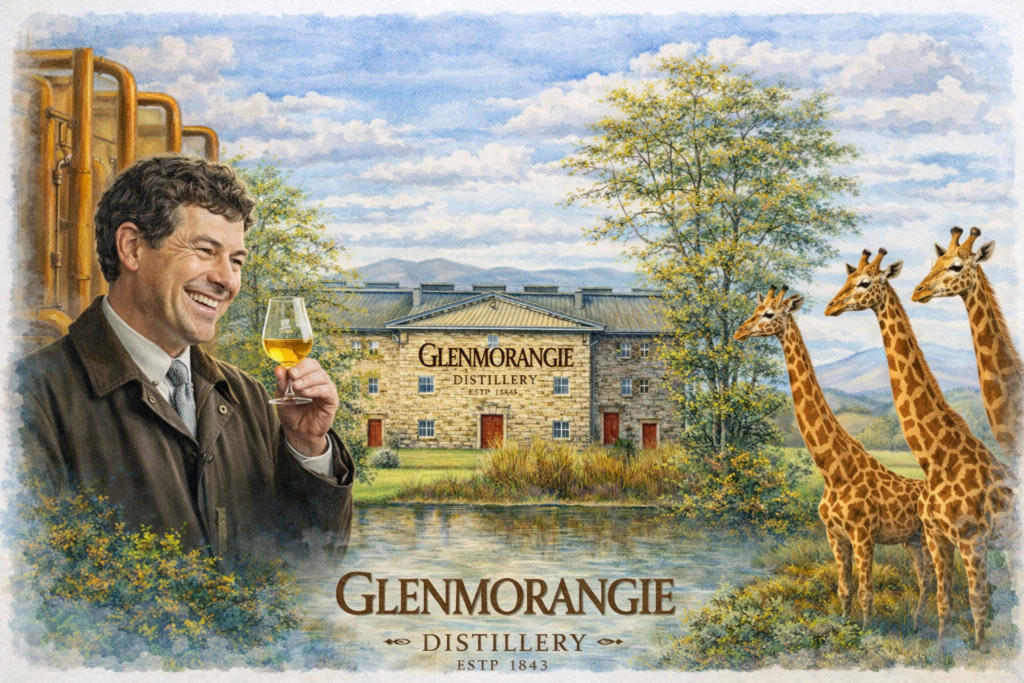
Set along the edge of the Dornoch Firth, Glenmorangie Distillery has a way of quietly earning your respect the longer you spend with its whisky. It’s not a distillery that tries to grab your attention straight away, but over time you start to notice just how consistent it is, and how deliberate every part of its process feels.
That consistency isn’t accidental. Glenmorangie has always had a very clear idea of the kind of spirit it wants to produce, and instead of constantly reinventing itself, it has focused on refining that identity. The result is a house style that leans toward elegance and clarity, where flavours feel well-defined rather than heavy or overworked.
It’s the kind of whisky that doesn’t need to shout to be heard.
A Bit of History, Without the Romance
Glenmorangie was founded in 1843 in Tain, and while it has all the history you’d expect from a Highland distillery, what stands out is how relevant it has remained without needing to lean too heavily on that past.
Rather than relying on heritage as a selling point, the distillery has consistently invested in improving how it makes whisky, whether that’s through refining its distillation process or taking a more thoughtful approach to maturation. It’s a quieter kind of evolution, but one that has kept Glenmorangie firmly in the conversation.
The Stills – More Than Just a Fun Fact
The tall stills are often the first thing people mention, and for good reason. At just over five metres, they’re the tallest in Scotland, and they play a big role in shaping the spirit.
What that height does is force heavier elements to fall back down during distillation, allowing only the lighter, purer vapours to make it through. In the glass, that translates to a whisky that feels clean, bright, and well-defined, even before it sees any influence from casks.
It’s one of those details that sounds technical, but once you taste it, it makes complete sense.
The Influence of Dr. Bill Lumsden
If you’ve explored Glenmorangie over the years, you’ve already experienced the impact of Dr. Bill Lumsden, even if you didn’t realise it at the time.
He’s been central to how the distillery approaches cask maturation, particularly when it comes to finishing whisky in different types of wood. Long before it became common across the industry, Glenmorangie was experimenting with wine and fortified casks, not as a gimmick, but as a way to add layers without losing the core character of the spirit.
What’s impressive is how controlled it all feels. Even when the flavours get richer or more complex, the whisky never loses that underlying sense of balance.
The Core Range – Where Most People Start (and Often Stay)
Glenmorangie’s core range is one of the easiest ways to understand what the distillery is about, because each bottle builds on the same spirit while showing how different casks can shape it.
The Original 12
This is one I keep coming back to, and it’s easily one of my favourite entry-level whiskies. It’s approachable, but not in a watered-down way. You get citrus, soft vanilla, a bit of creaminess, and just enough oak to hold it all together.
If someone asks where to start with single malt, this is always part of the conversation. It gives you a clear picture of what good whisky can taste like without overcomplicating things. In fact I included it in my Top 10 Whisky for Beginner’s list!
Lasanta 12
Here you start to see the impact of sherry casks, with more depth, a bit of spice, and some darker fruit coming through. It adds weight, but still keeps things balanced.
Quinta Ruban 14
This is where things get more interesting for me. The port casks bring in chocolate and a slightly darker profile, but it never feels heavy. There’s still that lift that keeps it from becoming too dense.
Nectar d’Or
A sweeter style, thanks to Sauternes casks, but it’s handled with restraint. It leans into dessert notes without becoming overly rich.
Together, the range does a great job of showing how versatile the spirit is without losing its identity.
When Glenmorangie Pushes Further: Glenmorangie Signet
Signet is where Glenmorangie steps outside its usual lane a bit.
Using heavily roasted “chocolate malt” barley, it brings in deep coffee, dark chocolate, and spice in a way that feels quite different from the rest of the range. It’s richer, more intense, and definitely aimed at a different kind of moment.
What I like about it is that, even with all that intensity, it still feels controlled. It doesn’t tip over into excess, which is where a lot of experimental whiskies can lose their way.
Visiting Glenmorangie Distillery
If you get the chance to visit Glenmorangie Distillery, it’s well worth it, especially if you appreciate a more relaxed, informative experience.
The tours are straightforward and focused, giving you a clear look at how the whisky is made without turning it into a performance. Seeing the stills up close gives you a better understanding of just how important they are, and the tastings help connect everything back to the glass.
The setting itself, right by the Dornoch Firth, adds to the experience in a way that feels natural rather than staged.
Must-Try Bottles from Glenmorangie Distillery
If you’re exploring the range, these are the ones I’d focus on:
- The Original 12 – A genuinely great starting point that still holds up over time
- Quinta Ruban 14 – A richer, more layered expression without losing balance
- Nectar d’Or – For a sweeter style that still feels structured
- Signet – A more experimental side of Glenmorangie, done well
FAQ: Glenmorangie Distillery
Where is Glenmorangie Distillery located?
Glenmorangie Distillery is located in Tain in the Scottish Highlands, overlooking the Dornoch Firth.
What makes Glenmorangie whisky different?
Its tall stills create a lighter, more refined spirit, and its approach to cask maturation adds complexity without overpowering that style.
Who is Dr. Bill Lumsden?
He is the Director of Whisky Creation at Glenmorangie and plays a key role in its cask innovation and flavour development.
Is Glenmorangie good for beginners?
Yes, especially The Original 12, which offers a balanced and approachable introduction to single malt whisky.
What is Glenmorangie Signet?
A premium whisky made using roasted chocolate malt, known for its rich coffee and dark chocolate flavours.
Can you visit Glenmorangie Distillery?
Yes, and it offers a well-paced, informative experience with tours and tastings.
Final Thoughts
Glenmorangie works because it knows exactly what it’s doing and sticks to it. It doesn’t rely on hype or constant reinvention, but instead focuses on getting the fundamentals right and building on them in a controlled way.
That might not always make it the most talked-about distillery, but it does make it one of the most reliable—and one that’s always worth revisiting.