Bruichladdich Distillery: The Islay Rebel That Refused to Die
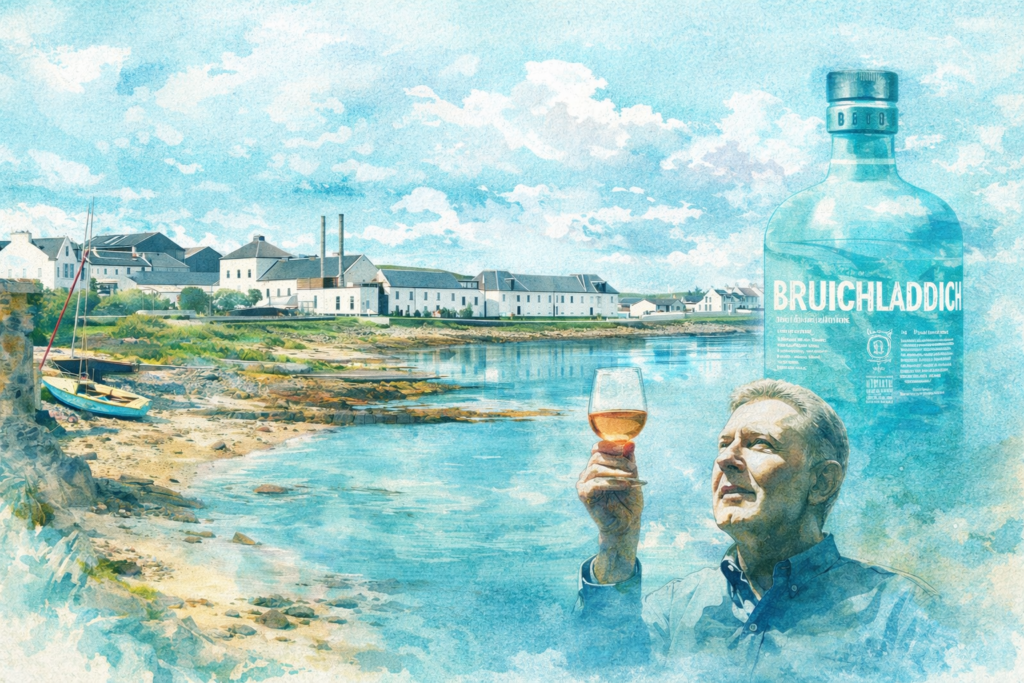
Bruichladdich Distillery is one of the most influential and innovative Scotch whisky producers on Islay. Founded in 1881, mothballed in 1994, and spectacularly revived in 2001, Bruichladdich Distillery has become synonymous with terroir, transparency, and fearless experimentation.
Few distilleries in Scotland have experienced such a dramatic fall — and such a triumphant resurrection.
This is the story of how Bruichladdich Distillery went from silent stills to global cult status, reshaping the conversation around modern Scotch whisky in the process.
The Fall of Bruichladdich Distillery: When the Stills Went Silent
Located on Islay’s rugged western shore, Bruichladdich Distillery always stood apart. Its tall stills produced a lighter, more floral spirit than many of its peat-driven neighbours. It championed elegance over brute smoke long before that was fashionable.
But by 1994, industry consolidation and shifting economics led to closure. The stills went cold. Warehouses sat quiet. For years, Bruichladdich Distillery seemed destined to become a footnote in Islay history.
It could easily have stayed that way.
The Resurrection of Bruichladdich Distillery: Jim McEwan & Mark Reynier
In 2000, entrepreneur Mark Reynier and master distiller Jim McEwan purchased Bruichladdich Distillery and reopened it in 2001.
What followed wasn’t simply a restart. It was a reinvention.
The revived Bruichladdich Distillery stood for:
- Full transparency in production
- Islay-grown barley and terroir focus
- No chill-filtration
- No added colouring
- Bold cask experimentation
- On-site bottling
At a time when most Scotch brands were guarded and corporate, Bruichladdich Distillery felt personal. It felt independent. It felt like whisky made by people who genuinely cared.
And drinkers responded.
Bruichladdich Distillery and The Water of Life
The cultural significance of Bruichladdich Distillery was captured powerfully in the documentary The Water of Life.
The film centres heavily around Jim McEwan and his role in reviving Bruichladdich Distillery, positioning the distillery as a symbol of Scotch whisky’s wider renaissance. Watching McEwan speak about Islay, barley, and spirit production makes one thing clear: this wasn’t just business. It was belief.
The Water of Life cemented Bruichladdich Distillery as more than a producer — it became a cultural icon.
What Makes Bruichladdich Distillery Unique?
Bruichladdich Distillery stands apart for several reasons:
- Three completely different whisky styles under one roof
- A serious commitment to Islay-grown barley
- Radical transparency in labelling
- On-site bottling (rare in Scotland)
- B Corp certification and sustainability leadership
- A documented, modern revival story
Few distilleries combine heritage equipment with contemporary philosophy so convincingly.
The Three Faces of Bruichladdich Distillery
One of the defining strengths of Bruichladdich Distillery is its ability to produce three distinct whisky identities from the same stills.
Bruichladdich – The Unpeated House Style
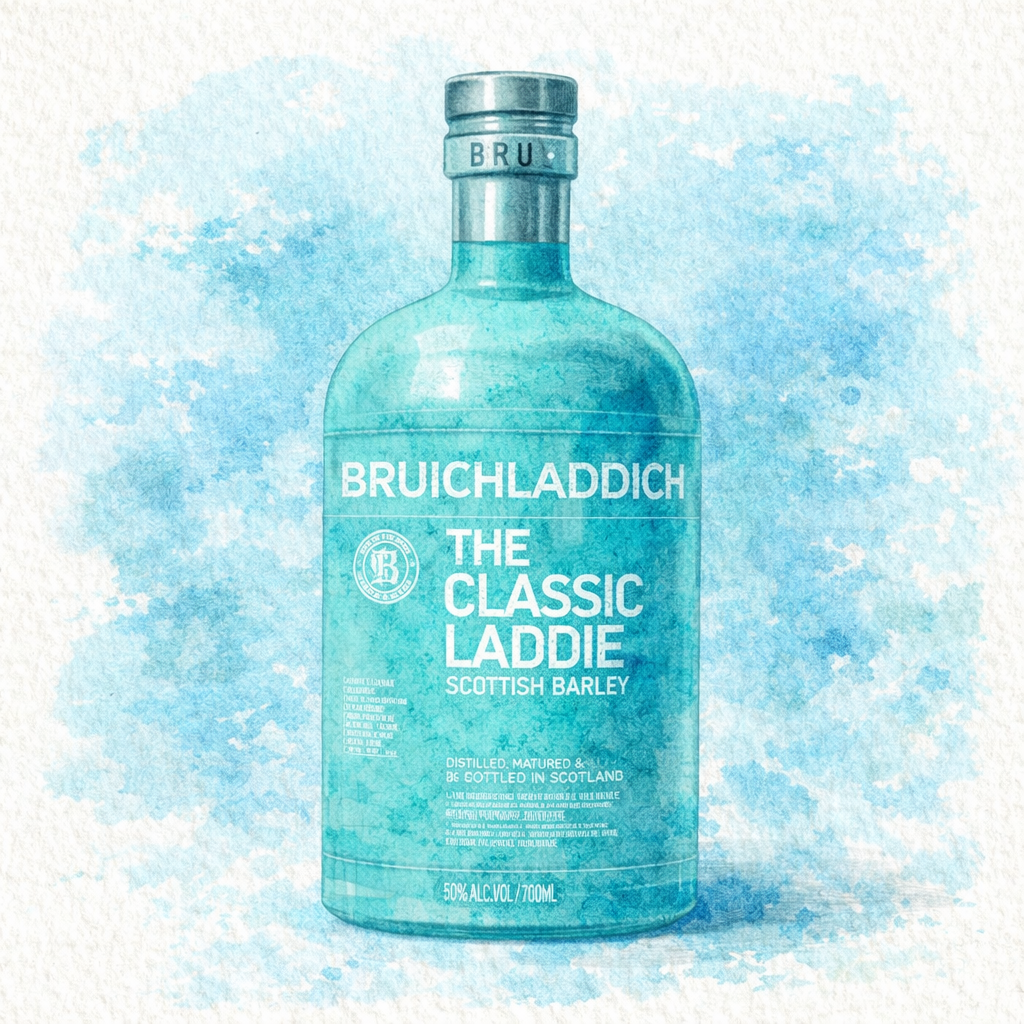
The core Bruichladdich range champions unpeated Islay spirit: floral, citrus-driven, saline, textured.
Must-Try Bruichladdich Bottles:
- The Classic Laddie
- Islay Barley Series
- Bere Barley
- Black Art
- Bruichladdich 16 Year Old
For a deeper dive into mature house-style character, see our detailed review of the Bruichladdich 16 here:
https://dram1.com/bruichladdich-16-review/
Black Art, meanwhile, represents the most luxurious expression of Bruichladdich Distillery — mysterious cask compositions, layered depth, and collector-level demand.
Port Charlotte – Heavily Peated Islay (~40 PPM)
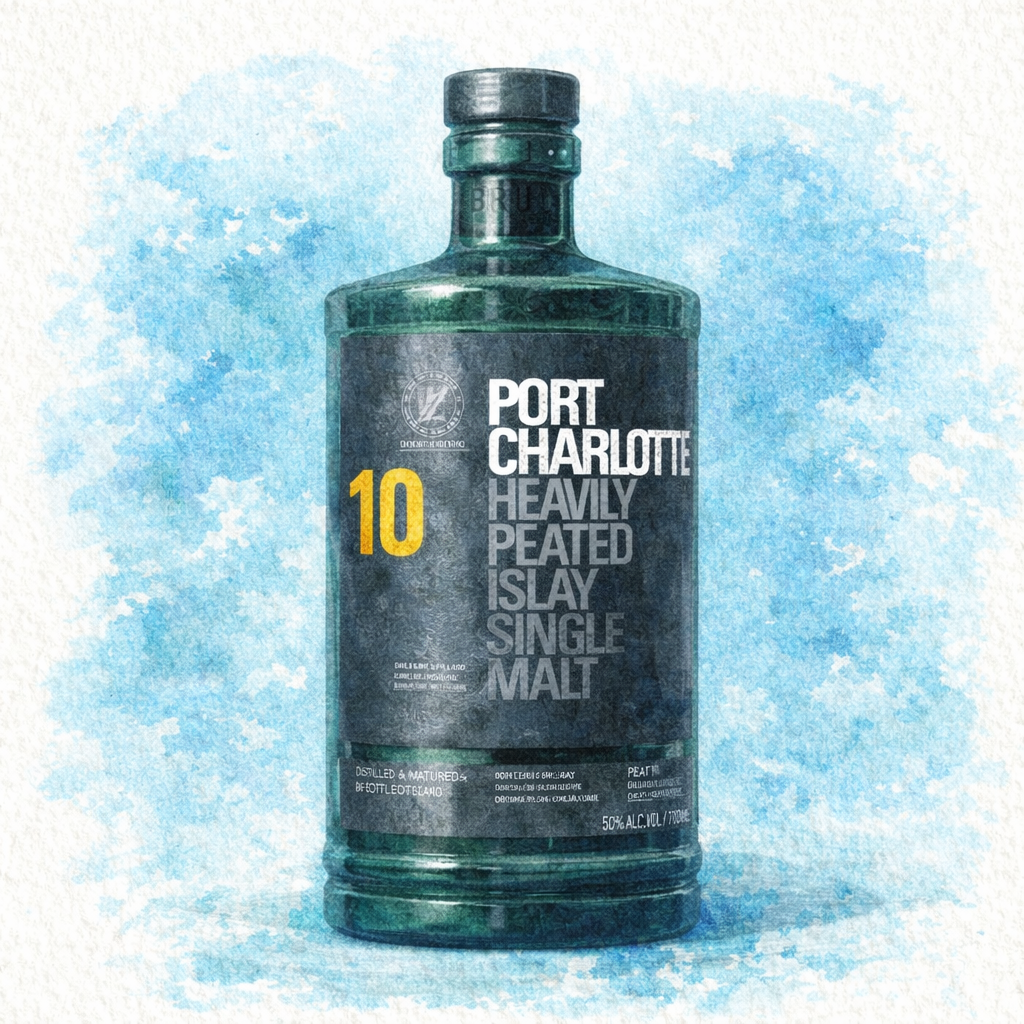
Port Charlotte proves Bruichladdich Distillery understands peat as well as anyone on Islay. Smoky, maritime, muscular — but always refined.
Must-Try Port Charlotte Releases:
- Port Charlotte 10 Year Old
- Port Charlotte Islay Barley
- Limited Cask Exploration Releases
For a full breakdown of the flagship, read our in-depth review of Port Charlotte 10:
https://dram1.com/port-charlotte-10/
Octomore – The Benchmark for Extreme Peat
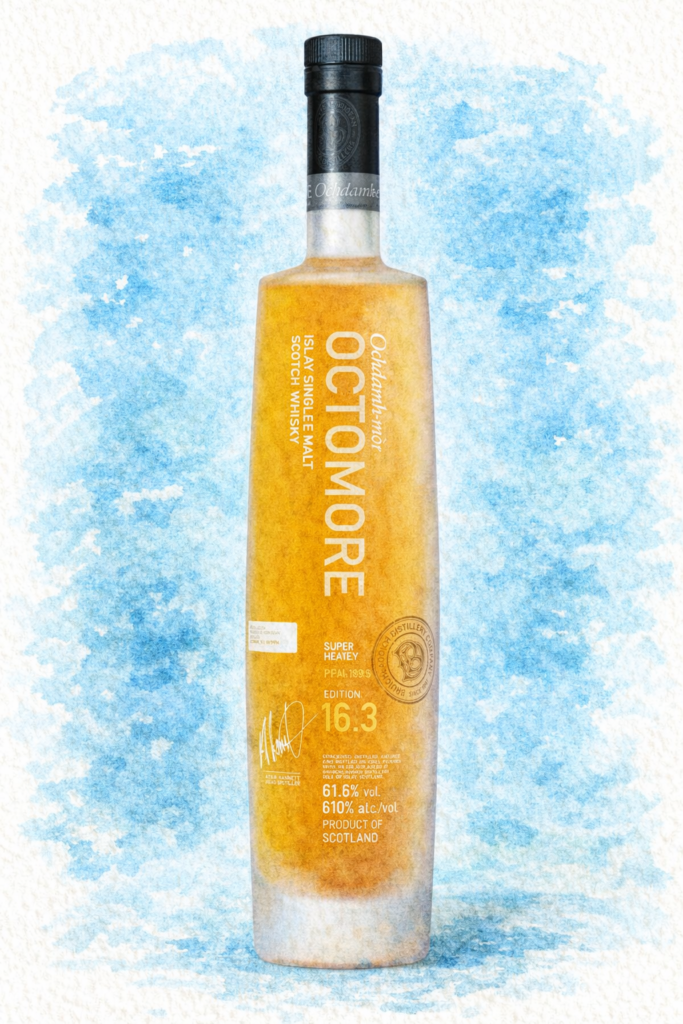
Octomore is one of the boldest modern Scotch projects. Often exceeding 100+ PPM, it challenges the idea that heavy peat must overwhelm nuance.
Instead, Octomore often reveals surprising elegance beneath the smoke.
For a direct comparison of recent releases, see our Octomore 16 showdown here:
https://dram1.com/octomore-16-showdown/
A Personal Observation: The Price Divide Around Bruichladdich Distillery
Something fascinating has happened in recent years.
Independent bottlings of Bruichladdich Distillery — especially from boutique names like Dramfool — have surged into extraordinary price territory. Early revival-era stock now commands serious collector premiums.
Many of these bottles have moved from enthusiast purchases to investment-grade whisky.
And yet, paradoxically, Bruichladdich Distillery’s own core range (excluding Black Art and Octomore) has become increasingly competitive in pricing. The Classic Laddie and Port Charlotte 10, in particular, often deliver remarkable value compared to other Islay malts of similar quality and transparency.
There’s a strange tension here:
- Independents: escalating, often unaffordable
- Core official releases: surprisingly accessible
It reinforces something important — Bruichladdich Distillery still seems committed to being drunk, not just collected.
Bruichladdich Distillery in the Modern Era
Since 2012, Bruichladdich Distillery has been owned by Rémy Cointreau. For many enthusiasts, that raised understandable concerns.
But in practice, the distillery has maintained its identity:
- Continued Islay barley initiatives
- Transparent labelling
- Sustainability focus
- Experimental cask programs
- Clear brand differentiation between Bruichladdich, Port Charlotte, and Octomore
It still feels unmistakably Bruichladdich.
FAQ: Bruichladdich Distillery
Where is Bruichladdich Distillery located in Scotland?
Bruichladdich Distillery is located on the western shore of Islay, Scotland.
Who saved Bruichladdich Distillery from closure?
Mark Reynier and Jim McEwan purchased and reopened Bruichladdich Distillery in 2001 after it had been mothballed since 1994.
Is Bruichladdich Distillery known for peated whisky?
The core Bruichladdich range is unpeated. However, Bruichladdich Distillery also produces heavily peated Port Charlotte and extremely peated Octomore.
Why is Black Art from Bruichladdich Distillery so expensive?
Black Art uses rare and undisclosed cask combinations, is released in limited quantities, and carries strong global collector demand.
Has Bruichladdich Distillery become more expensive in recent years?
Independent bottlings have risen sharply in price. However, much of the official core range from Bruichladdich Distillery remains competitively priced compared to other Islay producers.
What is The Water of Life documentary about?
The Water of Life explores the revival of Scotch whisky culture and prominently features Jim McEwan and Bruichladdich Distillery as symbols of that renaissance.
Final Thoughts on Bruichladdich Distillery
Today, Bruichladdich Distillery stands as one of the most progressive and culturally significant distilleries in Scotland. From producing unpeated elegance to pushing the boundaries of peat intensity with Octomore, Bruichladdich Distillery has reshaped modern Islay whisky.
Its revival story remains one of the most compelling in Scotch history. Its philosophy continues to influence industry conversations around terroir and transparency. And despite rising collector interest in independent releases, Bruichladdich Distillery’s core range still feels rooted in drinkability.
Few distilleries have fallen so far — and risen so decisively.
Bruichladdich Distillery didn’t just come back.
It changed the game.