DRAM1 Whisky Academy: The Complete Guide to Whisky Glassware — What is the best whisky glass?
There’s a sentence I come back to again and again when discussing whisky:
Whisky is best enjoyed the way you like it, in whatever glass you choose.
There is no universal rulebook for choosing the best whisky glass. No correct posture. No mandatory ritual.
But here’s the truth: the glass absolutely changes the experience.
Whisky is aroma-driven. What you perceive as flavour is largely shaped by what rises from the liquid and reaches your nose. The structure of the glass determines whether those aromas are scattered, softened, intensified, or focused with almost surgical precision.
If your goal is to experience whisky at its most expressive, a tulip-shaped glass that narrows toward the rim will almost always outperform a wide, open glass and might be the best whisky glass for you. It centres the aromas, reduces ethanol interference, and allows layers to reveal themselves gradually.
And if you don’t own dedicated whisky glassware? A small white wine glass is a surprisingly excellent substitute. It offers many of the same aromatic advantages.
Now let’s break down the major glass types — properly — and look at where each one truly shines.
1. The Tumbler (Old-Fashioned / Rocks Glass)
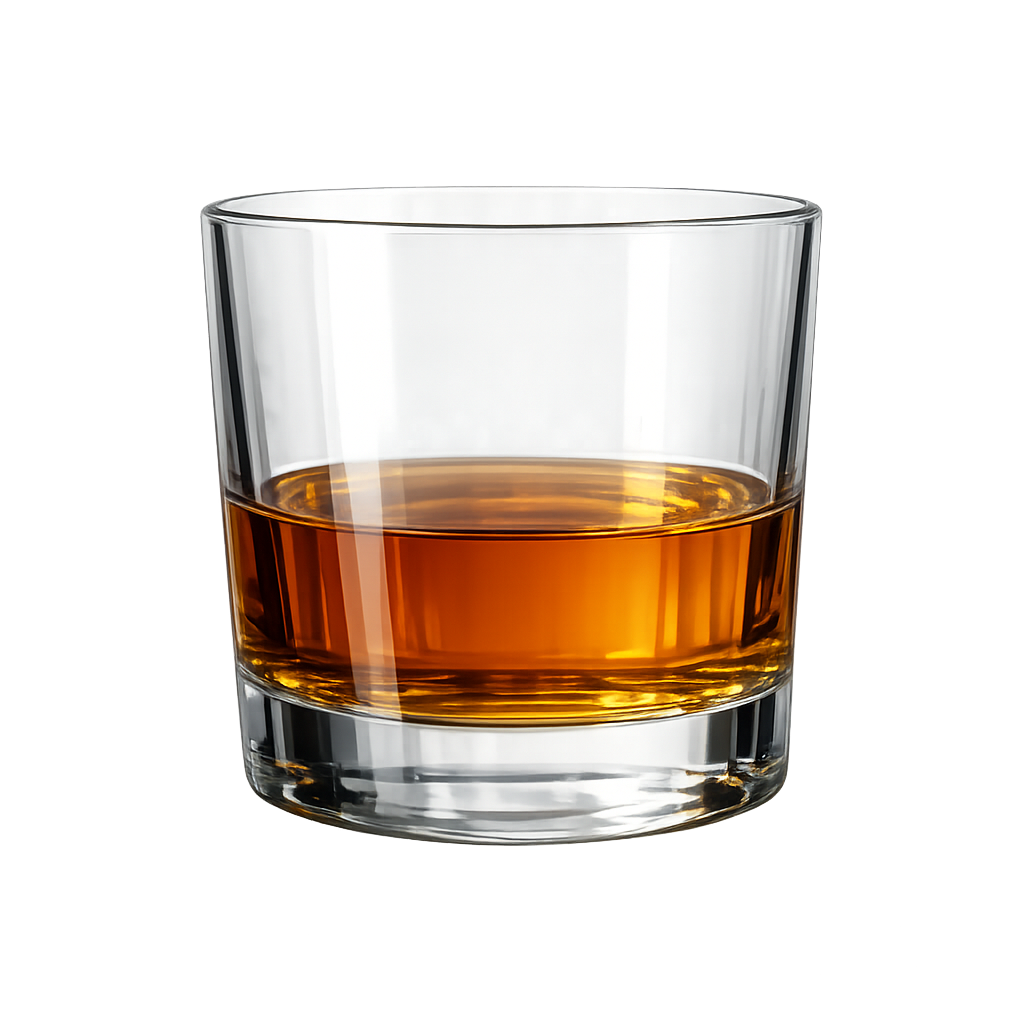
The tumbler is cultural whisky shorthand. It’s cinematic. It’s confident. It feels substantial.
But it is not built for precision.
What It Does Well
- Ideal for whisky with ice or large cubes.
- Excellent for cocktails.
- Encourages relaxed sipping rather than analysis.
- Thick glass softens the perceived intensity of the whisky.
Where It Falls Short
- Wide rim lets volatile aromas escape instantly.
- Little aromatic concentration.
- Complex whiskies can feel simplified or flattened.
- Not ideal for evaluating subtleties.
The tumbler is about atmosphere, not detail. It suits casual evenings, social settings, and whisky as part of a broader experience rather than the sole focus.
2. The Glencairn Glass
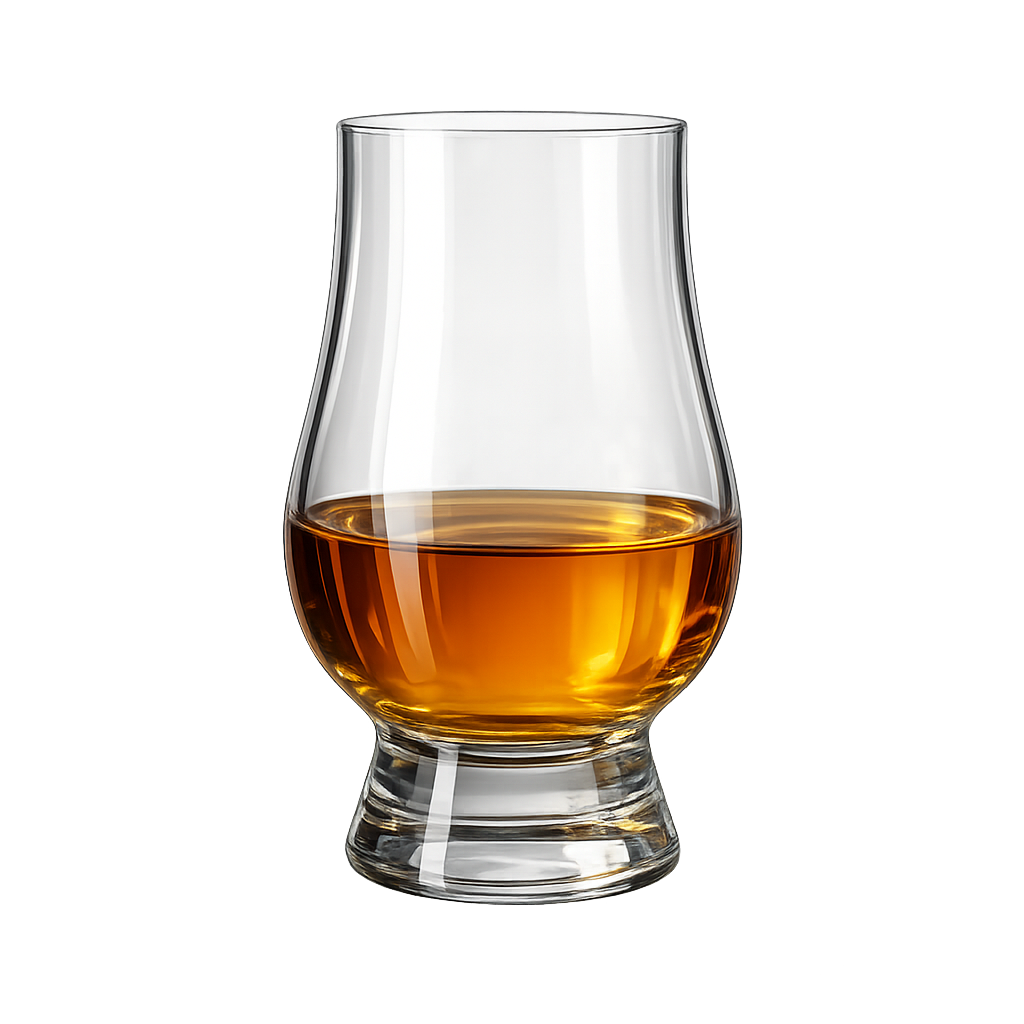
The Glencairn became the modern standard for a reason. Its curved bowl and tapering rim were purpose-built to capture aroma while remaining sturdy enough for everyday use.
For years, this was my go-to glass. It felt like the default serious choice.
What It Does Well
- Reliable aroma concentration.
- Excellent for both entry-level and complex whiskies.
- Solid base prevents tipping.
- Compact size makes it practical for home use.
Where It Falls Short
- Shorter bowl limits expansive swirling.
- With very high-proof whiskies, the narrow chimney can intensify alcohol vapours.
- Slightly enclosed feel compared to taller glasses.
The Glencairn is balanced and dependable — a true all-rounder. If you only want one whisky-specific glass, this remains one of the safest choices.
3. The Copita (Nosing Glass)

Originally used in the sherry trade, the copita is taller, stemmed, and slightly more refined in its taper.
Lately, I personally find myself reaching for a copita more often than a Glencairn. The added height gives aromas more room to develop before they concentrate at the rim, which can make the experience feel more layered and less compressed.
What It Does Well
- Superb for comparative tastings.
- Excellent control over ethanol intensity.
- Stem prevents warming the whisky.
- Allows more elegant swirling and aeration.
Where It Falls Short
- More fragile.
- Less casual — feels intentional and analytical.
- Can feel overly formal for relaxed sipping.
If you enjoy dissecting whisky, revisiting it over time in the glass, or running side-by-side tastings, the copita excels.
4. The Riedel Bourbon Glass
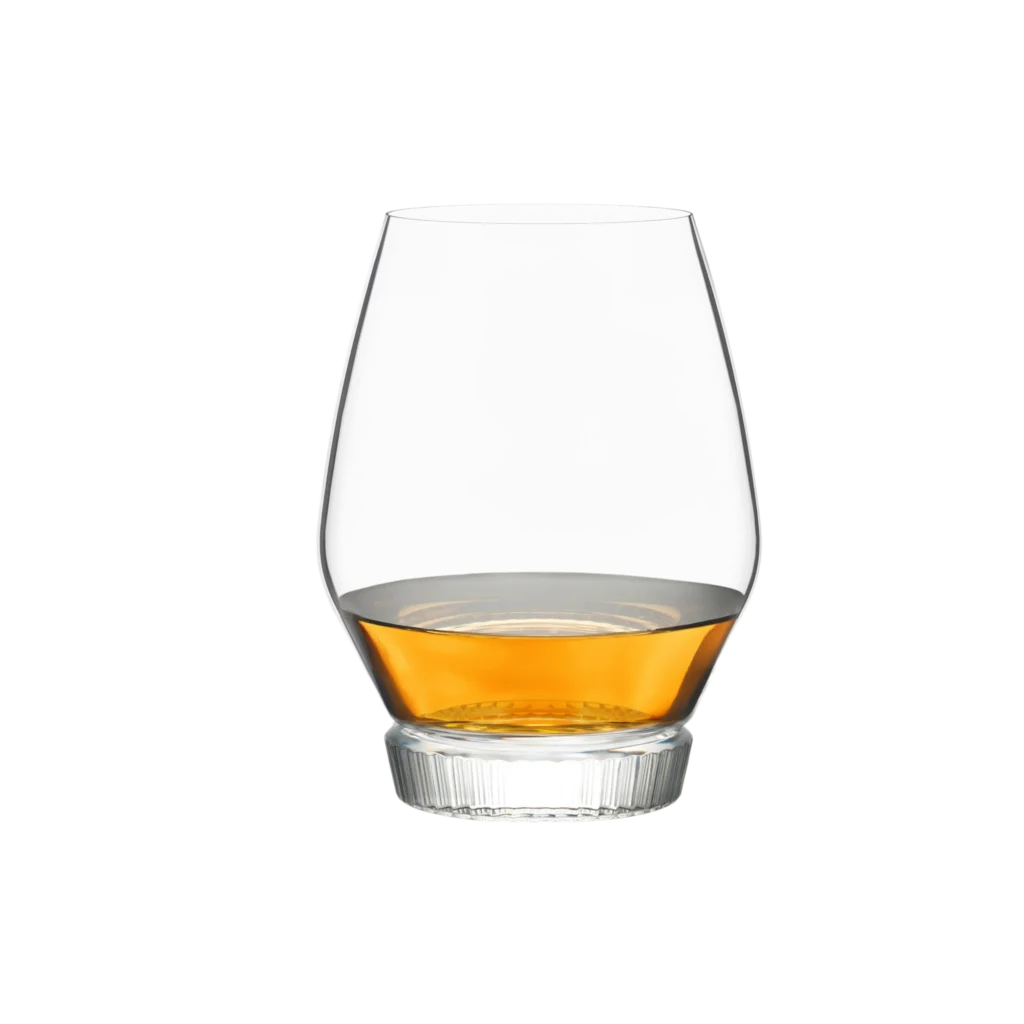
Designed specifically with American whiskey in mind, this glass has a slightly flared rim and broader bowl compared to traditional nosing glasses.
It’s engineered to balance sweetness and manage the intensity of bourbon’s higher corn content and often elevated ABV.
What It Does Well
- Softens ethanol sharpness in high-proof bourbons.
- Emphasises caramel, vanilla, and oak-driven notes.
- Provides a fuller aromatic spread rather than tight concentration.
- Comfortable for longer sipping sessions.
Where It Falls Short
- Less precise for delicate Scotch or lighter styles.
- Not as tightly focused as classic tulip glasses.
- Premium pricing.
If your cabinet leans heavily toward bourbon and rye, this glass is genuinely tailored for that profile.
5. The Perfect Dram Glass
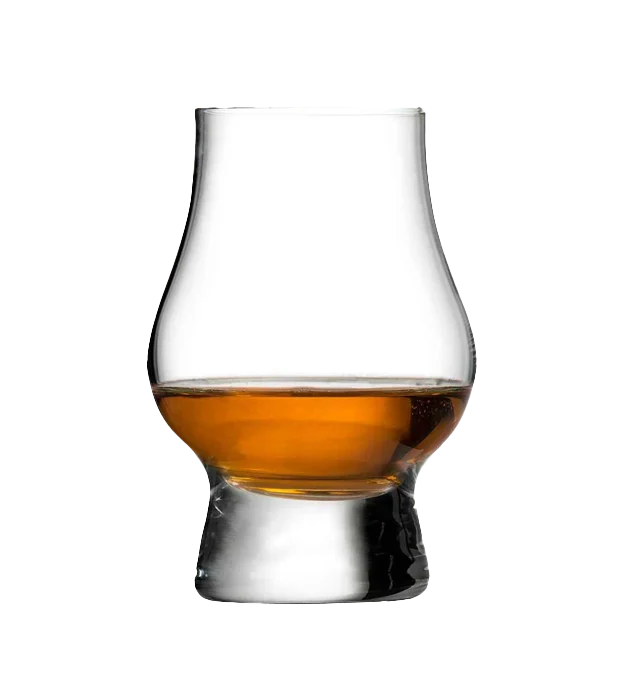
A hybrid design intended to refine the tulip concept further, often slightly thinner and more elegant than the Glencairn.
What It Does Well
- Strong aromatic focus without feeling cramped.
- Elegant presentation for hosting or formal tastings.
- Versatile across styles and strengths.
Where It Falls Short
- Variations in design depending on manufacturer.
- Can be less forgiving with very hot, cask-strength whiskies.
This is a refined enthusiast’s tool — somewhere between everyday practicality and tasting precision.
6. The Norlan Whisky Glass
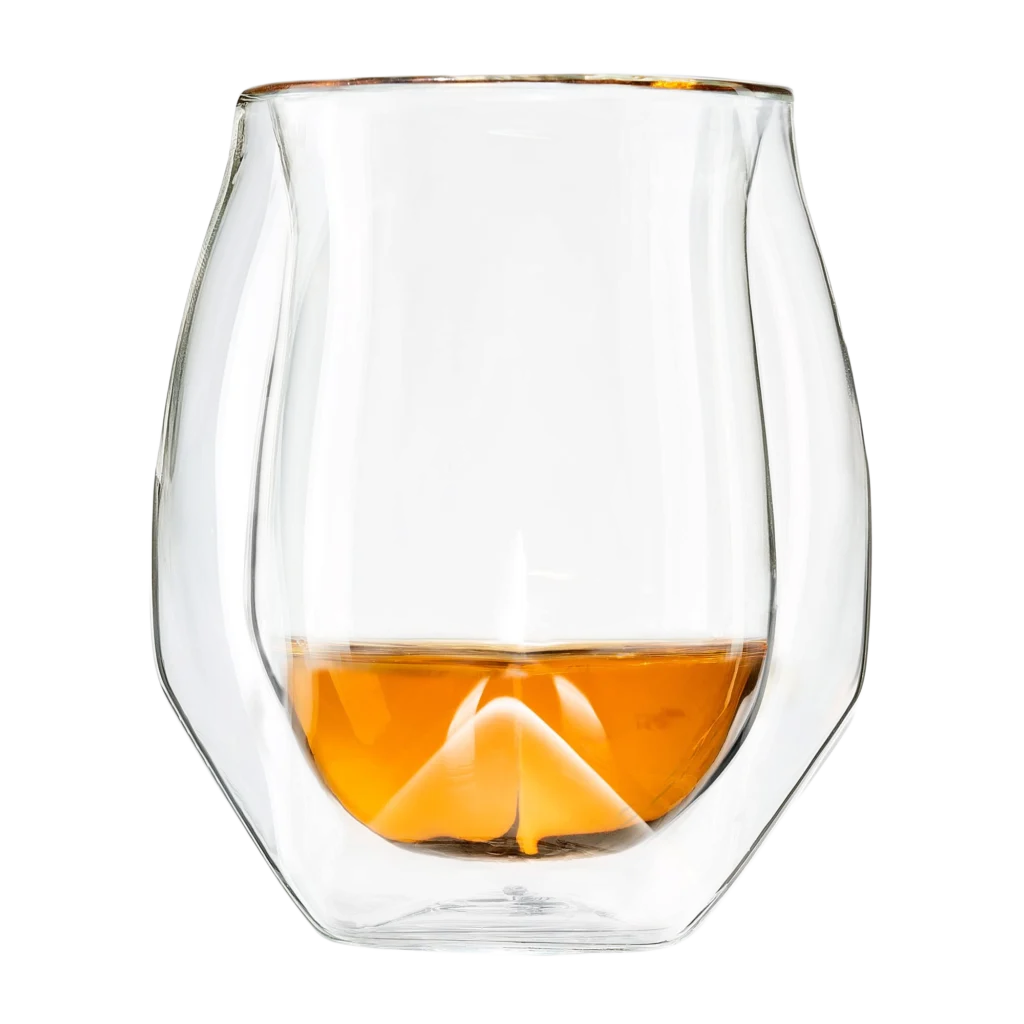
Modern, double-walled, visually striking. Inside, it mimics a tulip form; outside, it resembles a sleek tumbler.
What It Does Well
- Temperature stability due to double-wall insulation.
- Encourages swirling without splashing.
- Visually elevates the experience.
- Less intimidating than traditional nosing glasses.
Where It Falls Short
- Aromatic concentration is moderate rather than razor-sharp.
- Cleaning can be more involved.
- More about design innovation than classic tasting function.
This glass suits those who want performance — but also want something contemporary and conversation-worthy.
7. The Snifter (Brandy Glass)

Large bowl, narrow opening, cradled in the palm.
What It Does Well
- Amplifies bold, heavy whiskies.
- Encourages warming to release deeper aromas.
- Excellent for sherry-matured or rich, dense drams.
Where It Falls Short
- Heat from the hand can exaggerate alcohol.
- Too broad for delicate whiskies.
- Can blur precision in lighter styles.
The snifter is indulgent. It magnifies richness — sometimes beautifully, sometimes excessively.
8. The 1920s Blender’s Glass
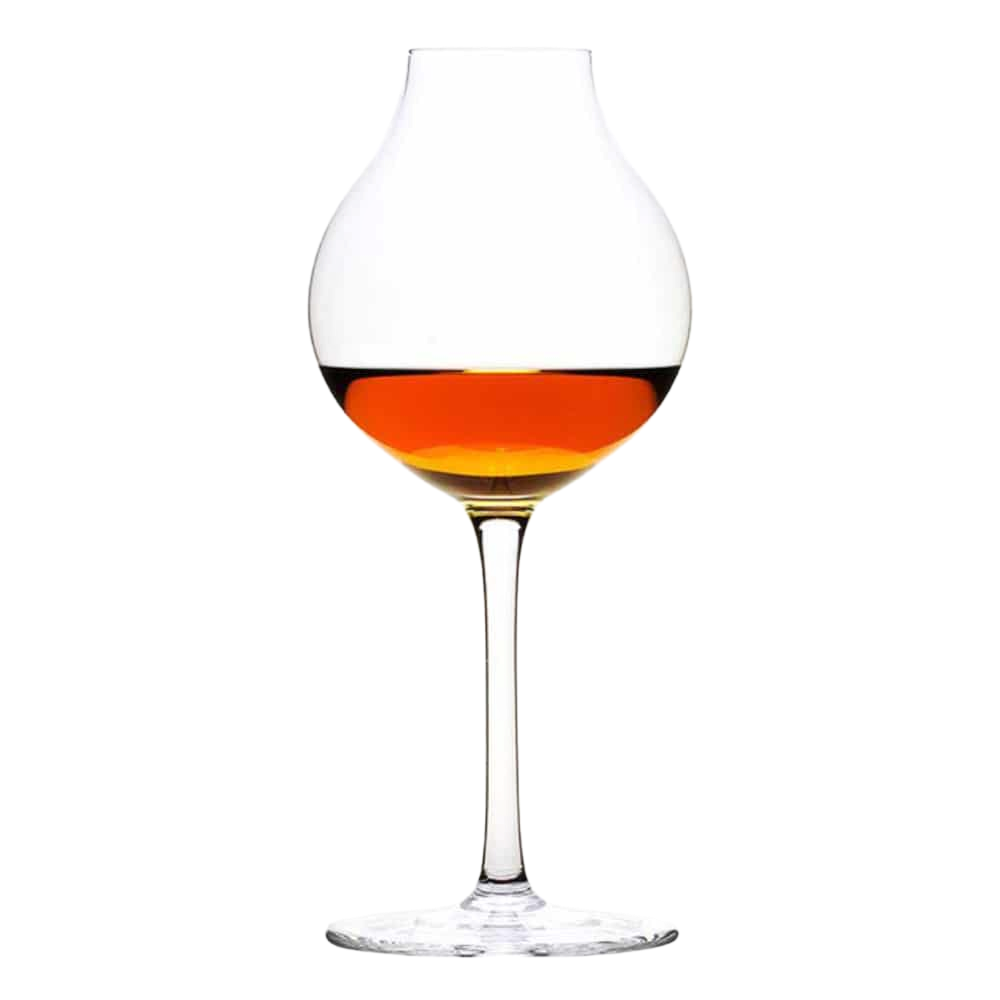
This historic-style glass has a distinctive shape that funnels aroma aggressively toward the nose.
What It Does Well
- Extremely centred aromatic delivery.
- Highlights layered, mature whiskies.
- Creates an immersive nosing experience.
- Strong vintage aesthetic.
Where It Falls Short
- With high-proof whiskies, the aroma concentration can become overwhelming.
- Not forgiving with aggressive cask-strength spirits.
- Less versatile across styles.
In my experience, this glass truly shines with older whiskies that carry many layers of subtle development, ideally at a proof up to around 50% ABV. Beyond that, especially with higher-strength releases, the centred aroma delivery can feel intense to the point of distraction.
Used thoughtfully, however, it can be extraordinary.
Choosing the Right Glass
Instead of asking, “What is the best whisky glass?”, ask:
- Am I relaxing or analysing?
- Is this whisky delicate or powerful?
- Am I drinking alone or sharing?
- Do I want comfort, precision, or theatre?
As a general principle:
- Maximum aroma focus: Copita, Glencairn, Perfect Dram.
- Bourbon-centric enjoyment: Riedel Bourbon Glass.
- Rich, heavy whiskies: Snifter.
- Layered older drams under 50% ABV: 1920s Blender’s Glass.
- Casual comfort: Tumbler.
- Modern aesthetic with solid function: Norlan.
And again — if nothing else is available — reach for a small white wine glass. It performs far better than most people realise.
FAQ about which is the best whisky glass
Does glass shape really affect flavour?
It affects aroma delivery — and since aroma drives flavour perception, the impact can be significant.
Is tulip shape always better?
For analytical tasting and aromatic detail, yes. For casual drinking, not necessarily.
Why can high-proof whisky feel harsh in some glasses?
Narrow chimneys can concentrate ethanol vapours. Some glasses amplify that effect more than others.
Do I need multiple glasses?
Not immediately. But as your preferences evolve, you may find different glasses suit different moods and whiskies.
Is it wrong to drink whisky from a tumbler?
Absolutely not. Enjoyment comes first.
Final Thought
Glassware doesn’t make whisky good or bad. But it can make whisky clearer — or blurrier.
For years, the Glencairn felt like the natural choice. Recently, the copita has earned more space in my cabinet. Not because one is universally superior — but because different glasses reveal different dimensions.
Whisky is personal. Ritual is personal. Preference evolves.
And the best whisky glass?
It’s the one that makes you slow down, lean in, and discover something new in the dram you thought you already knew.
If you’d like another point of view on the best whisky glass, I highly recommend to have a look at this blog: https://www.singlemaltsnob.com/writings/the-best-glass-for-whisky