Wild Turkey Distillery: A Bourbon Story Worth Telling
The wild turkey distillery has always done things in a way that feels stubbornly consistent. Not because it refuses to evolve, but because it knows exactly where its flavour comes from—and what happens if you start interfering with that too much.
That clarity shows up in the glass. It shows up in the pricing. And it shows up in how little the core range has needed to change to stay relevant.
The Story Behind the Name
The name “Wild Turkey” came from a hunting trip, and it’s one of those details that actually adds something meaningful rather than just sounding good.
In 1940, Thomas McCarthy brought samples of bourbon along on a wild turkey hunt. The group he was with kept asking for that same whiskey afterwards, referring to it simply as “that wild turkey bourbon.” The name stuck, and eventually became official.
It wasn’t designed, and it wasn’t tested—it was repeated until it became the identity. That origin still feels aligned with how the wild turkey distillery operates today: the whiskey comes first, everything else follows.
From the Ripy Brothers to the Russell Family
The site itself goes back to 1869, when the Ripy brothers set up their distillery on what is now known as Wild Turkey Hill. Their bourbon had already built a strong reputation by the late 19th century, even representing Kentucky at the 1893 World’s Fair.
Like most distilleries of that era, it didn’t have a smooth run. Prohibition forced closures, and the decades that followed brought changes in ownership and direction. The turning point came when the Wild Turkey name and the distillery’s production were finally brought together in the 20th century, giving it a single, recognisable identity.
Then you have the Russells.
Jimmy Russell joined in 1954 and stayed, shaping the flavour profile in a way that hasn’t drifted far since. Eddie Russell built on that without trying to reinvent it, and now Bruce Russell is part of the same lineage. Three generations working with the same core approach is unusual in bourbon, and it explains a lot about why the wild turkey distillery tastes the way it does.
Wild Turkey 101 and Rare Breed: The Value Benchmark
It’s difficult to talk about the wild turkey distillery without addressing the value question, because it keeps coming up for a reason.
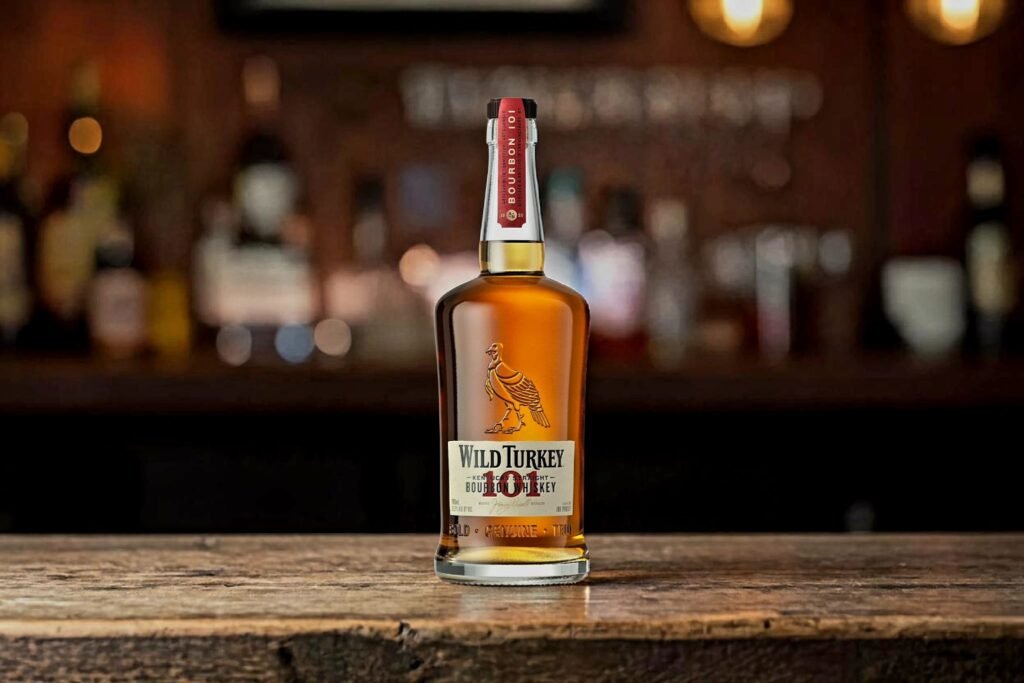
Wild Turkey 101 has been sitting in that same space for years—high proof, solid structure, and a flavour profile that doesn’t thin out when you add a drop of water. It covers spice, oak, and sweetness in a way that feels complete without needing to overthink it.
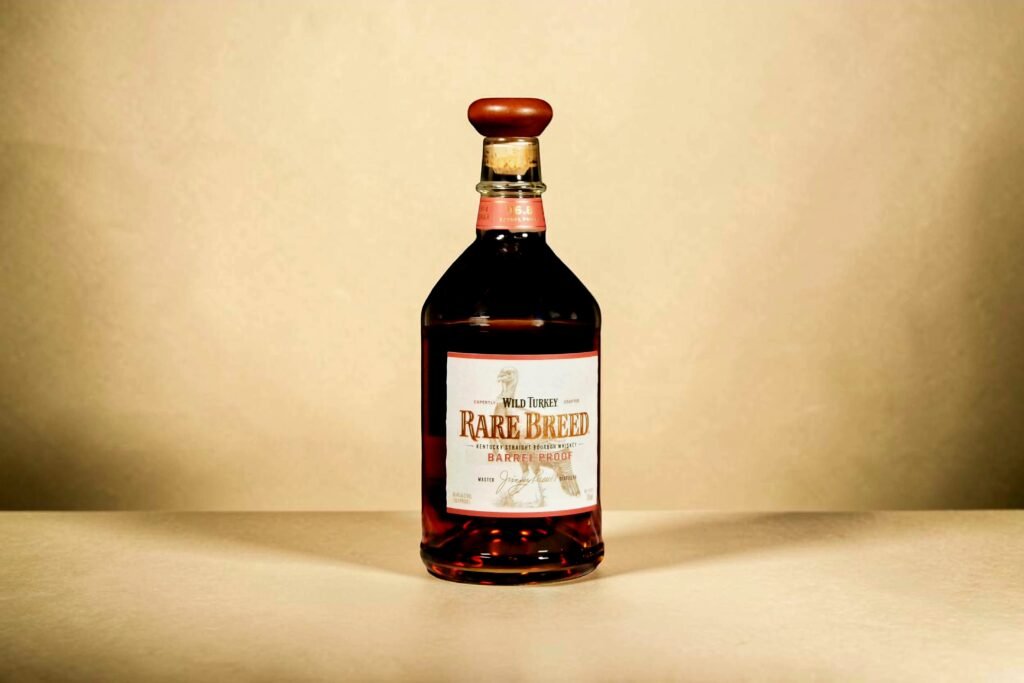
Rare Breed takes that base and pushes it further. Bottled at barrel proof and left non-chill filtered, it carries more weight and texture, but still holds onto the same core character. It doesn’t feel like a separate experiment—it feels like a more concentrated version of the same idea.
Between those two bottles, the distillery quietly sets a benchmark that a lot of newer releases struggle to match at similar prices.
Mash Bill and Production: Why It Tastes the Way It Does
A big part of the identity of the wild turkey distillery comes down to how little the mash bill and production approach have changed.
The grain recipe stays largely consistent across the range, which means most of the variation comes from ageing, barrel placement, and proof rather than constantly adjusting the ingredients. If you want to understand why that matters, this breakdown is worth a look:
Wild Turkey also distils at a lower proof than many other bourbon producers. That decision keeps more of the heavier flavour compounds in the spirit before it even reaches the barrel.
Add in a heavy barrel char and relatively patient ageing, and you get a profile that leans into depth rather than polish.
Recent Releases Worth Your Attention
The core range still carries most of the weight, but recent releases from the wild turkey distillery have added more context to what the spirit can do.
Master’s Keep “Beacon” (2025) marked the end of a series that often explored older stocks and different maturation approaches. It didn’t feel like a departure—more like a closing chapter.
The Russell’s Reserve Single Rickhouse series continues to focus on how specific warehouse locations influence flavour, giving a more detailed look at maturation than standard releases usually allow.
The return of Russell’s Reserve 13-Year at a higher proof adds another layer, showing how well the spirit handles extended ageing without losing structure.
If you’re comparing Wild Turkey to other American whiskey styles, this piece gives a useful perspective:
And if you want to explore more bourbon and rye reviews in a similar style:
- https://dram1.com/category/whisky-reviews-and-tasting-notes/bourbon-rye/
Visiting the Wild Turkey Distillery
The wild turkey distillery is open to visitors, and it’s worth seeing how the process translates from theory to practice.
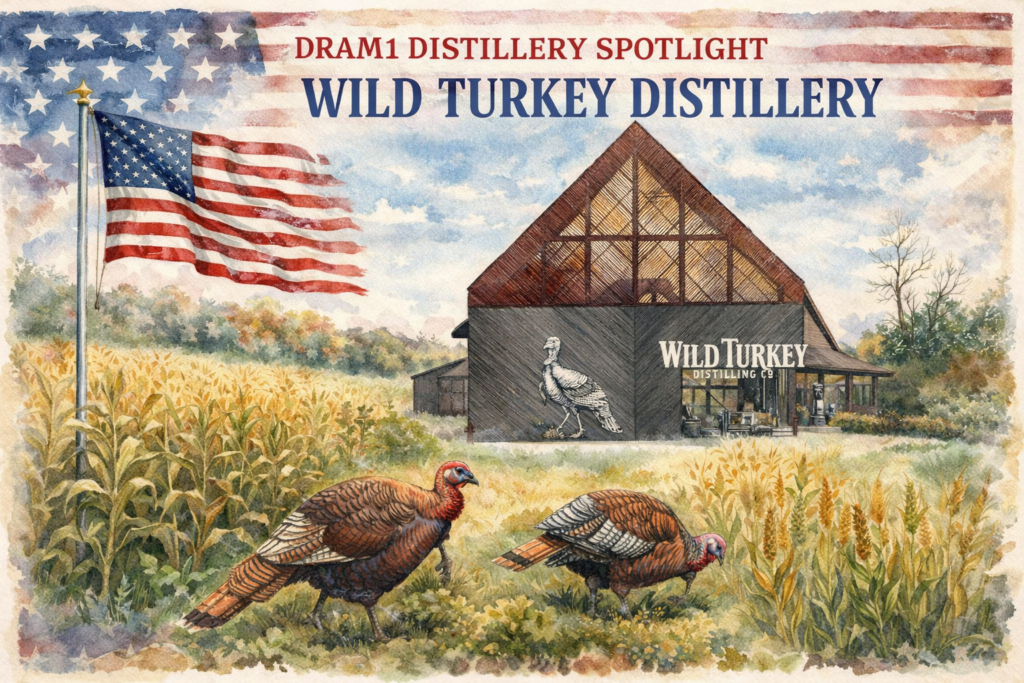
The distillery sits above the Kentucky River, with rickhouses positioned to take advantage of natural temperature variation. Walking through them gives you a clear sense of how much influence placement and time have on the final product.
The tours focus on production rather than presentation—how the spirit is made, how it’s aged, and how those choices show up in the glass.
If you’re planning a visit, the official distillery page has the most up-to-date information:
For broader background on the distillery itself, you can also explore:
- https://www.wildturkeybourbon.com/en-us/our-heritage/
- https://en.wikipedia.org/wiki/Wild_Turkey_(bourbon)
What the Future Might Look Like
The wild turkey distillery doesn’t need to change direction to stay relevant, but it has started to explore more within its existing framework.
Warehouse-specific releases, older age statements, and slightly higher proof expressions are all ways of showing different sides of the same spirit rather than moving away from it.
The end of the Master’s Keep series suggests there’s room for something new to take its place, but it’s unlikely to come at the expense of the core lineup.
Wild Turkey 101 isn’t going anywhere, and as long as that remains the anchor, everything else feels like an extension rather than a shift.
FAQ: Wild Turkey Distillery
Where is the Wild Turkey Distillery located?
Lawrenceburg, Kentucky, along the Kentucky River.
Why is it called Wild Turkey?
The name comes from a 1940 hunting trip where the bourbon became known as “that wild turkey bourbon.”
Who owns the Wild Turkey Distillery?
It is owned by the Campari Group.
Is Wild Turkey 101 good value?
Yes. It consistently delivers high proof and strong flavour at a price point that undercuts many competitors.
Can you visit the distillery?
Yes, it is open to visitors and part of the Kentucky Bourbon Trail.
What defines the Wild Turkey flavour profile?
A combination of a consistent mash bill, lower distillation proof, heavy barrel char, and steady ageing practices.
Final Thoughts
The wild turkey distillery has built its reputation by keeping control over the variables that matter most.
The mash bill hasn’t drifted. The production approach hasn’t been diluted. And the core bottles still reflect the same structure and weight they always have.
That kind of consistency is easy to overlook until you compare it to how much the rest of the bourbon market shifts year to year. Here, the focus stays on the whiskey itself—and that’s ultimately what keeps people coming back.