China cuts whisky tariffs on Scotch by halve — and the timing matters
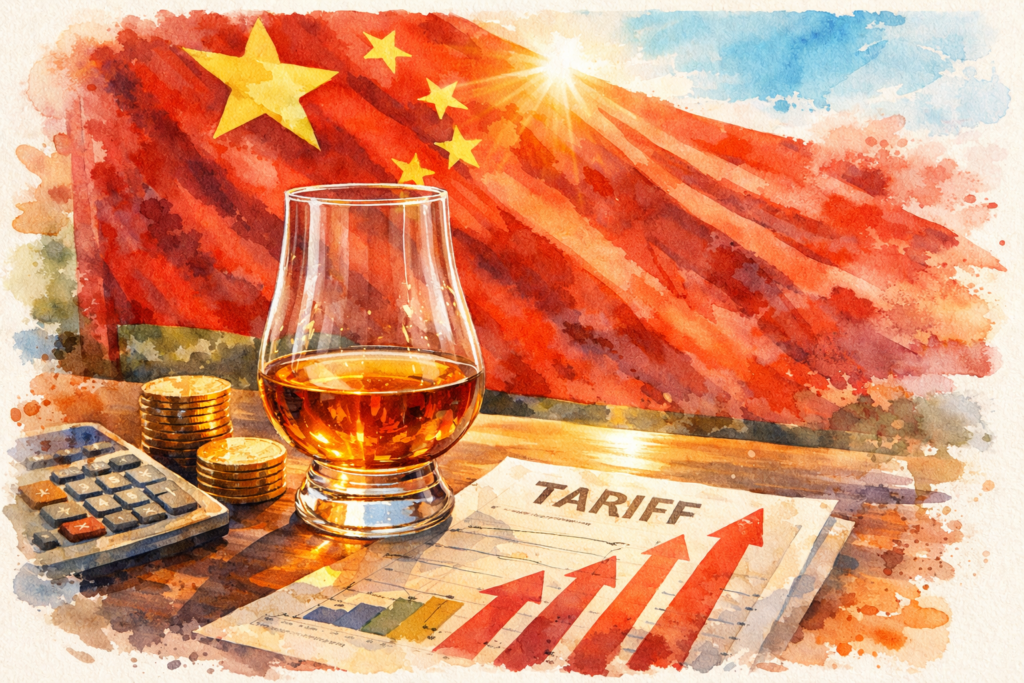
China cuts whisky tariffs on Scotch whisky from 10% to 5% starting today, 2 February 2026, effectively halving a cost that’s been quietly dragging on Scotch’s competitiveness in one of the world’s most strategically important premium spirits markets.
The change was announced in the wake of high-level UK–China talks during Keir Starmer’s visit to Beijing and his meeting with Xi Jinping, part of a broader attempt to reset trade and investment ties between the two countries.
For whisky fans, this is one of those rare policy moves that can eventually show up on shelves — not overnight, and not evenly — but it absolutely changes the direction of travel.
What actually changed?
China’s Customs Tariff Commission said it will apply a provisional 5% tariff on whisky imports from 2 February 2026, down from the current most-favoured-nation (MFN) tariff of 10%.
This isn’t a tweak at the margins. On imported spirits, every percentage point matters because the final price is built up in layers: import duty, taxes, logistics, distributor margins, retail margin, and often brand positioning decisions that deliberately keep certain bottlings premium. A lower tariff doesn’t automatically mean a dramatic price drop — but it gives distillers and importers room to manoeuvre, especially on high-volume and “gateway” single malts that need to stay sharp against rivals.
Why Scotch cares (a lot) about China
China has become a meaningful value market for Scotch, driven by premium gifting culture, a growing base of enthusiasts, and a hospitality sector that’s increasingly comfortable listing serious single malts. The UK government says China is currently Scotch’s 10th-largest export market by value, and it estimates the tariff reduction could be worth £250 million to the UK economy over the next five years.
Reuters also points to scale on the import side: in 2025, China imported $445.5 million worth of whisky, with 84% of that coming from the UK — a reminder that when China adjusts whisky policy, Scotch feels it first.
Industry reaction has been predictably upbeat. Scotch Whisky Association called China a priority growth market and said the cut has the potential to “re-energise” exports.
The backstory: this is also a rollback
One reason the fact that China cuts whisky tariffs is such a headline is that it unwinds a relatively recent rise. Reuters reports that China had previously applied a provisional 5% tariff on whisky (dating back to 2017), but that was lifted and the rate returned to 10% in 2025 — meaning the industry has effectively been battling a sudden headwind for the past year.
So yes, this is “good news” — but it’s also a partial return to a friendlier status quo, which helps explain why the move is being framed as a competitiveness boost rather than a windfall.
Will bottles actually get cheaper?
Sometimes. Eventually. And unevenly.
Here’s what tends to happen in real life:
- Entry-level premium bottles (core malts and blends that need to hit key price points) are the most likely to benefit, because a 5% swing can be the difference between a bottle feeling “reachable” or drifting into a different bracket.
- High-end limited releases may not budge much at retail, because their pricing is often driven more by allocation strategy and brand positioning than by duties.
- On-trade lists (bars, hotels, restaurants) can see faster adjustments than supermarkets or specialty retail, depending on stock turnover.
Also worth flagging: tariff is only one lever. Domestic taxes, distribution costs, and retailer strategy still dominate the final sticker price. The more meaningful impact may be less about dramatic discounting and more about wider range — more labels, more single casks, more brand experimentation, and more willingness to invest in education-led marketing in China.
Why this matters beyond Scotch
The fact that China cuts whisky tariffs is also a signal about the direction of UK–China trade engagement right now. Alongside the whisky move, reporting around the visit included other economic cooperation measures and investment announcements.
And for the spirits world, China is a battleground market: Scotch competes not just with other Scotch, but with Japanese whisky’s prestige aura, Irish whiskey’s growth narrative, and the continuing premium push of American whiskey. Lowering the tariff gives Scotch producers a clearer runway to defend share — especially in the mid-to-premium segment where brand stories and perceived authenticity carry serious weight.
What to watch next
- Brand responses: Do major players pass savings through, hold pricing and invest in visibility, or use the margin to fund local education and events?
- Category mix: Will the cut encourage more age-stated malts, or more premium blends, or a wider spread of independent bottlers entering China?
- Sustainability of the policy: The announcement describes the new rate as “provisional,” which usually means “we can change it again if we want to.”
For now, though, that China cuts whisky tariffs is a clean win: Scotch gets a friendlier landing in a market that rewards premium storytelling — and the entire category gets a reminder that geopolitics and glassware are never as separate as we’d like them to be.