History, Types, Myths, and the Modern Reality
Sherry casks sit at the very heart of Scotch whisky mythology. They are synonymous with richness, luxury, and depth — the dark, brooding counterpoint to bright ex-bourbon maturation. For many whisky drinkers, sherry influence is not just a flavour preference, but a philosophy.
Yet few topics in whisky are more misunderstood.
What most people imagine when they hear “sherry cask matured” no longer exists in any meaningful sense. The truth is more complex, more industrial, and — when done well — just as compelling.
This Dram1 Whisky Academy cornerstone article explores everything you need to know about sherry casks: where the relationship began, how it evolved, why transport casks disappeared, how modern seasoned casks are made, the different styles of sherry involved, and why sherry today is often produced specifically for the whisky industry rather than for drinking.
Why Sherry Casks Matter in Whisky
Cask maturation accounts for the majority of a whisky’s final flavour, and sherry casks are among the most influential tools available to a distillery.
When whisky is matured in sherry-seasoned oak, it can develop:
- Dried fruits and dark sugars
- Nuts, leather, and spice
- Natural colour without additives
- A fuller, weightier mouthfeel
Sherry casks don’t simply “add sweetness”. They reshape the spirit’s structure, texture, and ageing trajectory. At their best, they produce some of the most complex whiskies in the world.
The Origins of Sherry Casks in Scotch Whisky
The relationship between sherry and Scotch whisky was never planned — it was a logistical accident that proved transformative.
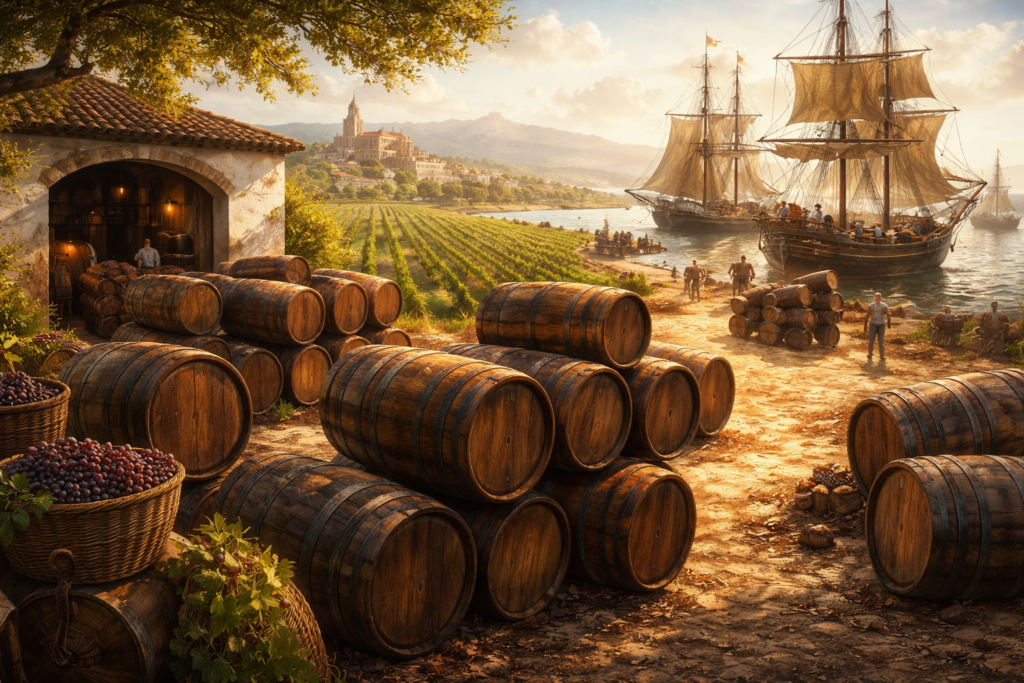
For centuries, sherry was exported from southern Spain to Britain in oak casks. The heart of this trade lay around Jerez de la Frontera and the wider Sherry Triangle. Bottling at source was rare; transporting wine in wood was simply the most practical option.
Once the wine arrived in the UK, the empty casks had little value to sherry merchants. Scotch distillers, always pragmatic, began using them to mature spirit — and quickly realised the results were exceptional.
This marked the beginning of what many now call the golden age of sherry-matured whisky.
Transport Casks: A Lost Era
The casks used during this early period are known today as transport casks. They were genuine working sherry vessels, often made from European oak and thoroughly soaked with wine during long sea journeys.
These casks:
- Had held real sherry for extended periods
- Were not designed for long-term reuse
- Delivered intense flavour transfer
The whiskies matured in them developed deep colour and profound complexity — a style that became the benchmark for sherried Scotch.
But this era could not last.
The Phylloxera Plague and the End of Transport Casks
In the late 19th century, the phylloxera vine louse devastated vineyards across Europe, including those in southern Spain. Sherry production collapsed almost overnight.
At the same time, Spanish regulations changed. To protect quality and provenance, sherry could no longer be exported in cask for bottling abroad. It had to be bottled at source.
These two events combined to end the supply of transport casks entirely.
By the early 20th century, Scotch whisky producers were cut off from their primary source of sherry wood.
Solera Casks: Romance vs Reality
One of the most persistent myths in whisky is the idea of distilleries acquiring ancient solera casks for maturation.
A solera system is a fractional blending method in which barrels are never fully emptied. Some solera casks have been in continuous use for decades — even centuries.
In reality:
- Solera casks are integral to sherry production
- Removing one disrupts the entire system
- They are almost never sold to whisky producers
When “solera” is mentioned in whisky marketing, it typically refers to inspiration, style, or seasoning methods — not literal solera wood.
True solera-matured whisky is essentially nonexistent.
The Rise of Seasoned Sherry Casks
With transport casks gone, the whisky industry adapted. The solution was seasoned sherry casks — barrels made specifically to flavour whisky.
The process is deliberate and controlled:
- Oak casks are coopered to whisky specifications
- They are filled with sherry-style wine in Spain
- The wine seasons the wood for a defined period
- The casks are emptied and shipped to Scotland
- Whisky is filled for long-term maturation
These casks exist solely for the whisky industry.
They do not replicate transport casks perfectly — but they offer consistency, scalability, and flavour control, which modern whisky production requires.
Sherry Made for Whisky (Not for Drinking)
One of the least discussed — and most important — realities of modern sherry casks is this:
The demand for sherry casks far exceeds the demand for drinking sherry.
As a result, much of the liquid used to season whisky casks today is:
- Produced specifically for wood seasoning
- Not bottled or sold as commercial sherry
- Often distilled into vinegar or industrial alcohol after use
This wine may meet the technical definition of sherry-style wine, but it is created with a single purpose: to condition oak for whisky maturation.
This is not inherently a negative. In fact, it allows whisky producers to tailor flavour outcomes more precisely than ever before. But it does mean that modern sherry casks are a fundamentally different product from historic transport casks.
Understanding this distinction is essential for informed whisky appreciation.
Oak Types: European vs American Sherry Casks
The type of oak used has a profound impact on the final whisky.
European oak (Quercus robur) typically delivers:
- Firmer tannins
- Spicy, drying structure
- Dark chocolate, clove, and leather
- Dense, savoury complexity
American oak (Quercus alba) sherry casks often contribute:
- Sweeter vanilla tones
- Coconut and caramel
- Softer spice
- A rounder, more approachable profile
Many distilleries use a combination of both to balance power and elegance.
Understanding Sherry Styles and Their Influence on Whisky
Oloroso
Oxidative, nutty, and rich, oloroso is the backbone of classic sherry maturation.
Common flavour contributions:
- Walnuts and hazelnuts
- Raisins and figs
- Leather, spice, and depth
Pedro Ximénez (PX)
Extremely sweet and concentrated, PX is used sparingly to add richness.
Expect:
- Dates and treacle
- Molasses and dark sugars
- Lush, dessert-like sweetness
Amontillado
A hybrid style that bridges flor ageing and oxidation.
In whisky:
- Toasted nuts
- Herbal dryness
- Subtle salinity
Palo Cortado
Rare and elegant, palo cortado sits between amontillado and oloroso.
Potential influence:
- Refined nuttiness
- Orange peel and spice
- Structured dryness
Fino and Manzanilla
Light, saline, and flor-driven, these styles are rarely used for full maturation but can work in short finishes.
Sherry Casks in the Modern Whisky Industry
Today, sherry casks are among the most expensive assets a distillery can acquire. They require:
- Long-term planning
- Relationships with Spanish cooperages and bodegas
- Significant financial investment
Producers such as The Macallan have built entire maturation philosophies around bespoke sherry cask programmes, demonstrating just how central this wood has become to premium Scotch whisky.
What other Whisky Writers say about Sherry Casks
1. Opinion: Sherry casks are misunderstood – and we need to change that
Christopher Coates explores common misconceptions about sherry casks, their value, and how industry narratives have evolved.
https://whiskymag.com/articles/opinion-sherry-casks-are-misunderstood-and-we-need-to-change-that
2. Whisky in Pedro Ximénez Sherry Casks — Whisky.com
A practical look at how PX casks influence whisky’s flavour, colour, and aroma profiles.
https://www.whisky.com/maturation-in-casks/whisky-in-pedro-ximenez-sherry-casks.html
3. Tasting the Difference: Sherry Influence in Scotch — Whisky Advocate
Insight from industry experts on how different sherry cask types (e.g., oloroso vs PX) shape single malts.
https://whiskyadvocate.com/tasting-the-difference-sherry-influence-in-scotch
4. The Influence of Sherry Casks on Whisky — Bunnahabhain Blog
Distillery perspective on why sherry casks are prized and how they’re used to balance flavour in whisky.
https://bunnahabhain.com/blogs/blog/from-jerez-to-islay-the-influence-of-sherry-casks-on-whisky
5. How do Sherry Casks Flavour Whisky? — ScotchWhisky.com
A technical overview of oak and sherry interaction, explaining flavour delivery during maturation.
https://scotchwhisky.com/magazine/ask-the-professor/11481/how-do-sherry-casks-flavour-whisky/
Frequently Asked Questions About Sherry Casks
What is a sherry cask in whisky?
A sherry cask is an oak barrel that has been seasoned with sherry-style wine before being used to mature whisky, imparting flavour, colour, and texture.
Are traditional sherry casks still used today?
Yes, but it’s mostly seasoned casks and historic transport casks are no more.
Is the sherry in sherry casks drinkable?
Often no. Much of the sherry used today is produced specifically to season casks and is later turned into vinegar or industrial alcohol. But there are exceptions ofcourse.
What is the difference between PX and Oloroso casks?
PX casks add intense sweetness and richness, while oloroso casks provide nuttiness, spice, and structure.
Are solera casks used for whisky?
Almost never. True solera casks are integral to sherry production and are not removed for whisky maturation.
Final Thoughts: Knowledge Deepens Enjoyment
The era of transport casks is gone. Solera casks are largely a myth. And much of today’s sherry exists to flavour wood rather than fill glasses.
But none of that diminishes the magic of a great sherry-matured whisky.
If anything, understanding the history, economics, and craftsmanship behind sherry casks makes each dram more impressive — not less.
Because when sherry cask maturation is done with intent, transparency, and skill, it remains one of the most powerful tools in whisky-making.
And that, at Dram1, is something worth celebrating.
If you’re into Sherry matured whiskies be sure to check out our reviews with the Sherry Velvet flavour profile!